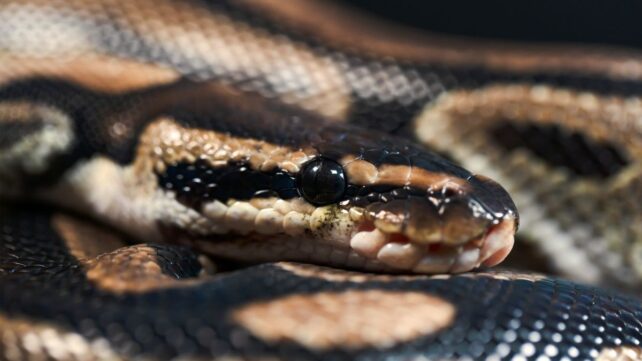
Scientists discovered GLP-1 mimics like Ozempic by way of the Gila monster, and now, a metabolite in python blood is also showing promise for future weight loss treatments – potentially minus some of the uncomfortable side-effects of GLP-1 drugs.
Pythons have pretty extreme metabolisms. They can go for months with nary a nibble, and then devour an antelope whole.
While this kind of yo-yo dieting would wreak havoc on the bodies of other animals, the snakes have special adaptations that help them thrive in this boom-or-bust lifestyle.
Their metabolism speeds up 40 times after a meal; their heart can grow by up to 24.5 percent for some species; and they have a gut microbiome that is primed and ready to jump at a rare python meal.
It's the byproducts of these bacteria that scientists might one day be able to harness for human use.
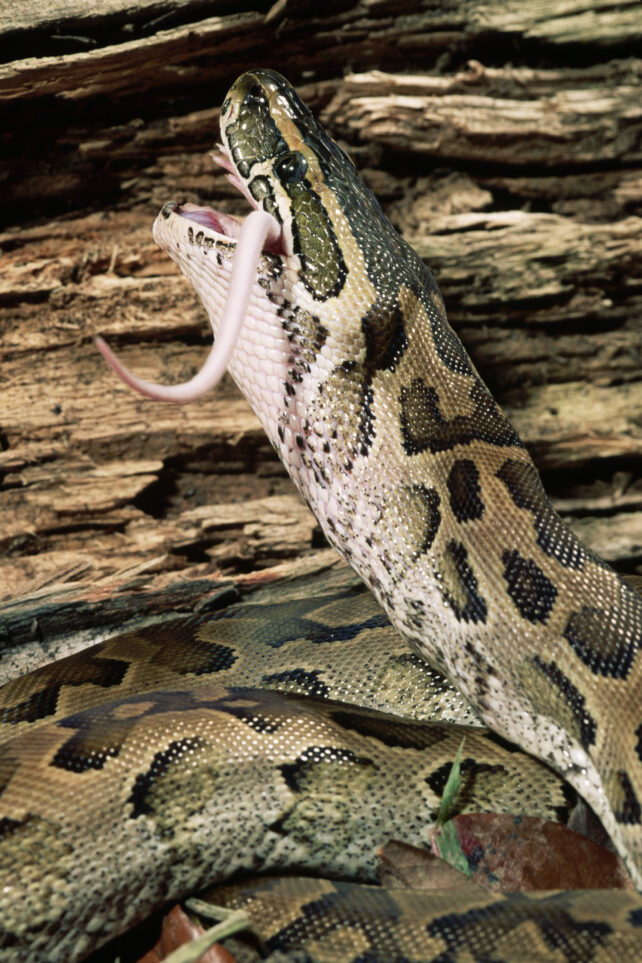
Biologists Leslie Leinwand of the University of Colorado Boulder and Jonathon Long of Stanford University teamed up to find out what was circulating in the blood of ball pythons (Python regius) and Burmese pythons (Python bivittatus) after feeding.
There were 208 different metabolites that spiked significantly after the pythons' once-a-month meals, but one in particular stood out.
Levels of para-tyramine-O-sulfate, or pTOS, increased 1,000 times over in the blood of postprandial pythons.
This metabolite is produced by the snake's gut bacteria as they break down the common amino acid tyrosine, releasing carbon dioxide and adding sulfate to the molecule.
But very little is known about pTOS. The researchers found a handful of studies that suggest pTOS does circulate in the human body, and a few that imply it may increase after a meal.
This isn't enough to say what effect pTOS has on humans, but it was enough to inspire the researchers to probe further.
"If we truly want to understand metabolism, we need to go beyond looking at mice and people and look at the greatest metabolic extremes nature has to offer," Long says.

They found that while pTOS does not seem to occur naturally in mice or rats (the animals most often used to study and test potential human treatments), it does affect their appetite.
Both obese and lean male mice ate much less food after they were given high doses of pTOS, whether by injection into the abdomen or oral gavage. Weight loss ensued without the gastrointestinal problems, muscle loss, or energy drops that usually go along with it.
In both mice and pythons, a dose of pTOS activated neurons in the ventromedial hypothalamus, the brain's control center for satiety, hunger, and energy balance, which may explain how this molecule signals to the python that it doesn't need to scarf that antelope.
Leinward and team hope that the metabolite could be repurposed for a similar effect in humans.
Related: Ozempic Literally Came From a Monster – And It's Not Alone
"We've basically discovered an appetite suppressant that works in mice without some of the side-effects that GLP-1 drugs have," says Leinwand.
This is still a long way from being translated into a medicine humans can actually use, and there are many more metabolites to explore, too.
The research was published in Nature Metabolism.