
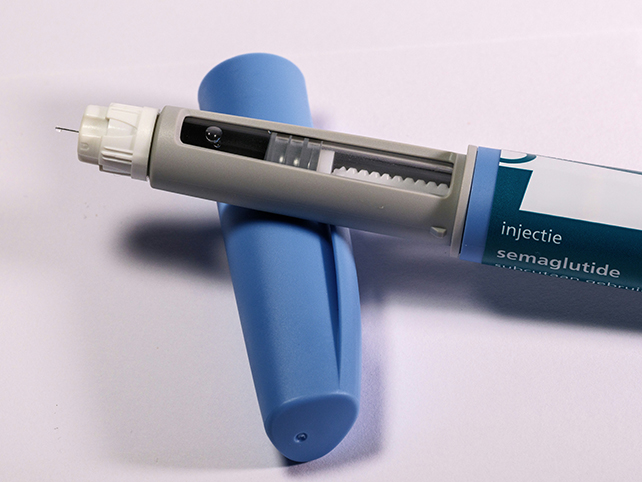
GLP-1 drugs, such as Ozempic and Wegovy, may slightly increase the risk of osteoporosis, gout, and the rare metabolic bone disease osteomalacia, a recent study suggests.
As these conditions are all related to bones and joints, the study's researchers suspect that the sudden reduction in mass may stress the musculoskeletal system. Rapid weight loss can also trigger a spike in the uric acid that causes gout. A drop in food and nutrient intake may also be involved, the team suggests.
GLP-1 (glucagon-like peptide-1) drugs have previously been linked to disruptions in the calcium production that bones rely on for growth and repair, raising the possibility that more than one mechanism may be responsible.
While it's becoming evident that GLP-1 medications provide a range of health benefits that extend beyond weight reduction and the management of Type 2 diabetes, the relative newness of these drugs means we may not have the full picture of their effects yet.
"We are just now reaching the precipice where five- and 10-year follow-up data is becoming available for patients taking GLP-1 medications," says lead author Muaaz Wajahath, a medical student at Michigan State University.
GLP-1 drugs are so-called because they mimic the effects of the naturally occurring GLP-1 hormone: reducing appetite, slowing digestion, and boosting insulin. They're sometimes referred to as receptor agonists (RAs) because they work on the same cell receptors as the GLP-1 hormone.
Wajahath and his colleagues analyzed the health records of 73,483 individuals for five years after they started on a course of GLP-1 medication. These records were compared to those of 73,483 control participants who weren't taking GLP-1 drugs, matched by age, sex, body mass index, and several other factors.
Compared to those not taking GLP-1 medication, those taking the drugs – including semaglutide, liraglutide, dulaglutide, or exenatide – had a 0.9 percent higher risk of developing osteoporosis, a 0.8 percent higher risk of gout, and a 0.1 percent higher risk of osteomalacia.
It's important to note the study doesn't prove cause and effect. Several other related factors, including diet and exercise habits, weren't included in the analyzed data.
While the increase in risk small, the association is statistically significant and worth exploring further. Not only does it give us a better understanding of how GLP-1 treatments affect the body it could also be used to personalize prescriptions in the future.
"Whenever you have a patient who is prone to osteoporosis, gout, or osteomalacia, clinicians should consider bone health surveillance and monitor for delayed-onset complications in at-risk populations," says Wajahath.
"These changes can be implemented immediately and can be an easy fix to potentially prevent these side effects."

It's a complicated picture, especially given that another related study presented at the same conference found people taking GLP-1 medication have better recovery outcomes, on average, from orthopaedic procedures like hip and knee replacements. It's not as straightforward as saying GLP-1 treatments are bad for bones, and might even help osteoarthritis issues.
Recent research has linked this category of drug with a small increased risk of vision loss, severe pancreas problems, and muscle loss, but we don't yet have enough data to fully assess the risk vs reward balance of GLP-1 RAs.
It's possible that for some people, other treatment approaches or natural alternatives might be better. For now though, researchers are continuing to closely examine the potential pros and cons of these GLP-1 medications.
Related: Suicidal Thoughts Prompt New Warnings From Health Authorities For GLP-1 Drugs
"Any medication that sees this rapid adoption warrants close examination, particularly in orthopaedics where obesity and surgical intervention often overlap, and when the long-term effects of GLP-1 RA exposure on bone and joint health remain poorly understood," says Wajahath.
The research has been presented at the 2026 Annual Meeting of the American Academy of Orthopaedic Surgeons (AAOS).