At first glance, searching for a way to heal an injured brain in the leg makes little sense.
Yet a new experiment suggests there may be a surprising line of communication between the brain and the shinbone, with messages traveling through the blood.
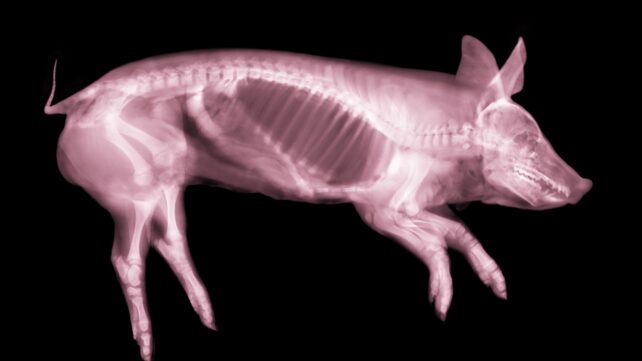
Scientists in China repeatedly applied controlled pressure to the shinbones of mice and pigs.
More treated animals survived after brain injury, and they recovered movement and memory abilities more successfully. The same procedure also helped mice recover after a stroke.
The unusual experiment began with a medical clue. Doctors have long known that fractures can heal unusually quickly in some people with serious brain injuries. Bone may even begin growing in soft tissues where it does not belong.
This suggests an injured brain can send messages that change bone. The researchers reversed the question: If the brain can reach bone, could bone send helpful messages back?
To investigate, they used a device that applied gentle, precisely controlled pressure to the animals' shinbones. It compressed each bone 300 times at a rate of twice per second, five days a week.
Mice treated after brain injury completed movement tests more quickly. They also performed better in a water maze that required them to remember a hidden platform.
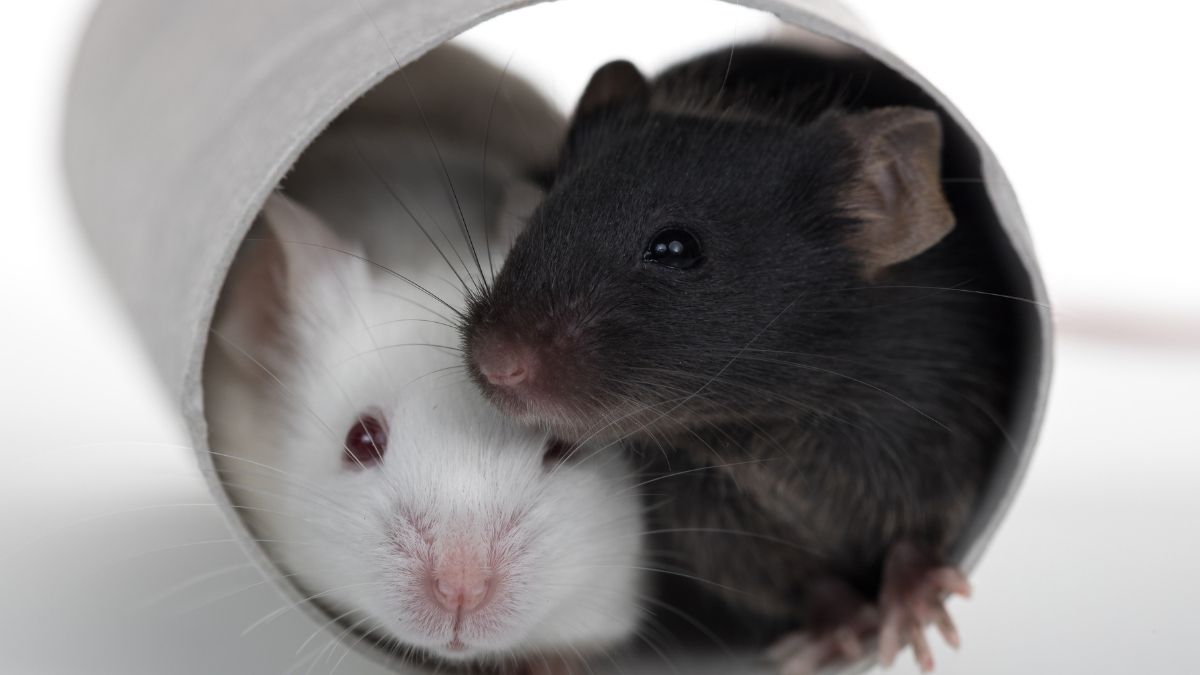
More mice survived severe brain injuries. Their damaged brain areas were smaller, more nerve cells remained alive, and long-term inflammation was reduced. Signs linked to the formation of new nerve cells also increased.
But the researchers still faced a puzzle.
Pressure on a leg can affect muscles, nerves, and circulation as well as bone. How could they know whether the changes in the brain truly came from the bone?
The answer appeared to lie in cells living deep inside it.
Bone is not merely a hard, lifeless structure. It contains living cells that sense movement and pressure, then help the body respond by releasing chemical messages.
The researchers focused on a pressure-sensitive switch called PIEZO1 inside these bone cells. When they disabled it in mice, compressing the shinbone no longer protected the brain in the same way.
That suggested the bone was not simply a surface being pressed. Its cells had to detect the pressure for the benefits to appear.
The team collected serum, the liquid portion of blood, from mice whose shinbones had been compressed. They gave it to brain-injured mice that had not received the procedure.
Compared to control mice, the mice that received serum had less neuron loss.
The benefit, then, did not come only from physical pressure on the leg. The bone's response appeared to produce signals that traveled through the blood to the brain.
Several substances linked to nerve-cell protection, reduced inflammation, and tissue repair increased after treatment. No single substance appeared to do everything. Instead, several protective messages seemed to work together.
The team then tested the method in four-month-old miniature pigs, whose brains are larger than mouse brains and provide a better model for the complexity and physiology of a human brain.
The pigs received controlled brain injuries. Six had pressure applied to their shinbones, while six injured pigs did not receive the procedure.
In separate tests, the treated pigs survived longer and performed better on the behavioral tests than control animals. Their damaged brain areas were smaller, more nerve cells remained alive, and substances linked to brain protection and repair increased in their blood.
Four weeks later, the researchers examined the animals' shinbones, knee joints, and cartilage. They found no obvious damage.
The pig experiment included only six animals in each injured group. All the mice and pigs were male, so females might not respond in the same way.
Their brain injuries were also created under controlled laboratory conditions. Human brain injuries vary greatly in location, severity, and consequences.
Researchers do not yet know how soon the pressure must be applied, how long its apparent benefits last, or which blood signals matter most.
The findings therefore do not mean anyone should squeeze a person's leg after a head injury. Traumatic brain injury is a medical emergency requiring professional care.
The study reveals a new possibility.
We usually imagine bones as a hard frame that holds the body upright. But bone is living tissue that can sense force and send chemical messages to distant organs.
In these experiments, pressure activated cells inside the bone. Those cells changed the chemistry of the blood, and the resulting messages may have helped protect and repair the injured brain.
If future studies confirm this connection, scientists might explore devices that stimulate bone safely or treatments based on the protective substances it produces. Neither possibility is ready for patients.
For now, the story is simpler and stranger: When the brain is injured, recovery may not begin only inside the skull. A bone in the leg may also answer the body's call for help in surprising ways.
The study was published in Nature Neuroscience.
This article was fact-checked by Rachel Garner and edited by Peter Dockrill. While we pride ourselves on our process, we are only human. If you spot a mistake, please let us know.