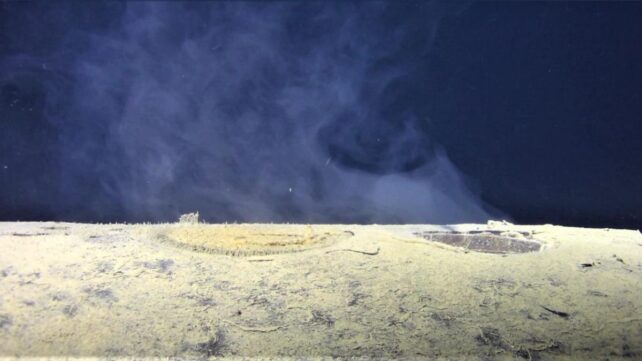
A sunken Cold War-era nuclear submarine is quietly leaking radioactive material into the deep, dark waters at the bottom of the Norwegian Sea, a survey has determined.
The Soviet K-278 Komsomolets sank after an on-board fire in April 1989, carrying not just the nuclear reactor that powered her, but two nuclear torpedoes.
Now, the results of a dedicated survey led by marine radioecologist Justin Gwynn of the Fram Centre's Norwegian Radiation and Nuclear Safety Authority reveal that the ongoing decay of the submarine hasn't yet caused the devastation it's capable of.
While the torpedoes remain sealed, the reactor is degrading, periodically releasing visible plumes of radioactive material into the water, Gwynn and colleagues report in a new paper.
"Releases from the reactor have occurred for over 30 years," the researchers write, but "there is little evidence of any accumulation of radionuclides in the near environment around the submarine as the released radionuclides appear to be rapidly diluted in the surrounding seawater."
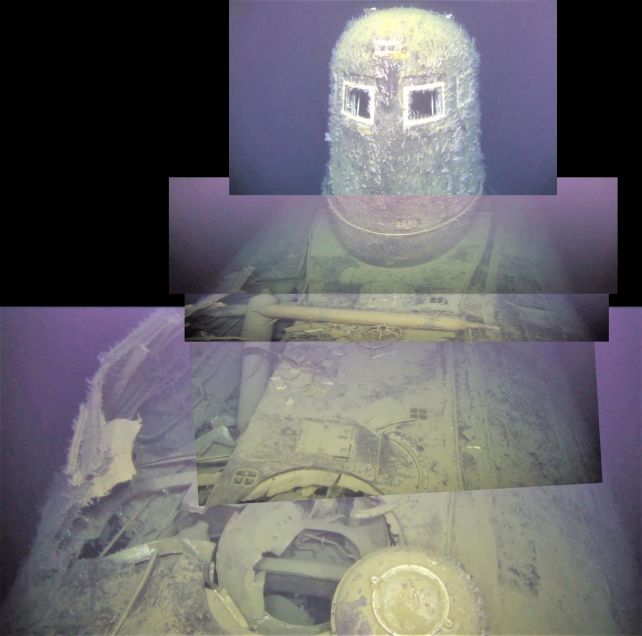
The wreck of the Komsomolets was a tragic disaster that resulted in the deaths of most of the crew, and left a long-term radioactive hazard in the permanent darkness 1,680 meters (5,510 feet) below the surface of the Norwegian Sea.
Ongoing monitoring of the wreck since the 1990s has indicated intermittent radioactive leakage. Early investigations showed that the submarine was significantly damaged, the hull was cracked open, and seawater was in contact with the nuclear torpedoes.
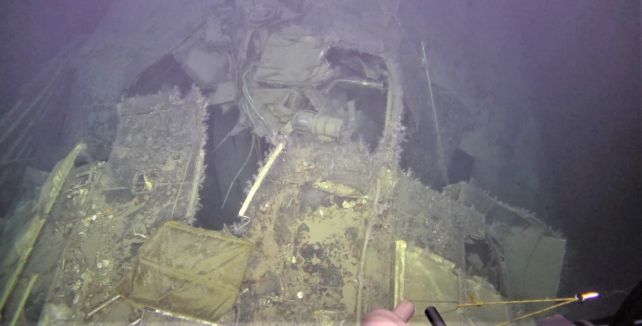
Major work was undertaken to seal the damaged torpedo compartment in 1994, and there has been no evidence of weapons-grade plutonium leakage in the surrounding environment.
However, ongoing annual investigations by the Norwegian government revealed radioactive cesium isotopes in the water around the submarine.
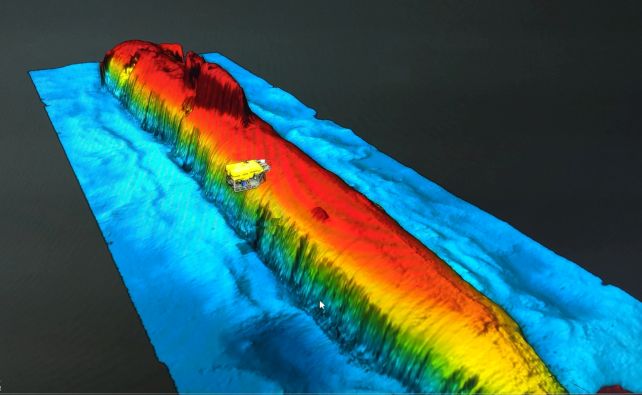
In 2019, scientists undertook a major survey, using a remotely-operated vehicle (ROV) called Ægir 6000 to sample the water and life around Komsomolets, and assess the damage to the vessel itself.
At the time, it was clear that the submarine was leaking. Now, Gwynn and his colleagues have finished analyzing the data collected, and have quantified the leak, its source, and its effects on the seabed ecosystem.
The team found that the leak is not constant but occurs in sporadic bursts from specific locations along the hull, including a ventilation pipe and the area around the reactor compartment. The ROV recorded video of visible plumes seeping out into the sea.

Samples of those plumes revealed levels of isotopes of strontium, cesium, uranium, and plutonium. Close to the vessel, the researchers report, the levels of strontium and cesium were "400,000 and 800,000 times higher, respectively, than typical levels of these radionuclides in the Norwegian Sea."
The elevated levels and ratios of uranium and plutonium, the researchers say, also indicate that the nuclear fuel inside the reactor is actively corroding.
However, just a few meters from the submarine, radioactive contamination drops sharply, suggesting that these isotopes are rapidly dissipating.
In addition, samples of the sponges, corals, and anemones that are living and growing on the wreck show slightly elevated levels of radioactive cesium – but no obvious signs of deformities or other damage. The surrounding sediment also shows little sign of contamination.
Meanwhile, the previous work to seal the torpedo compartment remains intact.
It's an unsettling finding. It suggests that the actual harm from the wreck has thus far been minimal, though we know so very little about marine life at these depths.
At the same time, a broken submarine sitting at the bottom of the sea will only lose more structural integrity over time, so the future of Komsomolets remains somewhat worrying.

The sunken vessel lies in the freezing, crushing depths of the bathypelagic sea – an environment that is very hard for humans to reach and in which any repairs require careful planning and engineering.
It's encouraging that the previous repairs are still holding, but the wreck remains a looming threat that requires continued surveillance, the researchers say.
Related: Ghostly Glow of Nuclear Power Station Detected in Water 150 Miles Away
"Further investigations should be carried out to determine the mechanisms behind the observed releases, the corrosion processes that are occurring within the reactor, and the implications of these for further releases and the fate of the remaining nuclear material in the reactor," they write.
"Komsomolets provides a unique opportunity to understand the risks and consequences of releases from other sunken or dumped reactors in the Arctic as well as risks from any further accidents involving nuclear-powered vessels and any other type of nuclear technologies used at sea.
"It is therefore important that continued monitoring of the situation and status of the submarine is carried out."
The findings were published in PNAS.