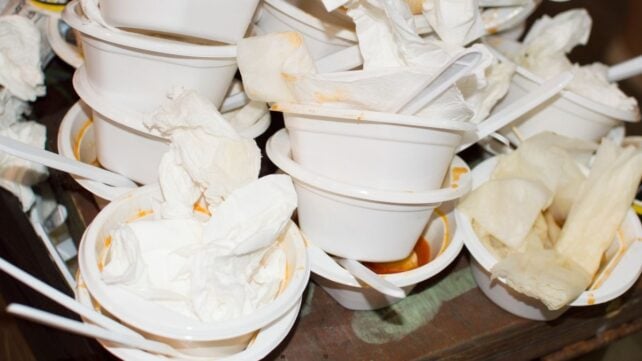
One of the world's most common plastics – used in food packaging, plastic wraps, storage containers, and takeaway cups – may be partially responsible for your risk of fatty liver disease.
The disease, as we know it today, was first described in 1980.
But physicians have known since the 19th century that fatty infiltration of the liver is somehow related to diet, long before formal studies began.
A new study in mice suggests modern food conveniences might be adding to the problem.
People often aren't aware they have fatty liver disease (the non-alcoholic kind) until it is detected incidentally when they get a scan for some other condition.
When people do experience symptoms, they may present with fatigue, feeling generally unwell, and discomfort under the right side of their ribs.
Excess fat builds up in the liver cells, which can eventually lead to inflammation, then fibrosis (an accumulation of scar tissue), and even cirrhosis (serious damage), if untreated.
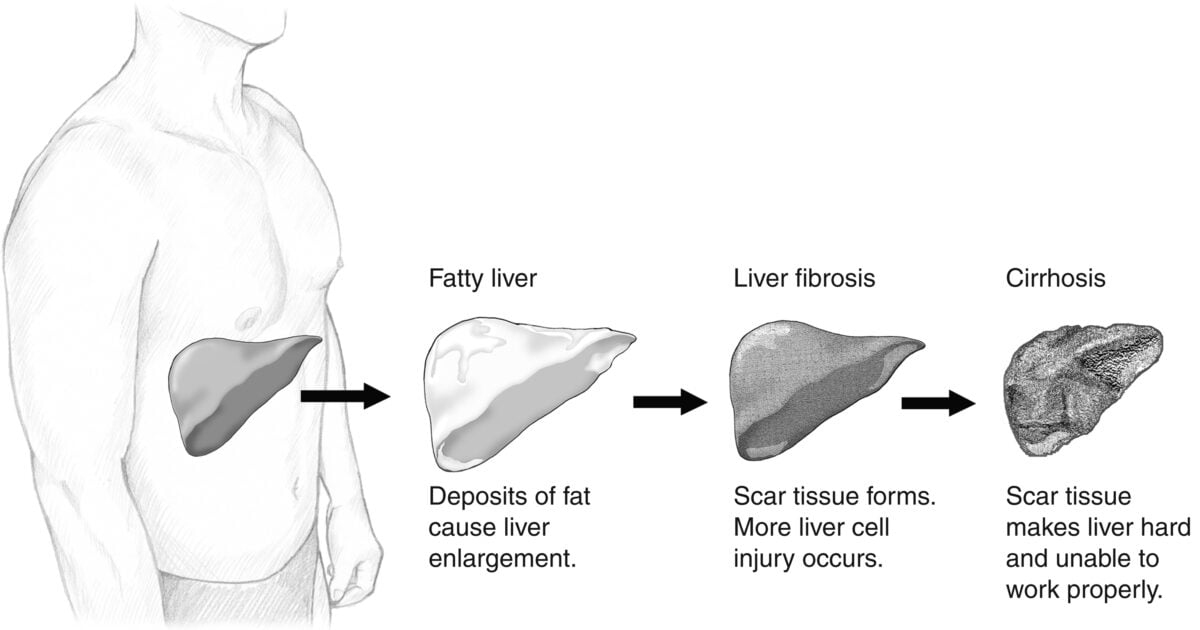
You're more at risk for fatty liver disease if you're carrying extra weight, especially around the middle.
Other risk factors include high blood fat levels (LDL cholesterol or triglycerides), type 2 diabetes or prediabetes, and high blood pressure.
All of these risk factors involve food and metabolism, but a new study in mice shows there may be an important aspect of people's diets that has been overlooked: exposure to microplastics, specifically polyethylene.
It's one of the most important plastics for food convenience: it packages takeaways, cling-wraps leftovers, stops your single-use cup from dissolving in your hand.
And, compared to many other polymers, polyethylene has kind of been considered a lesser concern.
"No studies have really looked into polyethylene's effect on liver health, and it's the most widely produced plastic," explains molecular pharmacologist Adi Joshi of Texas A&M University.
"What we now know is that these microplastics, especially polyethylene, affect our liver's natural defense and repair mechanisms."
Joshi and his colleagues' research, published in Science Advances, is based on mouse experiments, so it's important that further research is conducted to know for sure if polyethylene has the same or similar effects on the human liver.
It was also a pretty small sample of mice, but the effects they saw were concerning nonetheless.
Twenty male mice were separated into four groups.
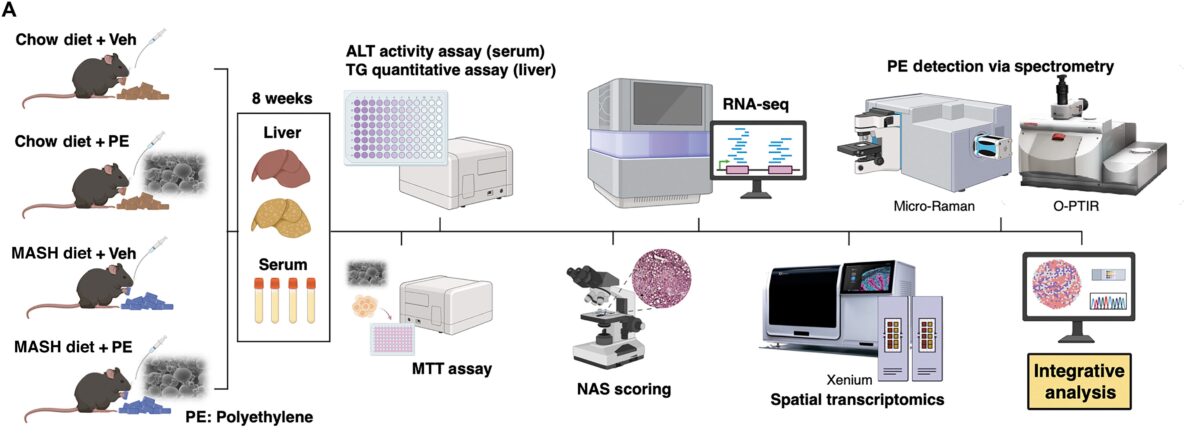
Groups 1 and 2 were fed standard lab mouse chow, while groups 3 and 4 were fed a high-fat, high-sugar, and high-cholesterol diet known to cause metabolic dysfunction-associated steatohepatitis (or MASH) – the medical term for this kind of fatty liver disease.
The scientists also gave the mice in groups 2 and 4 a dose of water containing two milligrams of polyethylene particles, between 10 and 150 nanometers in diameter, each day.
These treatments continued for eight weeks. Then, the mice were euthanized, and their blood serum and livers were collected for closer inspection.
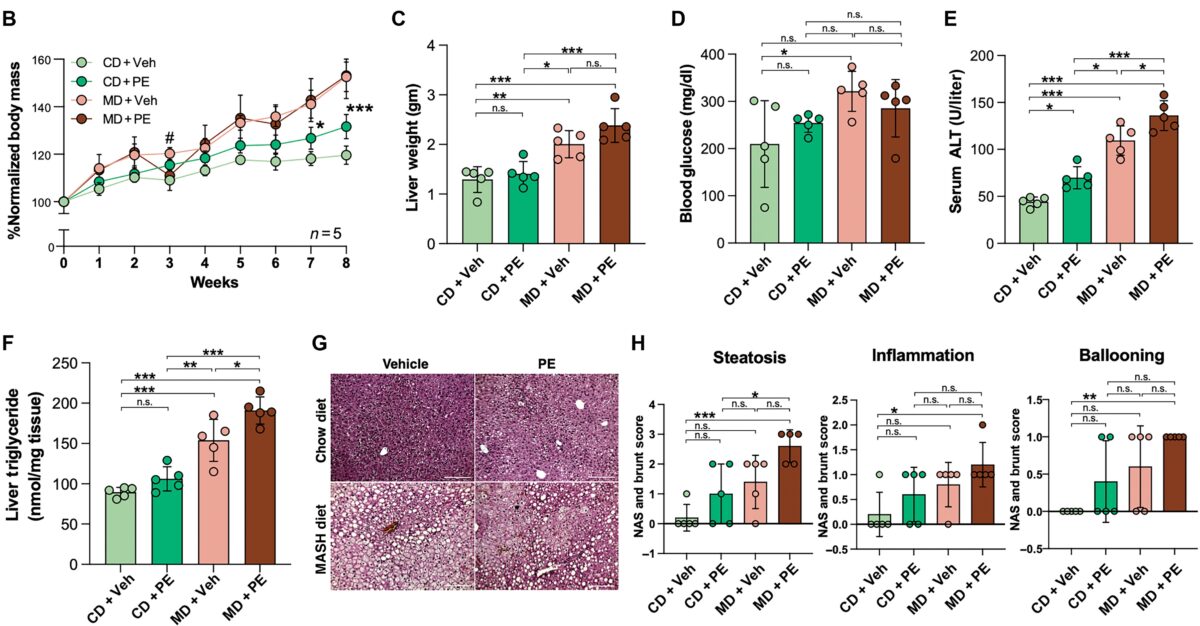
The results suggest that microscopic polyethylene can trigger signs of fatty liver disease, even with a standard diet.

As expected, the two groups of mice fed the MASH diet had far higher scores for signs of fatty liver disease than the standard chow groups.
But regardless of diet, the addition of microplastics appeared to exacerbate the condition – even among the mice who ate a relatively healthy diet.
Levels of ALT, an enzyme indicative of poor liver health, and liver triglycerides were higher in both groups whose diets were laced with microplastics than in animals fed the same corresponding diet without polyethylene.
The same went for liver cell inflammation and ballooning, and steatosis (fat buildup in the liver).
Using spatial transcriptomics on the mouse liver samples, Joshi and colleagues investigated levels of genetic readouts for proteins produced in response to the presence of microplastics.
Genes encoding proteins PPAR-alpha (which regulates liver fat production) and Annexin A2 (which, in the liver, is involved with tissue repair) were both in overdrive in the microplastics-affected livers.
Studies with larger sample sizes are definitely needed, but with what we've got so far, it appears polyethylene microplastics and poor diet could both be contributing to the development of fatty liver disease – especially when paired, as they so often are.
Related: A Common Cholesterol Treatment May Also Remove PFAS And Microplastics From Blood
"Those who have a more Western-style diet, including foods like burgers and sodas, may have a greater chance of progressing to fatty liver disease if they are also exposed to polyethylene," Joshi says.
The research was published in Science Advances.
This article was fact-checked by Rachel Garner and edited by Clare Watson. While we pride ourselves on our process, we are only human. If you spot a mistake, please let us know.