The secret to preventing tooth decay may have been hiding in your mouth all along. Increasing levels of an amino acid in saliva can turn bacterial biofilms from damaging to protective, a clinical study has found.
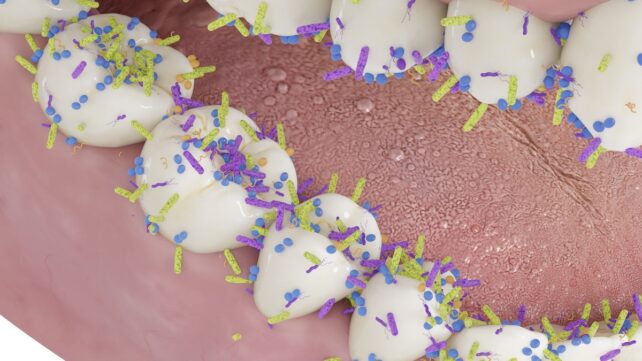
Sugar doesn't directly harm your teeth – but it attracts and feeds bacteria that do. These bugs excrete acidic substances that then get to work dissolving tooth enamel. The issue is worsened by bacterial biofilms that form on tooth surfaces.
But the recent study from researchers at Aarhus University in Denmark has found a way to switch the balance of power among mouth microbes back in our favor. The key is arginine, an amino acid that's naturally found in saliva.
Related: Silencing Bacterial 'Chatter' in Your Mouth May Help Prevent Tooth Decay
In people with active tooth decay, regular arginine treatment significantly reduced the acidity of bacterial biofilms, by changing the ratios of sugars and bacteria populations.
"Our results revealed differences in acidity of the biofilms, with the ones treated with arginine being significantly more protected against acidification caused by sugar metabolism," says Yumi Del Rey, microbiologist at Aarhus.
Plenty of previous research has suggested arginine plays a role in keeping tooth decay at bay, but most studies have been conducted in lab experiments. The Aarhus University study was designed to test whether the same effects occur in real-world environments of human mouths.
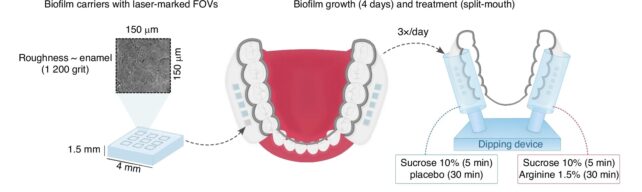
Ten participants wore dentures over their lower teeth for four days, which had tiny panels on either side that allowed biofilms to form. Three times a day, the dentures were removed for treatment in a dipping device.
First, the biofilm panels were bathed in a solution containing 10 percent sucrose. Then, one side was treated with an arginine solution while the other was dunked in plain old distilled water.
After four days, the dentures were removed and the biofilms examined in detail.
"The aim was to investigate the impact of arginine treatment on the acidity, type of bacteria, and the carbohydrate matrix of biofilms from patients with active caries," says Sebastian Schlafer, microbiologist at Aarhus.
After the biofilms were exposed to sugar again, those treated with arginine consistently showed higher pH levels. If you remember your high school chemistry days, a higher pH means lower acidity.
Next, the team investigated how arginine might be reducing acidity, by taking stock of which bacteria and sugars were present in each sample. Biofilms treated with arginine showed lower levels of a sugar called fucose, while another sugar, galactose, was concentrated towards the outer surface of the biofilm – in other words, away from the tooth surface.
Analyzing the DNA of bacteria present, the researchers found that arginine treatment significantly reduced a specific population of Streptococcus bacteria that produce acid, while slightly increasing other bacterial strains that can metabolize arginine.
Notably, results seemed to vary from person to person. Some participants didn't respond to treatment, and the researchers were unable to link this variability to clear differences in populations of microbes or sugars.
More work will need to be done to investigate how arginine affects biofilms, but the amino acid could be a promising new addition to oral hygiene products like toothpaste or mouthwash. And it's already considered safe – not only is arginine naturally present, but it's also used to treat conditions like high blood pressure.
The research was published in The International Journal of Oral Science.