
Dementia affects dogs as well as people, and although it goes by a different name, it's no less devastating for owners of beloved pets.
Known as cognitive dysfunction syndrome or canine cognitive dysfunction, it's thought to affect up to 60 percent of pooches above the age of 11.
Distinguishing cognitive dysfunction syndrome (CDS) from normal aging can be difficult. Signs can include changes in a dog's sleeping patterns and social behavior, as well as confusion or getting lost in familiar places.
Now, a new study led by researchers at North Carolina State University suggests there's a specific physical sign that can flag dog dementia: a change in the stride length of the front legs (the thoracic limbs).
The study doesn't show that this can diagnose dog dementia on its own. Gait can be affected by other factors, including chronic pain.
But the findings suggest that front-leg stride length could serve as a useful, objective measure for monitoring aging dogs alongside cognitive questionnaires and veterinary exams.

"Here we show that the length of front leg stride taken by dogs decreases with age, but even more importantly, decreases with a cognitive impairment," says veterinary neurologist Natasha Olby, from North Carolina State University.
"In fact, we found that the effect of cognitive decline is larger than the effect of age by itself."
The study was based on an analysis of 88 elderly dogs, including both females and males, and purebreds and mixed breeds.
To be included, dogs had to have reached at least 75 percent of their expected lifespan, based on their size and breed.
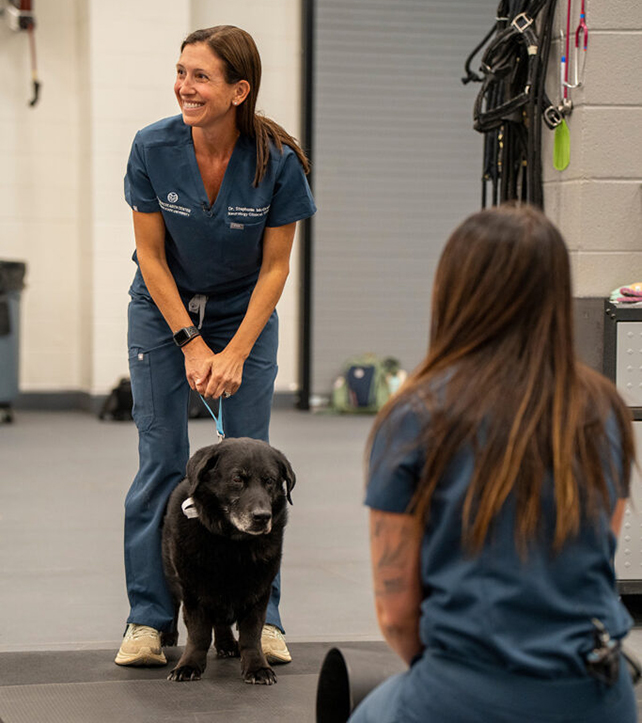
A host of different variables were analyzed. The animals were subjected to physical, neurological, physiological, and orthopedic tests to assess everything from vision and hearing to mobility and physical strength.
For the walking part of the experiments, which were carried out every six months for several years, the pooches were set up along a 5-meter (16-foot) path to walk at their own pace – without verbal encouragement or treats.
Shorter stride lengths corresponded with lower cognitive test scores, even after accounting for age and chronic conditions – but only in the front legs.
"It is fascinating to see that cognitive decline affects front legs and hind legs differently," says Olby.
"In dogs, the hind legs are important for moving forward, while the front legs also change direction and initiate braking.

Walking smoothly is not just a matter of muscles and joints. It also depends on the brain's ability to integrate sensory information, plan movement, and coordinate the body.
"The cerebral cortex integrates more sensory information into the neuronal circuits which produce steps in the front legs, and so loss of high-level sensorimotor integration affects them differently," explains Olby.
Observing how the walking pattern of a dog changes in between vet visits – or even just day to day at home – could therefore be a useful indicator of canine dementia.
It requires no special equipment, just a watchful eye, and while shortening front leg stride lengths is no guarantee that a pooch is developing dementia, it's something that could be checked out by a professional.
"These findings support the use of thoracic limb stride length as an objective, scalable functional mobility measure that reflects changes associated with cognitive decline and may be a useful tool for research and clinical monitoring of aging in dogs," write the researchers in their published paper.
It's possible that new insights into CDS could help inform research into dementia in humans, too.
Studies have shown that people with more advanced Alzheimer's disease tend to have a slower walking speed and a shorter stride length compared to those with milder cognitive impairment.
Related: One Stage of Sleep Seems Critical For Reducing The Risk of Dementia
For dogs, the researchers are keen to test these measurements and conclusions in large groups of dogs across a wider range of ages and with a wider variety of health conditions.
"If owners notice that their dog's front leg stride is becoming shorter they should visit their vet, for there are possible alternative causes such as arthritic pain or neck issues that can be treated," says Olby.
"If a diagnosis of cognitive decline is made, there are likewise several lifestyle interventions than can be made, even if there is currently no cure."
The research has been published in Frontiers in Veterinary Science.