A prehistoric bird that lived and died 120 million years ago has presented forensic paleontologists with a baffling medical mystery.
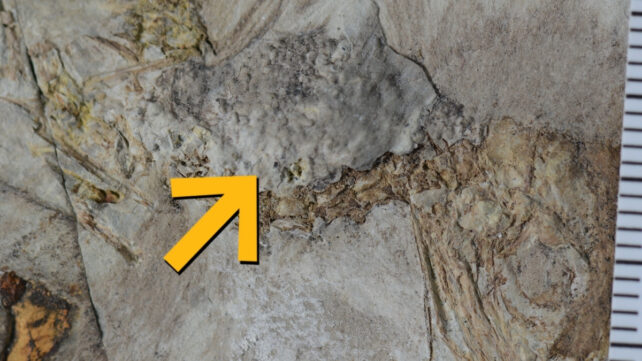
Somehow, it managed to die with more than 800 tiny pebbles in its throat – a situation that researchers think almost certainly caused its demise. But why was the sparrow-sized bird swallowing the stones in the first place?
It's a discovery that raises some interesting questions about the diet, behavior, and physiology of prehistoric birds – especially since the mass of stones discovered in the esophagus of the newly discovered Chromeornis funkyi is unlike anything seen in modern birds.
Related: Armour-Plated Dinosaur's Last Meal Found Beautifully Preserved, 110 Million Years Later
"It's pretty rare to be able to know what caused the death of a specific individual in the fossil record," says paleontologist Jingmai O'Connor of the Field Museum in Chicago.
"But even though we don't know why this bird ate all those stones, I'm fairly certain that regurgitation of that mass caused it to choke, and that's what killed that little bird."
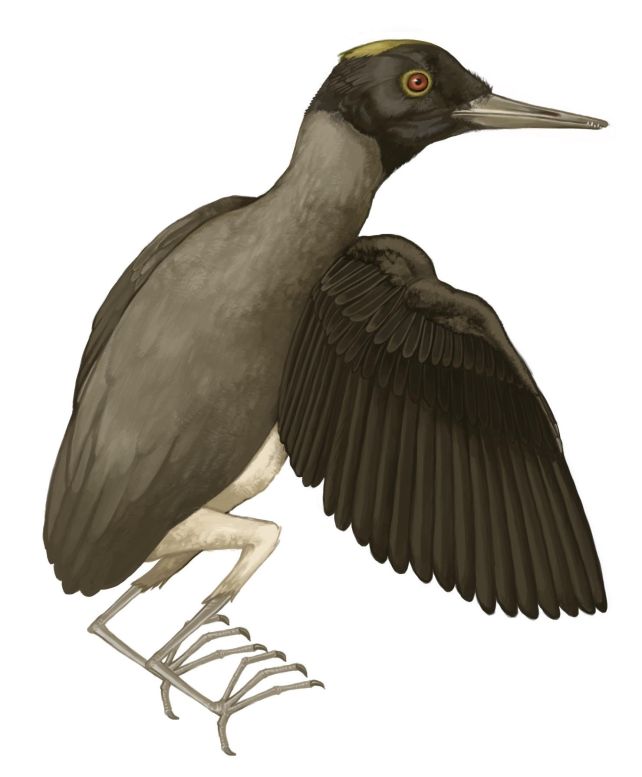
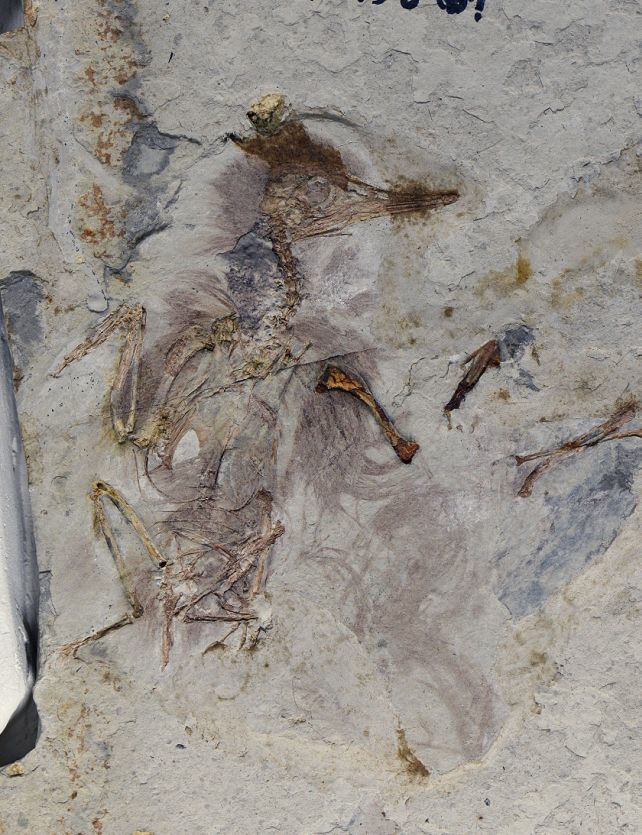
Chromeornis is remarkable for a number of reasons unrelated to the cause of its death, capturing O'Connor's immediate attention when she stumbled across it in the Shandong Tianyu Museum in China.
The bird was fossilized in a type of fossil formation known as a Lagerstätte, a deposit of sedimentary rock that preserves the remains of organisms buried therein with exquisite detail, often including fine details of even their soft tissues.
Such is the case with Chromeornis, an exceptional fossil retaining soft features such as an outline of the skin around the neck, wings, and legs; feathers; traces of dark pigment from the eyes; and even hints of muscle. That's in addition to the harder parts of the anatomy that fossilize more readily, such as the beak and bones.
These details allowed O'Connor and her colleagues to determine where Chromeornis sat on the prehistoric bird family tree. It was a tiny thing, weighing around 33 grams (1.16 ounces), belonging to an extinct family called Longipterygidae – small birds with teeth just at the very tip of their long, snouty beaks. Chromeornis's closest resemblance is to the Longipteryx genus.
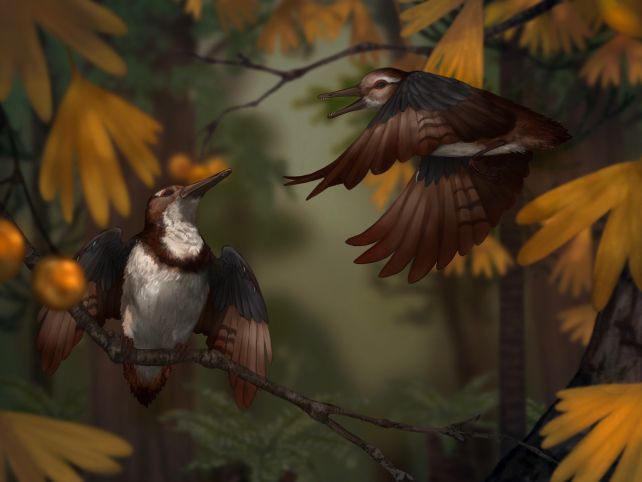
Examining the bird more closely is when questions about the large agglomeration of tiny stones began to emerge.
"I noticed that it had this really weird mass of stones in its esophagus, right up against the neck bones," says O'Connor. "This is really weird, because in all of the fossils that I know of, no one has ever found a mass of stones inside the throat of an animal."
Carefully examining the composition of the stones revealed that they had a different mineralogy from the stone in which the fossil was embedded – and also from each other. This ruled out natural deposition in the lakebed after the bird's death, suggesting that the bird had, for some reason, swallowed the stones while alive.
Some birds swallow stones to aid digestion; these stones, called gastroliths, sit in the gizzard, where a muscular section called the gastric mill helps grind and break down the food the bird eats.
For some birds, when the stones become too smooth to grind effectively, the bird regurgitates the stones and finds new rough stones to swallow.
The family of birds to which Chromeornis belongs, including Chromeornis itself, shows no evidence of having had a gastric mill, the stone-grinding part of the gizzard seen in some birds. Besides, the total volume and number of stones were too large for a gastric mill in a bird of this size.
"We found over 800 tiny stones in this bird's throat – way more than we would have expected in other birds with gizzards. And based on their density, some of these stones weren't even really stones, they seemed to be more like tiny clay balls," O'Connor explains.
"With these data, we can very clearly say that these stones weren't swallowed to help the bird crush its food."
The other option is that perhaps Chromeornis was unwell. Some living birds are known to swallow stones to help dislodge parasites, for example, or to compensate for a nutrient deficiency.
"When birds are sick, they start doing weird things," says O'Connor. "So we put forth a tentative hypothesis that this was a sick bird that was eating stones because it was sick. It swallowed too many, and it tried to regurgitate them in one big mass. But the mass of stones was too big, and it got lodged in the esophagus."

Like most other animal life on Earth at the time, Chromeornis and its entire family of birds were wiped out during the devastating Cretaceous-Paleogene mass extinction 66 million years ago.
This single fossil offers a rare, tiny window into the life of this bird, which may provide insight into how it may have been susceptible to extinction.
"Learning about Chromeornis and other birds that went extinct could ultimately help guide conservation efforts today," O'Connor says.
The research has been published in Palaeontologica Electronica.