A customized version of the Mediterranean diet called the MIND diet is associated with slower brain aging, new research shows.
In a study sample of 1,647 adults in middle age and older, sticking closely to the MIND diet showed a positive correlation with losing less brain tissue over time.
This was particularly true of gray matter, the type of tissue that helps carry out vital functions like thinking, remembering, and decision-making.
Participants whose diets were more MIND-like were also found to have less ventricular enlargement – another sign of tissue loss in the brain.
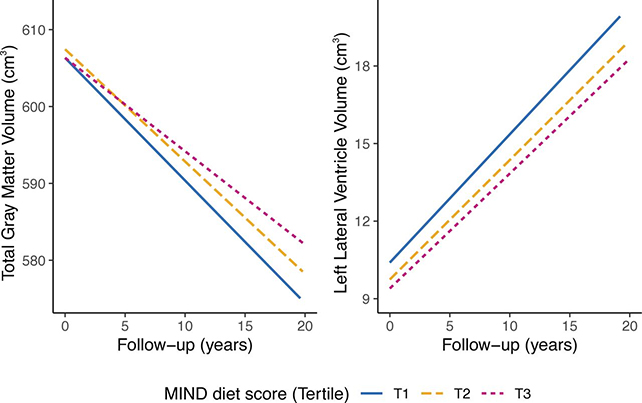
Those who stuck most closely to the MIND diet experienced brain changes equivalent to 2.5 years of slower aging across the study period. Participants were followed for around 12 years on average, via self-reported dietary habits and MRI brain scans.
"MIND-recommended foods rich in antioxidants, such as berries, and high-quality protein sources like poultry may reduce oxidative stress and mitigate neuronal damage," write the researchers in their published paper.
"Conversely, fast fried foods, often high in unhealthy fats, trans fats and advanced glycation end-products, may contribute to inflammation and vascular damage."
The MIND diet, which is known to have multiple benefits, is a combination of two other healthy eating plans. The core is the Mediterranean diet, which includes high consumption of plants and nuts, moderate fish and dairy, and little red meat. Extensive research has linked it to many health benefits, including longer life and slower cognitive decline.
Then there's the Dietary Approaches to Stop Hypertension (DASH) diet, which aims to lower blood pressure and boost other areas of health by focusing on fruit, vegetables, wholegrains, and low-fat dairy.
The MIND diet is Mediterranean plus DASH, plus some extra tweaks to try and ward off cognitive decline. Prior studies have found it can reduce dementia risk and maintain brain sharpness.

In the new study, an international team of researchers led by scientists from the Zhejiang University School of Medicine in China investigated the MIND diet's effects on brain aging.
Participants weren't asked to follow any particular diet, but they were scored on how closely their eating habits matched the MIND diet. Those who matched more closely saw greater brain aging benefits, the team says, which provides more evidence that the MIND diet is good for brain health.
"Gray matter atrophy and ventricle volume enlargement are well-established markers of brain aging," write the researchers.
"Gray matter, rich in neuronal cell bodies, dendrites and synapses, plays a key role in memory, learning and decision-making. Ventricle volume expansion, in contrast, reflects brain atrophy, where the brain tissue loss is accompanied by the enlargement of cerebrospinal fluid-filled spaces."
However, the data stops short of showing direct cause and effect. While many additional factors were accounted for, including age and education, others weren't – such as sleep quality or genetics. There may be influences at play affecting both diet and brain aging that weren't specifically tracked in this study.
There were some unexpected quirks to the findings. Wholegrain foods were associated with faster declines in gray matter, while higher cheese intake seemed to slow declines in brain health. Intriguingly, cheese is one of the foods that the MIND diet recommends limiting.
Clearly, there's some variation between people and their health as to how effective a MIND diet might be. Overall though, the study gives us valuable new evidence of how closely diet and brain health are related.
Multiple studies have found that diet choices can have an impact on the likelihood of developing neurodegenerative diseases such as Alzheimer's, and the researchers suggest future studies could build on these findings using larger and more diverse groups of people.
Related: Keto Diet May Have a Surprising Bonus Benefit, Mouse Study Suggests
"The results highlight the need for additional long-term studies to further reveal how specific dietary patterns influence brain aging and neurodegeneration, which informs future dietary intervention programmes to improve brain health," write the researchers.
"Given the global rise in aging populations and the growing burden of neurodegenerative diseases, such as Alzheimer's disease and Parkinson's disease, promoting the MIND diet as a part of dietary guidelines for aging populations could be an accessible strategy to address this challenge."
The research has been published in the Journal of Neurology Neurosurgery & Psychiatry.