This week in science: paleontologists discover that gigantic octopuses the size of whales once roamed the world's oceans; a personalized cancer vaccine shows promise in early human trials; the Curiosity rover finds 'dragon scales' on Mars; and much more!
Tinnitus May Be Linked to a Crucial Brain Chemical

The severity of tinnitus may be linked to levels of serotonin in a specific brain circuit, according to a new study in mice.
"When we turned that circuit off, we were able to ameliorate the tinnitus significantly. This gives us a much clearer picture of what's going on in the brain – and points toward new possibilities for treatment," says neuroscientist Zheng-Quan Tang of Anhui University in China.
Read the full story here.
Giant, Kraken-Like Octopuses Once Stalked Their Prey in Cretaceous Seas
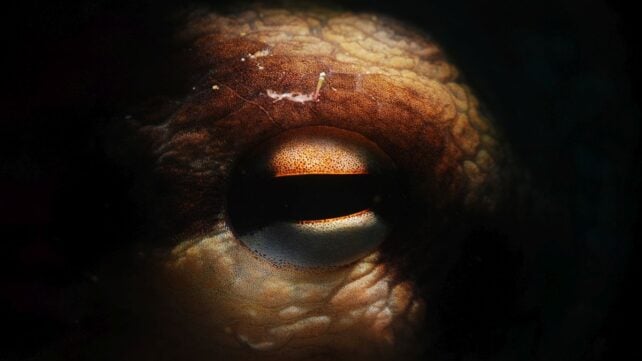
Giant octopuses up to 19 meters (62 feet) long may have been among the top ocean predators during the time of the dinosaurs.
"These octopuses may represent the largest invertebrates thus described, rivaling contemporaneous giant marine reptiles," writes an international team led by paleontologists Shin Ikegami and Yasuhiro Iba of Hokkaido University in Japan.
"Our findings show that powerful jaws, and the loss of superficial skeletons, convergently transformed cephalopods and marine vertebrates into huge, intelligent predators."
Read the full story here.
Personalized Vaccine For 'Deadliest Major Cancer' Keeps Patients Alive 6 Years Later
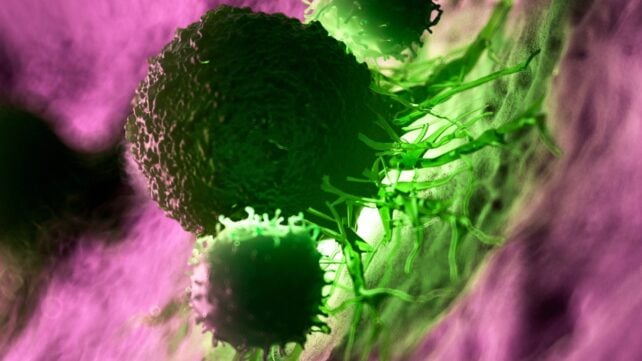
A personalized pancreatic cancer mRNA vaccine is showing promise in clinical trials, with seven patients in long-term remission.
"We think we've found a way to awaken the immune system to prevent cancer from coming back," Robert Vonderheide, President-elect of the American Association for Cancer Research (AACR), told reporters at CBS8 news in San Diego.
"If we can do that, we can apply it to more patients with pancreas cancer, and, in fact, the strategy could have applicability to other types of cancer. We're really hopeful."
Read the full story here.
Curiosity Found Strange 'Dragon Scale' Rocks on Mars, And Scientists Are Excited
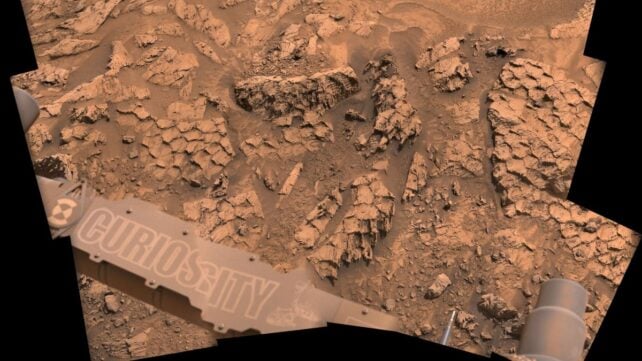
The Curiosity rover has found striking 'dragon scale' rocks on Mars, which may be evidence of repeated cycles of wetting and drying.

"We've seen polygon-patterned rocks like these before, but they didn't seem quite this dramatically abundant, stretching across the ground for meters and meters in our Mastcam mosaics," says Curiosity project scientist Abigail Fraeman in a blog post.
Read the full story here.
Scientists Restore Memory In Aging Mice Using a Simple Nasal Spray

A nasal spray has been found to reduce brain inflammation associated with aging, and to restore lost memory, in new tests in mice.
After two doses, the treated animals outperformed control mice on tasks measuring object recognition and spatial memory. Further biochemical analysis of the hippocampus suggested the treatment had the desired effects on brain inflammation.
Read the full story here.
Scientists Found 5.5 Million Bees Living Beneath a New York Cemetery
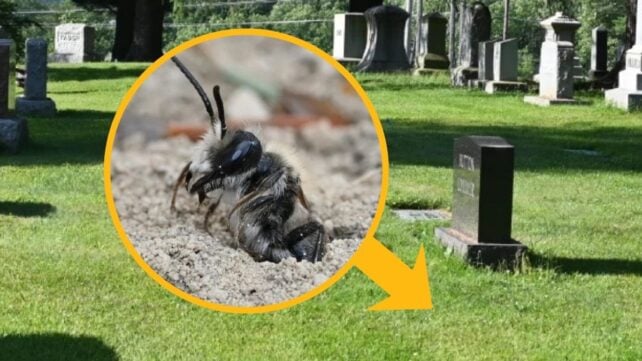
A huge population of around 5.5 million bees has been discovered living beneath a cemetery in New York.
"I'm sure there are other large bee aggregations that exist around the world that we just haven't identified, but in terms of what is in the literature, this is one of the largest," says Steve Hoge, biologist at Cornell University.
Read the full story here.