Chronic tinnitus may increase stress levels by keeping the body that much closer to a fight-or-flight response to sound, a new study suggests.
By carefully studying the facial expressions of people with and without tinnitus, scientists have found a pattern of altered involuntary facial movements and pupil dilation associated with distress and threat assessment in those with the condition.
Moreover, by cataloguing the facial movements of their tinnitus participants, the team of researchers, led by neuroscientist Daniel Polley of Mass General Brigham in the US, was even able to predict the severity of the ear-ringing condition.
Related: Tinnitus Is Somehow Linked to a Crucial Bodily Function
The results suggest that people with debilitating chronic tinnitus experience heightened vigilance and react to normal, everyday sounds as though they were threats.
"For the first time," Polley says, "we directly observed a signature of tinnitus severity. When we began this study, we didn't know if sounds would elicit facial movements; so, to discover that these movements not only occur, but can provide the most informative measure to date of tinnitus distress, is quite surprising."
Chronic tinnitus is a condition in which a constant buzzing, clicking, or high-pitched ringing can be heard in one or both ears (but not by anyone else).
No one knows what causes it, and it currently has no objective clinical biomarkers, since tinnitus is a purely subjective experience, like migraine.
"Imagine if cancer severity were determined by giving patients a questionnaire – this is the state of affairs for some common neurological disorders like tinnitus," Polley says.
This makes it difficult to diagnose and even more challenging to track over time. There is also no known cure, although some sufferers report symptom reductions or better symptom management after trying sound therapy, cognitive behavioral therapy, or tinnitus retraining therapy.
Almost everyone will experience tinnitus at some point in their lives, but for most people, it will be temporary.
Chronic tinnitus is when the condition lasts for at least six months, and it affects more than 120 million people around the world.

It's also notoriously frustrating for patients, and treatment options are inconsistent, which can leave some people feeling dismissed or unsupported in clinical settings.
In some cases, it's severe enough to disrupt sleep and interfere with daily activities, with strong links to depression and anxiety.
Any clue that can help doctors understand the condition may bring us closer to knowing its causes, which could then help with the development of new, more effective treatments.
Human faces undergo a phenomenon known as microexpressions: vanishingly brief, involuntary twitches that can reveal strong emotions, for example.
Recently, scientists have also made headway in using facial cues to diagnose the severity of conditions that lack clear clinical biomarkers, such as severe depression.
Polley and his team adopted a similar approach for studying tinnitus. They recruited 97 study participants – 47 with tinnitus or sound sensitivity, and 50 without – and made them listen to a range of sounds from a previously compiled database of emotionally evocative audio recordings.
These sounds all have assigned associations, from positive sounds such as soft music and laughter, through more neutral sounds such as background chatter, rustling paper, and kitchen sounds, to unpleasant sounds such as screeching metal, sirens, and alarms.
Related: Tinnitus Could Be Our Brain's Way of Coping With Nerve Damage
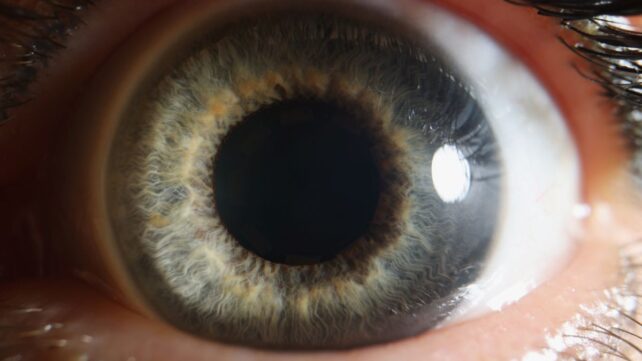
While listening to these sounds, each participant had their facial expressions tracked, and their eyes recorded to look for signs of pupil dilation as the body shifts into threat assessment mode. Then, AI software was used to tease out tiny changes in facial expression that human eyes might miss.
The control group of tinnitus-free participants tended to show microexpressions consistent with the emotional association of each sound: a slight smile for pleasant sounds, and a slight frown for unpleasant sounds.
However, the tinnitus participants showed markedly reduced facial changes compared to the control group, regardless of how pleasant or unpleasant the sound was. Meanwhile, their pupils dilated extra wide for all sounds – again, no matter the category. The pupils of the control group dilated only for the most unpleasant, loudest sounds.
Each of these markers individually – the lack of facial expression and the exaggerated pupil response – enabled the scientists to gauge not just whether or not a participant had tinnitus, but how severely they were impacted.

A popular idea in tinnitus research is that, in response to hearing loss, the brain 'turns up' its auditory pathways to compensate (although not all cases of tinnitus are associated with hearing loss).
However, this proposed mechanism cannot predict the severity of the condition, suggesting it may be only part of the overall picture.
Chronic tinnitus is likely to be a complex condition, with a wide range of causes and presentations. The work of Polley and his team fills in some of the blanks.
"These biomarkers get to the root of the distress," Polley says. "While imaging might show hyperactive brain regions in tinnitus patients, these biomarkers reveal body-wide threat evaluation systems that are operating outside of their normal range, leading to the distressful symptoms they experience."
The research was published in Science Translational Medicine.