
Twins appear to experience developmental delays in early childhood compared with their single-born siblings, potentially influencing their long-term learning behaviors.
A unique new analysis offers evidence that twins display disadvantages in cognition, language, and social-emotional skills as they approach school age. However, twins seem to surpass their siblings in language skills by the age of 7.
Overall, the findings suggest that twins could benefit from early support to reduce learning disparities and improve their chances of achieving academic success.
"The twin experience creates a specific set of challenges that are often overlooked," explains Emily Wood, a developmental psychologist from King's College London and the study's lead author.
"When you have two children of the exact same age, they are in direct competition for everything – from toys and food to a parent's one-on-one attention. This is a challenge inherent to being a twin, and it's something parents of single children don't have to navigate in the same way."
Previous evidence for developmental delays in twins is mixed.
A meta-analysis of 15,000 twin pairs and 1.5 million singleton children suggested that twins scored several IQ points lower than singletons (single-born children) during childhood and adolescence. Other studies, however, have found minimal differences.
Yet this most recent study, led by researchers from the University of York in the UK, is unique in comparing twins and singleton children from the same family, reconciling common confounding factors such as genetics, environment, and household variables.
The researchers analyzed findings from the Twins Early Development Study (TEDS), drawing on data from 851 twin pairs and their younger singleton siblings from the UK.
The data, gathered between 1996 and 2004, tracked and compared the children's developmental progress at 2, 3, 4, and 7 years of age across three domains: language, cognition, and social-emotional skills.
At ages 2, 3, and 4, parents completed questionnaires assessing their children's development. At age 7, the data were collected directly from the children via telephone.
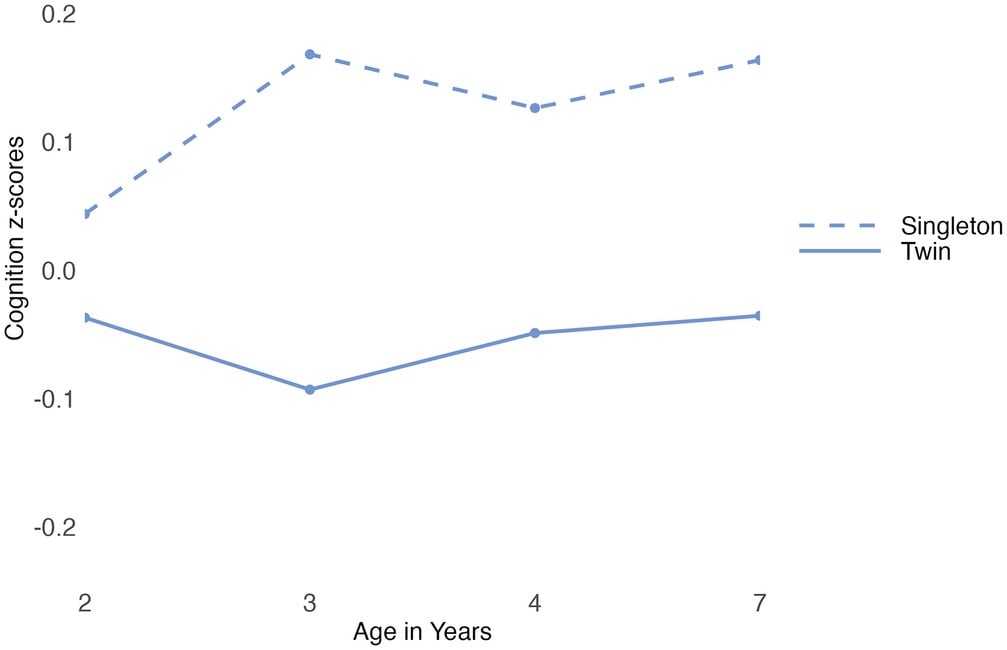
Singleton children scored higher than twins across all ages in cognition tests, which included conceptual questions and puzzle tasks.
Singletons of all ages also exhibited higher scores in social-emotional development, showing more prosocial behaviors as well as fewer conduct and emotional problems.
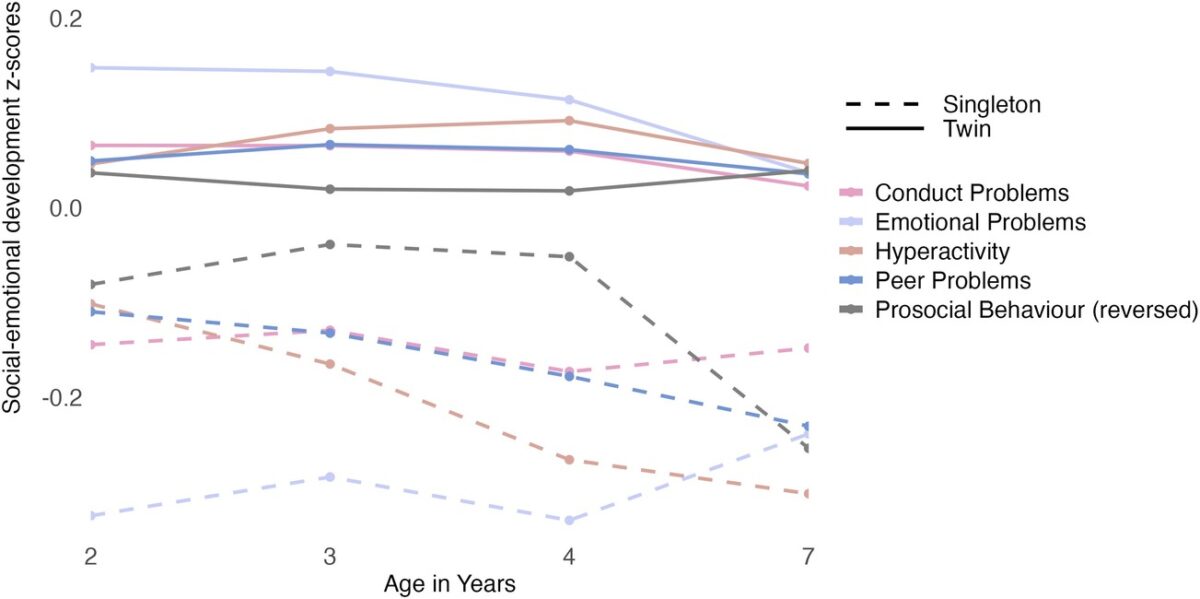
The differences in some social-emotional issues, like hyperactivity and peer problems, actually increased as the children reached school age.
However, even though twins scored lower than singletons in early-age language skills, they caught up to, and exceeded, their single siblings in this domain by age 7.
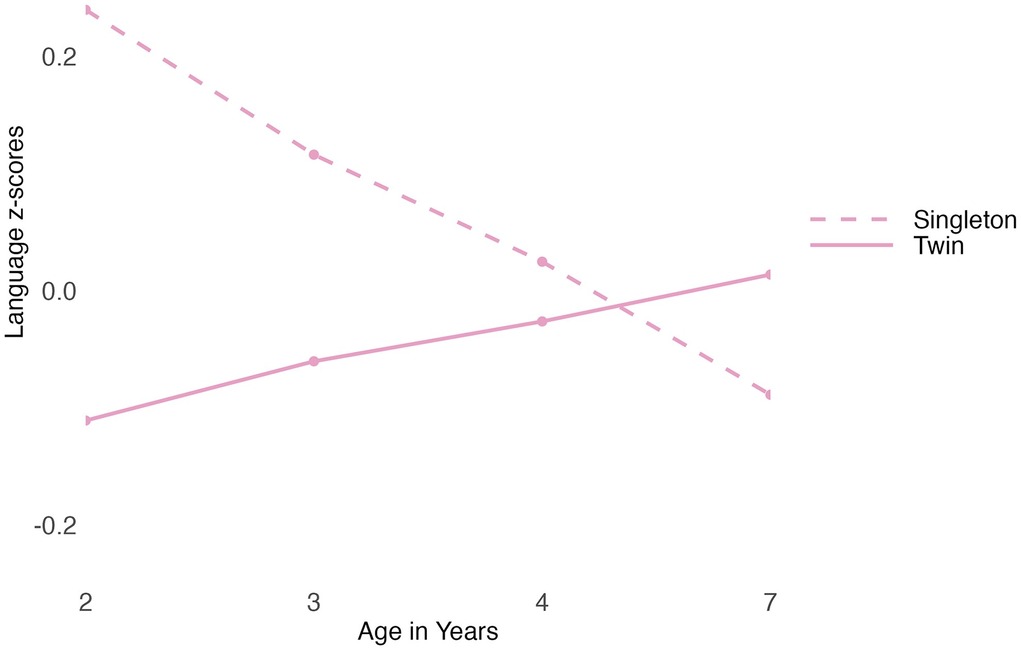
The twins' apparent disadvantages were small to medium in effect sizes but significant, the researchers say.
Numerous factors may influence twins' developmental patterns. As an example, parents may lavish more attention on younger siblings because older children may be more self-sufficient.
Plus, twins must share their parents' attention. Additionally, parenting twins can be more emotionally, physically, and financially stressful. As a result, twins may be talked to and held less by their parents.

"These and similar strains have been found to affect the speech that parents direct at their twins, which includes shorter, less sophisticated utterances than speech directed at singletons," the researchers explain.
This research also evokes enigmas.
"First, twins share the company of their co-twin from conception; they start life by sharing a womb, and monozygotic twins, originating from the same fertilized egg, often even share the same placenta, including in some cases even the same amniotic sac," the team writes in the study.
Therefore, playing with a child who is similar to oneself in every way may make twins more reluctant to interact with unrelated children.
Related: Identical Twins Can Have Significant IQ Differences, Shock Study Reveals
Additionally, twins are often identified as a pair, rather than as individuals, and are frequently compared to one another. This may help them forge connections, but may also affect each child's sense of identity.
As a result, twins may benefit from additional support in their early years to mitigate developmental delays in the key skills that influence life outcomes. Failing to close this learning gap can lead to long-term maladaptive behaviors, such as avoidance and a lack of motivation.
Preemptive educational initiatives may be more essential now as the rate of multiple births is increasing. Twin births are becoming more common due to trends like older age at pregnancy and an increase in IVF births.
This study was published in Child Development.