If the animal kingdom is anything to go by, love is, indeed, a many-splendored thing. We humans may have slightly over-complicated the process, with our penchant for ever-changing hairstyles and a plethora of complex mating rituals, including, for better or worse, Valentine's Day.
But we're not the only animals who take the business of making love very, very seriously.
Put a ring on it
In 1995, Japanese divers spotted 'mystery circles' on the ocean floor that turned out to be the handiwork of the male pufferfish in the Torquigener genus. Female pufferfish, it seems, appreciate artistic gestures when it comes to romance.
The male pufferfish digs a complex pattern of valleys and peaks in a circle, and decorates the peaks with fragments of shell. The final product is certainly impressive: A ring of intricate sandy markings encircles the middle patch of fine sand, perfect for laying eggs in.
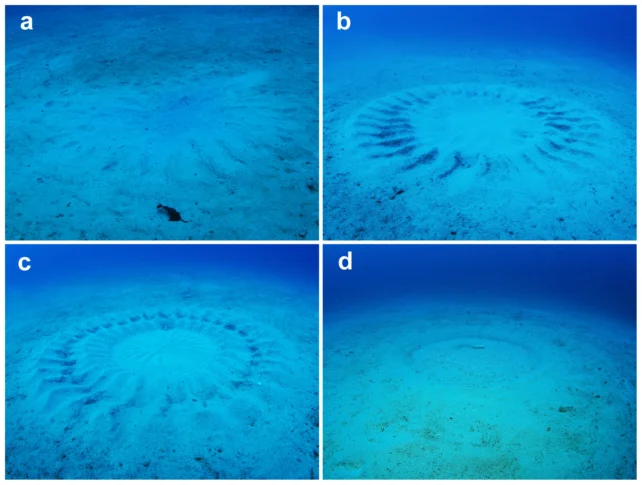
"The circular structure not only influences female mate choice but also functions to gather fine sand particles in nests, which are important in female mate choice," scientists explained in a 2013 paper describing the discovery.
It takes the fish about seven to nine days to construct this throne for his queen, but after mating, the elaborate artwork is left abandoned, with males starting entirely from scratch each time.
I've got you under my skin
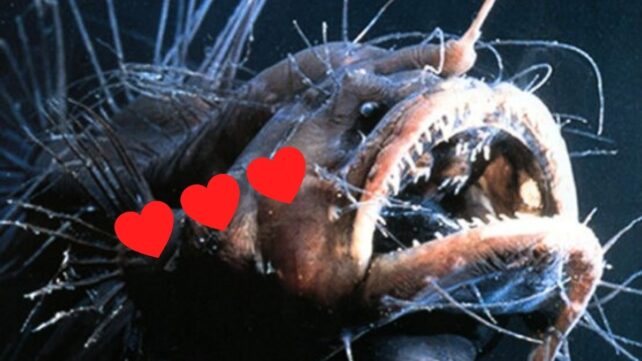
The male deep-sea anglerfish (Ceratioidei) knows that when he finds a decent woman in the vast and dark pelagic zone, he'd better hold on tight.
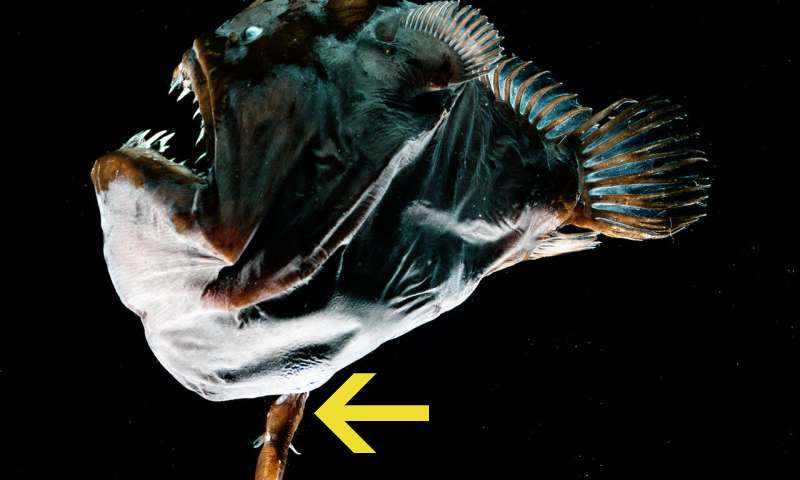
He's very small compared to his sexual counterpart, and lacks the signature light-up lure which the female fish uses to attract and eat her prey. His whole MO, therefore, is sniffing out a large, luminous lady, to whom he clings with his small, sharp teeth – in some species, becoming permanently fused to her side.
The female receives a lifetime's supply of sperm in exchange for doling out crumbs to her suitors (she usually collects quite a few hungry little males in her travels). Co-dependent, much?
A token of my gratitude
Female argonauts are similarly gigantic compared to their male counterparts: they can grow to more than 20 centimeters, whereas males only reach a meager two centimeters.
What they lack in size, these cephalopod gentlemen make up for with their hectocotylus, a fully-detachable arm used to deliver sperm to the formidable females from a safe distance.
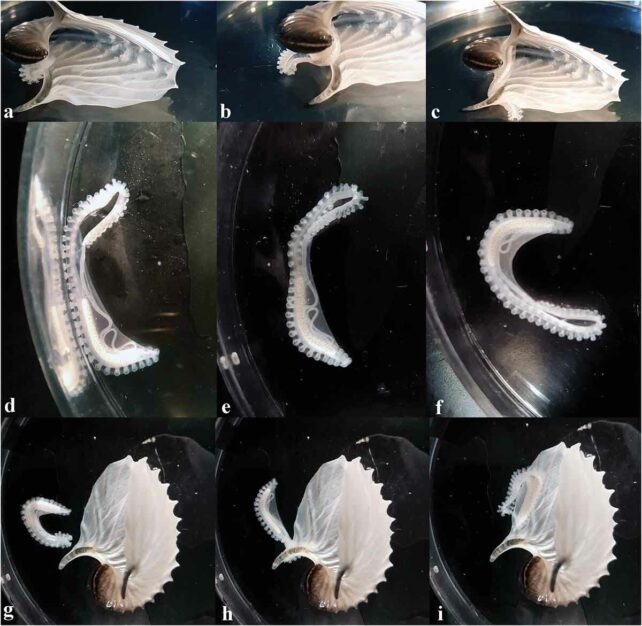
Scientists found one of these 'detachable penises', still alive and fully mobile even after seven hours without water, wriggling around inside an empty brood case that had washed up on a beach in Sicily. Even after the scientists removed it from the case, it found its way back, perhaps in search of shelter or eggs to fertilize. Now that's dedication.

Sweet little lies
In certain spider species, it is customary for male suitors to offer their female of interest a 'nuptial gift', a kind of spider dowry, usually in the form of a silk-wrapped fly or other delicious treat. The gift is meant to impress the female sufficiently that she decides not to eat him.
However, the bridal gift spider (Pisaura mirabilis), literally named for its gift-giving tendencies, isn't always as generous as it may seem. One study showed males sometimes give their mates a decoy gift: the empty exoskeleton of an insect, or an inedible part of a plant.
This deception is successful enough that it's persisted through spider evolution. But it's not ideal: The females wise up to the ploy pretty quickly, ending mating prematurely. This shorter mating reduces sperm transfer and the trickster's reproductive success compared to males who offer bona-fide gifts.
Related: An Anthropologist Made a Mammal 'Monogamy Scale'. Here's Where Humans Rank.
Throwing shapes
Birds of paradise are probably the most notorious case of sexual selection, making males look, frankly, quite ridiculous. Female birds of paradise have a taste for dandyism, it seems.
Take this fellow, for instance. Through many generations of trying to best appeal to the female gaze, he has essentially become a black oval with a wide-mouthed turquoise gape. This is the ideal male body. You may not like it, but for the Vogelkop lophorina (Lophorina superba), this is what peak performance looks like.

Penis fencing
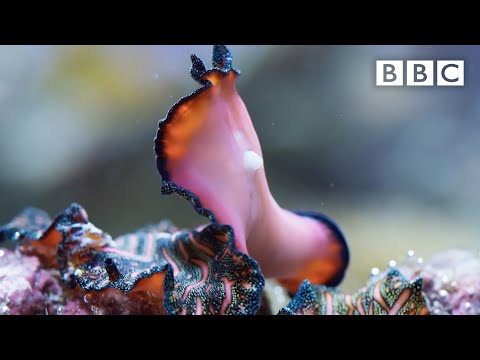
Even hermaphrodites can enjoy the thrill of romance. In fact, for the flatworm Pseudobiceros hancockanus, lovemaking really is something of a sport.
Since both members of a mating pair have the ability to provide sperm and become pregnant, they decide whose turn it is by battling it out with their two-headed, penis-like stylets, in what looks very much like fencing. Whoever gets stabbed by the other's stylet first will be the mother of their offspring, unless of course it's a draw, in which case, the eggs of both combatants will be fertilized.
Evolution has a lot to answer for. Every single one of these mating strategies persists because it worked, enabling the happy couples to transmute their "love" into healthy offspring that continue to carry on their parent's fruitful – and sometimes freaky – courtship rituals.