
Blinking handles essential eye maintenance, and we usually blink multiple times a minute without thinking much about it, though you might be more self-conscious about your own after the results of a new study on their connection to cognitive load.
Researchers in Canada found we tend to blink less when we're listening to someone speak, especially when there's background noise.
"We wanted to know if blinking was impacted by environmental factors and how it related to executive function," says Pénélope Coupal, a psychology researcher at Concordia University in Montreal.
"For instance, is there a strategic timing of a person's blinks so they would not miss out on what is being said?"
Related: Why Blue Eyes Aren't Really Blue (And What Makes Green So Rare)
To find out, the study team conducted two experiments with a total of 49 participants, tracking the number of blinks registered as volunteers heard sentences being read aloud.
Two key variables were adjusted across the experiments: lighting conditions and background noise, making it harder or easier to hear.
Across all of the participants, blink rates dropped noticeably and consistently while the sentences were being read out loud, compared to before and after. When higher levels of background noise were involved, blink rates dropped further.
There were no significant changes in blinking rates across different lighting conditions, suggesting it was the cognitive effort of understanding speech, rather than visual strain, that influenced blinking.
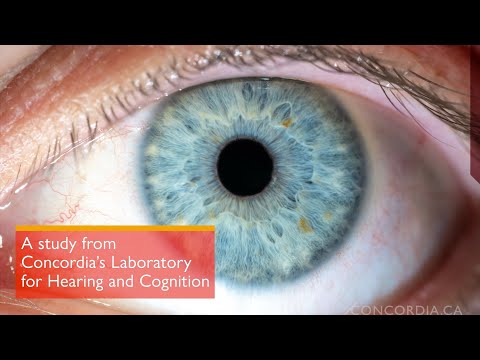
Even though average blink rates between individuals varied, the tendency to reduce the number of blinks per minute was consistent across the group. In line with findings from previous studies, this suggests we blink less when our brains are working harder to make sense of sounds.
"We don't just blink randomly," says Coupal. "In fact, we blink systematically less when salient information is presented."
The researchers didn't study why thinking and blinking are linked, but they have some ideas. For example, the brain may slow blinking rate so there are fewer interruptions to the visual information coming from our eyes.
"Our study suggests that blinking is associated with losing information, both visual and auditory," says psychology researcher and acoustics engineer Mickael Deroche, from Concordia University.
"That is presumably why we suppress blinking when important information is coming."

There's also research to suggest that blinks act as a sort of mental pause for the brain as it processes written sentences or responds to emotional cues. Less frequent blinks could be a sign of a brain paying attention.
"It is possible that a similar regulatory mechanism is at play within the auditory system, adapting the principles observed in vision to support auditory processing by optimizing blink timing to reduce disruptions in auditory attention," the researchers write in their paper.
Looking ahead, the team suggests blink patterns could one day be used as another way of assessing cognitive load and cognitive processing, understanding when the brain is busier, and perhaps spotting signs of cognitive issues – similar to speech and hearing.
However, scientists will need to collect a lot more data to see whether those connections hold.
"To be fully convincing," Deroche says, "we need to map out the precise timing and pattern of how visual [and] auditory information is lost during a blink. This is the logical next step."
The research has been published in Trends in Hearing.