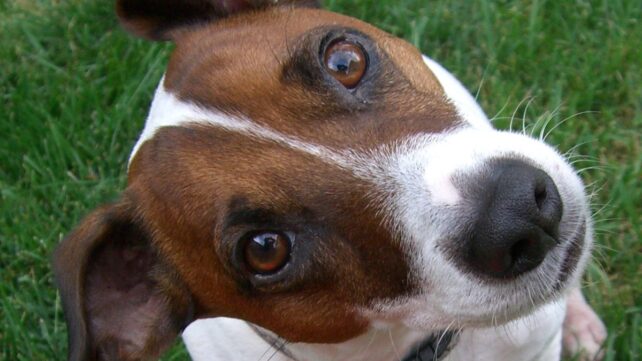
Dogs have far smaller brains than their wolf relatives, and now a study led by researchers in France has plotted a timeline for when this shrinking – sometimes considered a mark of domestication – might've begun.
According to their results, it was well underway by at least 5,000 years ago – and appears to align with humankind's move into settled, agricultural societies.
Brain tissue doesn't preserve well in fossils, but bones do. The space inside the cranium – the part of the skull also known as the 'braincase' – is a standard approximation for brain size, since the brain usually fills this cavity.
Zooarchaeologist Thomas Cucchi from France's National Museum of Natural History and colleagues used CT scans to measure the volume of the cranial cavities of 22 prehistoric wolves and dogs from Belgium and France. And to keep the comparison fair, they took the same approach for the 163 specimens of modern dogs and wolves included in the study.
For each canid in the study, they also calculated the proportion of the brain cavity to the animal's skull length. This allowed them to consider brain size relative to the animal's body size: a brain size that is normal for a small dog would be considered extremely small in a larger dog, for instance.
Two 'protodogs' in the mix – one from Belgium, about 35,000 years old, and one from France, about 15,000 years old – had relative brain sizes equivalent to Pleistocene, Neolithic, and modern wolves.
These protodogs represent the early phase of humankind's relationship with dogs, and their divergence from wolves (though the two groups are, to this day, still considered members of the same species). But they predate the advent of agriculture: a turning point in human evolution, and potentially dogs, too.
By around 5,000 years ago, dogs' brains were drastically different from those of their wild ancestors.
Dogs from the Late Neolithic period had brains about half the size of wolves from the same era. These ancient dogs had relative brain sizes comparable to those of modern terriers and toy breeds (e.g., pugs, chihuahuas, and Pekingese).
The authors suggest this could be evidence for early behavioral selection, with humans choosing to care for and breed dogs with traits that benefit their own interests.
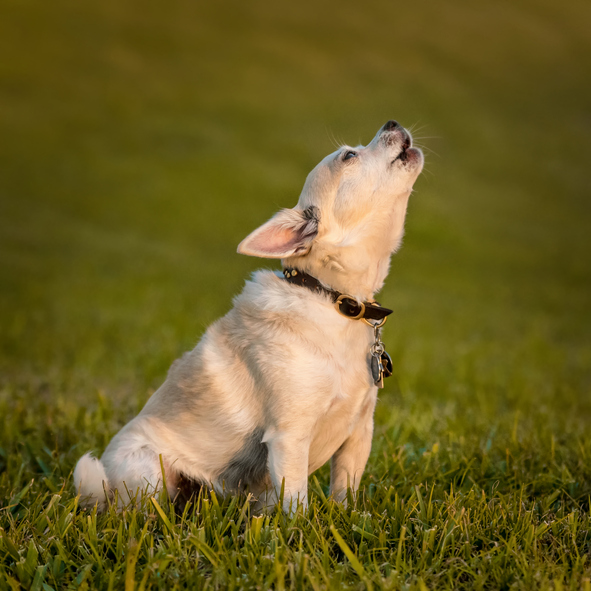
"This drastic brain size reduction in the Neolithic provides important clues for their potential use for alerting the settlement against threats, among other functions such as scavenging, a convenient source of meat, or hunting," the authors write.
Though it's just speculation at this point, the authors propose that a smaller brain size could have also required an overhaul of brain tissue allocation: proportionally less cortex (the part of the brain involved in perception, thought, and attention), and more subcortex (the center of 'basic' functions like homeostasis, movement, and emotion).
This reallocation, they think, could have really changed the dogs' temperaments in ways that may have benefited the Late Neolithic humans of Western Europe.
More anxious and wary dogs would have made great alarm systems, for instance, in the emerging settlements of the newly agrarian society. On the other hand, these features could have made the dogs more difficult to train.

But far more research will be needed to uncover what these dogs were really like: brain size doesn't always equal brain power, and how these traits truly entwined with human culture will require more archeological evidence.
It also stands in stark contrast to the giant flock-guarding dogs that have been considered among the earliest dog 'breeds'.
Related: Oldest Dog DNA Ever Found Reveals How Ancient Our Friendship Really Is
"To further document the timing and the cultural contexts of these changes, more Mesolithic and Neolithic dogs across Europe need to be examined," the authors acknowledge.
The research was published in Royal Society Open Science.