Thousands of years ago, in what is now Siberia, a mysterious ancient culture laid some of their dead to rest in an enormous burial mound.
The kurgan, now known as Tunnug 1, was richly appointed – and its contents possibly gruesome.
The royal tomb contained elaborate grave goods, as well as the remains of dozens of sacrificed horses, many placed with human bones in arrangements that evoke ancient accounts of ghostly riders standing guard over Scythian kings.
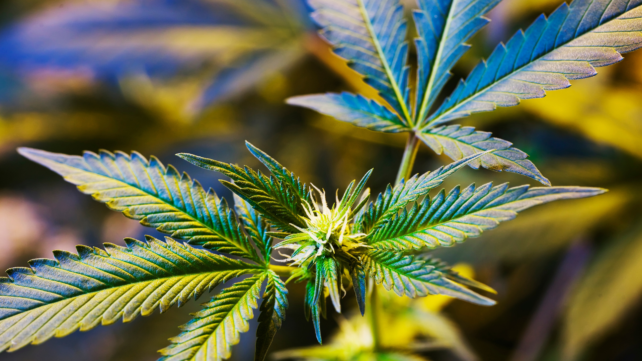
Now, a new discovery suggests that a very familiar substance may have played a role in these funerary rites – cannabis.
And not just the seeds buried with the dead. Analysis of human hair from the Arzhan Scythians interred in the kurgan has revealed compounds associated with the plant's intoxicating effects.
The findings, reported by an international study led by archaeologist Gino Caspari of the University of Bern in Switzerland, provide the earliest securely dated direct evidence yet of psychoactive cannabis use.
And it may have been used as part of the sacrificial rites.
"In this princely tomb, the burials were accompanied by extensive horse sacrifices and, most likely, human sacrifices as well," Caspari says.
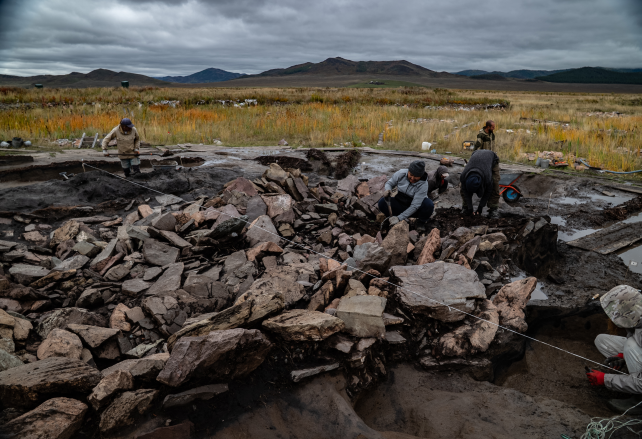
Tunnug 1 lies in the Uyuk Valley of southern Siberia, a region sometimes called the Valley of the Kings for the huge number of ancient Scythian burial mounds that can be found there.
Dating to around the early eighth century BCE, the monument is among the earliest known royal tombs associated with the Scythians, the horse-riding peoples whose cultures eventually spread across much of the Eurasian steppes – the Arzhan culture at the very onset of the Scythian period.
It was discovered in the 2010s, and archaeologists rapidly realized they had found something special – one of the oldest known Scythian royal tombs. And what a tomb it was.
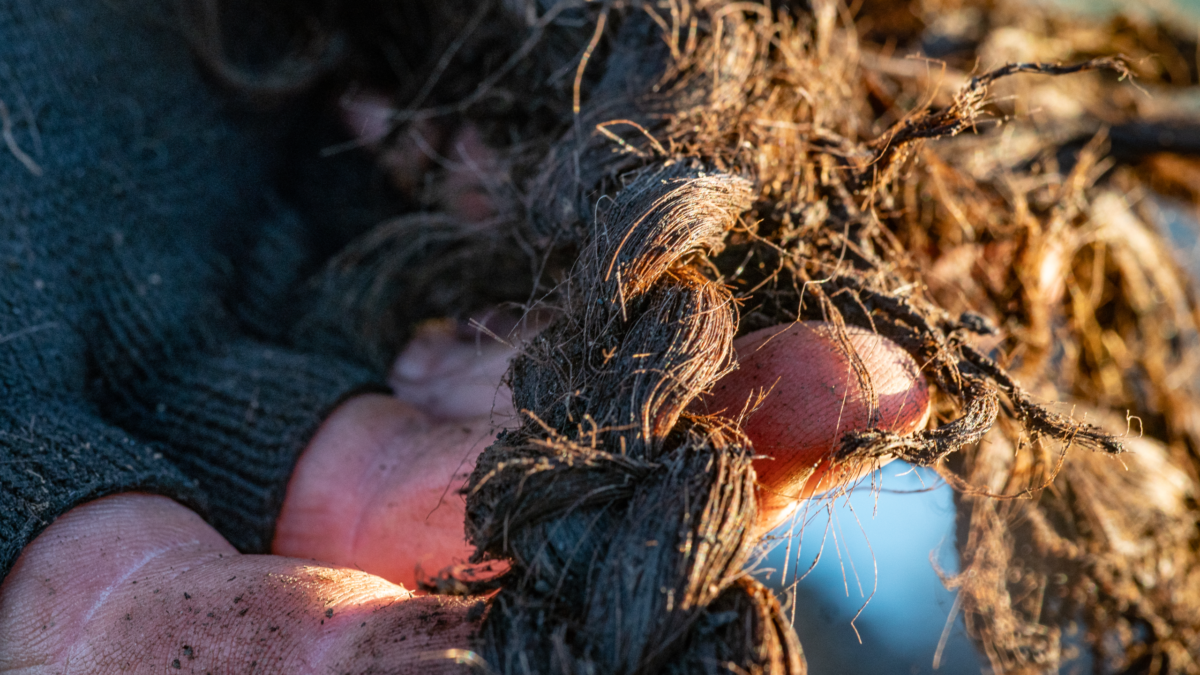
Measuring roughly 140 meters (460 feet) across, the enormous mound concealed an elaborate arrangement of wooden burial chambers, along with bronze ornaments, beads, weapons, and horse-riding equipment.
Its scale and intricate construction suggest that the people who built it commanded considerable resources.
The new investigation focused on six individuals interred in four wooden burial structures within the mound – and something rather more humble than you might usually expect of a 'princely burial'.
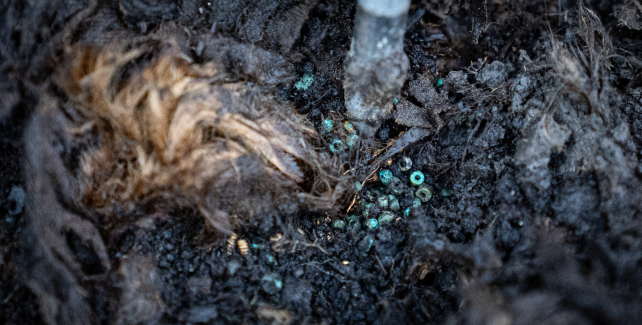
In and around the human burials, archaeologists discovered an extraordinary quantity of cannabis seeds – more than 1,000, many still intact after nearly three millennia.
The seeds were small, resembling those of wild cannabis rather than modern domesticated varieties. And although cannabis is often associated with warmer climates, the plant grows naturally across temperate Central Asia, so it may have been gathered locally.
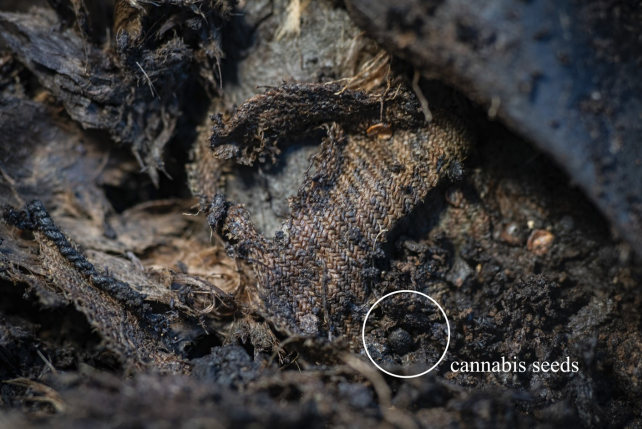
Their presence raised questions. Plant seeds don't tend to be included in elaborate burials unless they are culturally important in some way. So what was so important about these seeds?
To find out, the researchers needed to dig a little deeper – chemically, anyway.
Cannabis plants vary in their production of intoxicating compounds, and the seeds alone couldn't reveal whether these ancient plants had been used for their psychoactive effects.
But the researchers had another clue. Unlike many other soft tissues, hair is remarkably resistant to decomposition – and, as hair grows, traces of substances circulating through the body can become trapped within its keratin structure, creating a chemical record that remains long after death.
Human hair the tomb certainly had, too – preserved so perfectly it looks like it could have been taken from a living head yesterday, still bound up in braids.
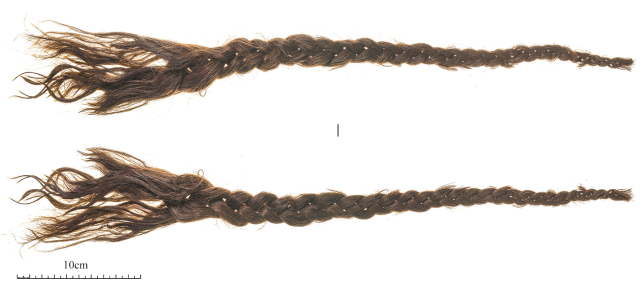
It was too good an opportunity.
The researchers took samples of the hair and subjected them to mass spectrometry, looking for the telltale chemical signatures of cannabinoids preserved within.
In every one of the hair samples they tested, the results revealed clear chemical signals matching cannabinol (CBN), a compound that forms when tetrahydrocannabinol (THC) – the main intoxicating ingredient in cannabis – breaks down over time.
The researchers also detected much weaker signals consistent with THC itself.
Together, the findings provide compelling evidence that these ancient people had been exposed to psychoactive cannabis – likely on purpose.
"The molecular traces in the hair and the cannabis seeds come from the same grave and suggest that cannabis was used for its intoxicating properties," Caspari says.
That's a tantalizing result – because it raises more questions than it answers.
While it seems pretty clear that the deceased had been exposed to cannabis, we don't know how – whether it was eaten, smoked, inhaled from passive exposure, or infused into a nice pot of tea.
We also don't know what they had used it for… although the paper offers an intriguing possibility.
"The likely involvement of human sacrifice leading to the creation of a spectral cavalcade would have potentially made the plant a useful agent to calm individuals who were to be included in the rituals," the researchers write.
The researchers are now sequencing the ancient cannabis remains, hoping to learn more about whether the plants were cultivated and how cannabis spread across the ancient world.
In the meantime, it serves to mark a new chapter in the long history of humanity's relationship with psychoactive substances.
"Early cannabis use thus emerges not simply as a pharmacological curiosity but as an indication of how ancient societies experimented with and ritualized the psychoactive qualities of the botanical world," the researchers write.
The research has been published in Science.
This article was fact-checked by Fiona MacDonald and edited by Fiona MacDonald. While we pride ourselves on our process, we are only human. If you spot a mistake, please let us know.