
A very rare type of cancer is on a sharp upward trajectory in younger generations, and no one knows why.
Recent research in the US reveals that Gen X-ers and Millennials are three to four times more likely than older generations to be diagnosed with cancer of the appendix, the finger-sized organ hanging off our digestive tract that few think about unless something goes awry.
Historically, cancers of the appendix almost always impacted older people, but today, 1 in every 3 appendiceal cancer patients is diagnosed under the age of 50.
Related: Most People Develop Diverticulosis in Their Gut by Age 80 … So What Is It?
The lead author of two recent analyses, epidemiologist and molecular biologist Andreana Holowatyj from Vanderbilt University, wants to know why. For years now, she has studied a sharp uptick in appendix cancers across generations.
"When we think about the significant progress we've made in other cancers, there's a big gap," she said in 2024.
A few years before, in 2020, Holowatyj led a national analysis that found the incidence of malignant appendix cancer in the US increased by 232 percent between 2000 and 2016. Every generation saw an uptick.
For a long time, the appendix was dismissed as vestigial, a leftover organ with no real function. But recent evidence suggests it may not be so useless after all.
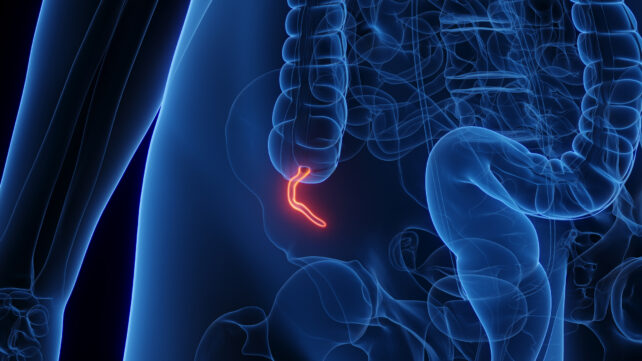
Inflammation of the appendix, or appendicitis, is the most common complication associated with the organ, and, on very rare occasions, cancer is found when the appendix is removed.
The progression of appendix cancer can be insidious. The warning signs, such as abdominal pain, bloating, and pelvic pain, can be easily confused with other conditions that are far more common, like digestive issues or colorectal cancers, the latter of which impact roughly 150,000 people in the US yearly.
By comparison, there are only about 3,000 cases a year of appendix cancer. As a result, the disease lacks research and awareness.
"Albeit cancer of the appendix is rare, it is important for individuals who have these symptoms to see a health care professional," says Holowatyj.
"Ruling out the possibility of an appendix cancer diagnosis, or diagnosing it early, is important for this cancer as we continue to learn what factors may be contributing to this worrisome trend."

Currently, there are no standardized screening guidelines for appendix cancer, and available treatments are limited. Appendiceal cancers can easily be missed, according to Holowatyj, especially as managing appendicitis without surgery is becoming more common.
Sometimes it can present like hernias, fibroids, or cysts. In women, the cancer can be mistaken for endometrial lesions.
"Appendiceal tumors harbor different molecular features from colorectal cancers," explained Holowatyj in 2020.
"They present and spread differently, don't respond to the chemotherapy most colorectal tumors do, and they disproportionately affect younger adults."
Related: Sperm Donor With Rare Cancer-Risk Gene Fathers Nearly 200 Children
According to Holowatyj and her team's most recent research, cases of appendix cancer tripled for Americans born between 1976 and 1984, compared to those born between 1941 and 1949. Meanwhile, for those born between 1981 and 1989, they quadrupled.
Scientists are not yet sure why that is.
Holowatyj and her colleagues suspect that changes in health behaviors, like diet and physical activity, inherited gene variants, and possible environmental exposures, such as plastic or chemical pollution, may contribute to the development of the condition.

Related: Vomiting Syndrome Linked to Cannabis Is on The Rise in The US
University of Colorado surgical oncologist Steven Ahrendt, who was not involved in the research, is not surprised by the recent increase.
"I certainly see patients in their 20s and 30s who have advanced appendix tumors that we take care of," he said in June, commenting on Holowatyj and her team's most recent study.
"We know that colon cancer has been increasing in incidence in young adults, so it stands to reason that the same factors are operating in patients with appendix cancer."
Other recent studies have found a surge in cancer in young people in recent years, with the rate of diagnosis in under-50s jumping to nearly 80 percent in three decades, according to a 2023 study.
A 2022 international review found that gastrointestinal cancers were the forerunners, with the most significant increases seen in cancers of the bowel, appendix, bile duct, and pancreas.
While the reasons for this are yet to be established, experts believe that diet and poor sleep may play a role, with ultra-processed foods and alcohol looking particularly suspicious.
So-called forever chemicals contaminating drinking water and microplastics have also been implicated in cancers more generally.
Holowatyj and her colleagues plan to continue studying who is most at risk of appendix cancer, and why.
"As a rare cancer, appendix cancer garners limited attention. Our team is passionately committed to driving marked advances in our understanding of this disease for our patients," she says on her Vanderbilt lab website.
The studies were published in Gastroenterology and the Annals of Internal Medicine.