Most of us can relate to feeling uncomfortable when someone scrapes their nails down a chalkboard.
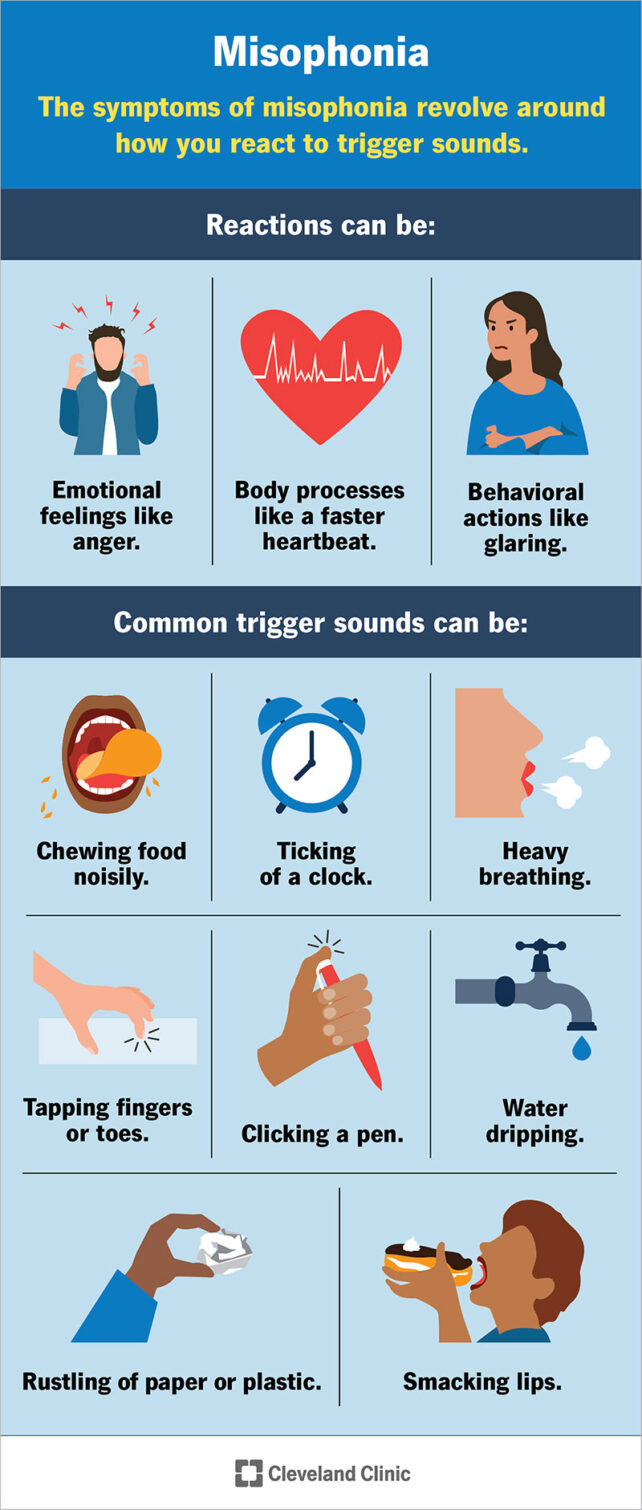
For those with the condition misophonia, sounds like slurping, snoring, breathing, and chewing can draw an equally stressful response.
A study published in 2023 by researchers in the Netherlands suggests the condition shares genes with mood disorders such as anxiety, depression, and PTSD.
Related: Tinnitus Is Somehow Linked to a Crucial Bodily Function
University of Amsterdam psychiatrist Dirk Smit and colleagues analyzed the genetic data from the Psychiatric Genomics Consortium, UK Biobank, and 23andMe databases.
They found people who self-identified as having misophonia were more likely to have genes associated with psychiatric disorders, as well as tinnitus.
Watch the clip below for a summary of their findings:
Patients with tinnitus – a persistent, shrill ringing in the ears – are also more likely to have psychological symptoms of depression and anxiety.
"There was also an overlap with PTSD genetics," Smit told Eric W. Dolan at PsyPost.
"This means that genes that give a sensitivity to PTSD also increase the likelihood for misophonia, and that could point to a shared neurobiological system that affects both. And that could suggest that treatment techniques used for PTSD could also be used for misophonia."

This doesn't mean misophonia and these other conditions necessarily have shared mechanisms, only that some of the genetic risk factors may be similar.
Previous research found people who experience misophonia are more likely to internalize their distress.
Smit and team's research also backed this up, showing strong links with personality traits such as worry, guilt, loneliness, and neuroticism.
Related: Misophonia Linked to Difficulty in Switching Emotional Focus
Responses to a triggering sound can range from irritation and anger to distress that interferes with everyday life.
"It has been argued… that misophonia is based on the feelings of guilt about the evoked irritation and anger rather than behavioral expressions of anger itself that causes the distress," write the researchers.
People with autism spectrum disorder ( ASD) were less likely to experience misophonia. This was unexpected as those with ASD often have a decreased ability to tolerate sounds.
"Our results suggest that misophonia and ASD are relatively independent disorders with regard to genomic variation," Smit and team write in their paper.
"It raises the possibility that other forms of misophonia exist, one that is mostly driven by conditioning of anger or other negative emotionality to specific trigger sounds moderated by personality traits."
Related: Study Traces Autism's Origin to The Rise of Human Intelligence
Smit and colleagues caution that their data were mostly sourced from European populations, so the same links may not show up in different populations.
What's more, misophonia was not medically diagnosed in their data samples, only self-reported, which may skew the results.
But their study also provides clues for where further research could focus to find the biological mechanism behind misophonia, which affects more of us than previously thought, according to a 2023 survey.
"The prevalence of misophonia in the UK is 18.4 percent," the researchers conducting the survey found, explaining that these results are only representative of the UK and may differ in other parts of the world.
The team used an algorithm to distribute survey respondents across sex (including non-binary), age, and ethnicity in a way that reflected UK census data to get a representative sample of people aged over 18.
The 772 volunteers completed a questionnaire about potential trigger sounds and their emotional responses, which probed 5 aspects of misophonia: a sense of emotional threat, internal and external appraisals, outbursts, and impact.

"Our survey captured the complexity of the condition," explained University of Oxford clinical psychologist Jane Gregory when the results were published.
"Misophonia is more than just being annoyed by certain sounds."
There were two key differences between those with misophonia and the general population.
Firstly, the negative feelings towards the sounds universally disliked were more often accompanied by anger and panic. They reported feeling trapped or helpless and unable to escape the noise.
Finally, people with misophonia were more likely to be bothered by sounds like normal breathing and swallowing, whereas these didn't prompt any reaction in the general population.
Gregory and the UK team think their survey may be a useful tool to help other clinicians identify those troubled by misophonia – a term that they report less than 14 percent of their sample population were previously aware of.
Related: Misophonia Turns Out to Be Way More Common Than We Thought
Studies like these are invaluable for understanding how our perception of the world links with our mind's ability to cope within it.
"We conclude that – based on the genetics of a common misophonia symptom – misophonia most strongly clusters with psychiatric disorders and a personality profile consistent with anxiety and PTSD," writes the Netherlands team.
This research was published in Frontiers in Neuroscience.
An earlier version of this article was published in October 2024.