
Large doses of vitamin C may provide our lungs with a degree of protection from the harmful effects of fine particles in the air. Referred to as PM2.5, in reference to their micrometer-wide particle size, these pollutants have been linked to issues such as asthma and lung cancer.
Researchers led by a team from the University of Technology Sydney (UTS) conducted a series of experiments on male mice and lab-grown human tissues to test the effects of vitamin C on tissues exposed to fine particulate matter, finding that the vitamin protected against some of the core damage to cells that air pollution typically does to the lungs.
In particular, vitamin C reduced the loss of the cells' mitochondrial 'power stations', reduced harmful inflammation, and prevented cells from being damaged by the effects of oxidative stress – attacks caused by unstable, reactive molecules that then lead to numerous malfunctions.
Related: High Doses of This Vitamin Could Help You Remember Your Dreams
Vitamin C is a known antioxidant, which is why the researchers were keen to test its protective effects against air pollutants.
"Antioxidant vitamin C supplementation was effective in mitigating the adverse effects of low-level PM2.5 exposure, which may be recommended to high-risk individuals," UTS graduate student Xu Bai and colleagues write in their published paper.
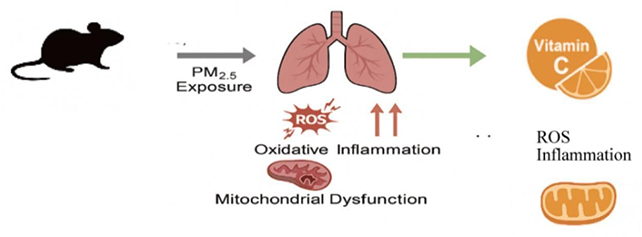
The results of the study are encouraging, but further research is needed to determine whether achievable doses of the vitamin protect living humans rather than lab-grown tissues and mouse models. The pollution levels and vitamin C dosage were carefully calibrated in the lab, and may not necessarily reflect the real-world exposure of most people.
"This study suggests that taking the highest permitted dose of vitamin C for you would potentially help," says molecular biologist Brian Oliver, from UTS. "But you would need to speak with your GP to make sure you're taking the right kind of supplement at the right levels and don't accidentally overdose on something else included in an over-the-counter supplement."

PM2.5 pollutants are commonly produced by traffic congestion, bushfires, and dust storms. In recent years, we've started to understand just how damaging these tiny particles can be to our health.
Besides the vitamin C discoveries, this study shows that even low levels of this type of air pollution can cause dramatic degradation on the cellular level. The PM2.5 pollution that the mice were exposed to was consistent with levels measured in much of the developed world.
Ideally, efforts need to be renewed to improve the quality of the air we're all breathing in every day. In the meantime, some extra vitamin C may be one way we could potentially protect ourselves from the effects of fine particulate matter.
"For the first time, we are providing hope for a low-cost preventative treatment to a global issue affecting hundreds of millions of people," says Oliver.
"We know now that there is no safe level of air pollution, which causes inflammation in the lungs and leads to myriad respiratory diseases and chronic illnesses, especially in the case of bushfires."
The research has been published in Environment International.