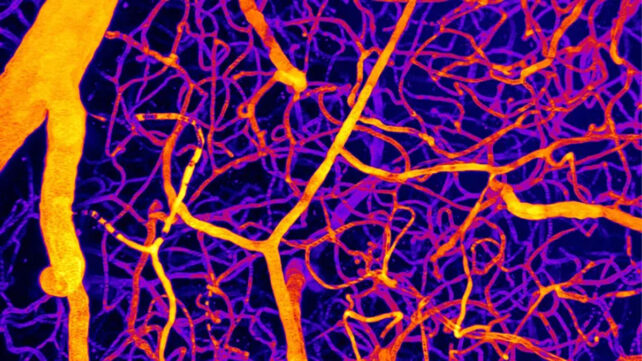
Reduced blood flow to the brain is thought to be a key factor in many forms of dementia, including Alzheimer's, and scientists have just identified a new mechanism regulating this flow, which may also help explain how it goes wrong.
A fat molecule helps maintain the system's balance, researchers at the University of Vermont discovered, and in mouse models of Alzheimer's disease, disruption of this balance led to problems.
Fixing the imbalance restored more normal blood flow, offering a hopeful new target for understanding and treating dementia-related brain changes.
"This discovery is a huge step forward in our efforts to prevent dementia and neurovascular diseases," says pharmacologist Osama Harraz.
Related: An Early Warning Sign of Dementia Risk May Be Keeping You Up at Night
Building on previous studies of endothelial cells, which line the inside of blood vessels, the team looked specifically at the protein Piezo1 – a pressure 'sensor' in the cells. When this sensor is overactivated, it can disrupt the brain's blood flow.
By analyzing brain activity in mice, they determined that a fat molecule called PIP2 acts as a brake on Piezo1. When brain cells are active, PIP2 levels are low, and Piezo1 is activated, increasing blood flow to where it is needed.

In mouse models of Alzheimer's, PIP2 was found to be abnormally low. This led to Piezo1 overactivating, boosting blood flow to areas where it wasn't required and disrupting overall circulation.
Crucially, when the researchers restored PIP2 levels in these mice, normal blood flow patterns were largely recovered.
It's still early days in understanding exactly how this mechanism works – this was a short-term study that only looked at mice – but it's another promising area to explore when it comes to investigating the underlying drivers of dementia.
Vascular dementia, in which impaired blood flow to the brain is a key contributor, is one of the most common forms of dementia, affecting millions worldwide. Blood flow problems are also thought to play a role in Alzheimer's disease, although the damaging buildup of toxic proteins is likely more significant.
As blood flow controls the delivery of oxygen and nutrients to the brain, the implications extend beyond dementia. Maintaining the right balance is essential for keeping the brain functioning properly.
"These findings establish the foundation for a therapeutic approach for improving cerebral blood flow in conditions where Piezo1 activity is altered and could have impacts beyond brain blood flow control," write the researchers in their published paper.

While our understanding of dementia is steadily improving, there's still a lot we don't know about how these diseases begin or why some people are more vulnerable than others. Even with vascular dementia, it's not clear what all of the contributing factors to blood flow might be.
Studies like this help fill in those gaps by identifying the molecular players involved.
Related: World's Most Common Pain Relief Drug May Induce Risky Behavior, Study Suggests
Next, the researchers plan to look at precisely how PIP2 interacts with Piezo1. Understanding that interaction will be crucial for controlling this system and potentially restoring healthy blood flow – and perhaps cognitive function too.
"We are uncovering the complex mechanisms of these devastating conditions, and now we can begin to think about how to translate this biology into therapies," says Harraz.
The research has been published in PNAS.