
If you've been pregnant in the past few months, you may have faced a dilemma. You wake up with a fever, a pounding headache, or back pain – and then pause. Is it safe to take paracetamol?
That hesitation isn't surprising. In September last year, the United States government sowed widespread doubt and anxiety by linking paracetamol use in pregnancy to autism and attention-deficit hyperactivity (ADHD).
But now a major new international study, published today in The Lancet, provides some much-needed clarity.
Related: World's Most Common Painkiller During Pregnancy Linked to ADHD
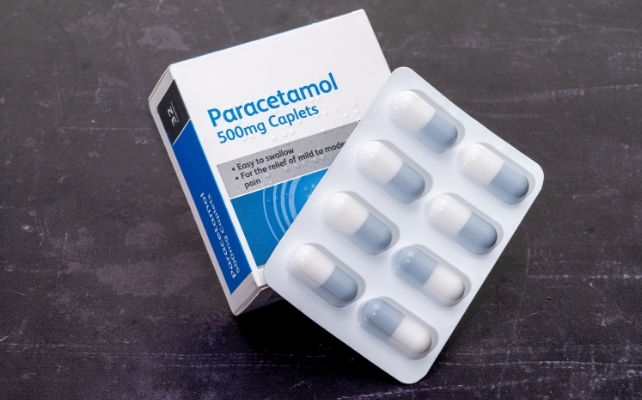
The research confirms that taking paracetamol – also known as acetaminophen, or by brand names such as Panadol and Tylenol – does not increase a baby's risk of autism, ADHD, or intellectual disability when used in pregnancy.
Paracetamol remains a safe and effective way to treat fever and pain at any stage of pregnancy.
What the new study looked at
The researchers carried out a large systematic review and meta-analysis, meaning they didn't just study one group of people. Instead, they pulled together results from many previous studies.
In total, they reviewed 43 studies that focused on whether children exposed to paracetamol in the womb were more likely to later be diagnosed with autism, ADHD, or intellectual disability.
Crucially, the authors prioritised sibling-comparison studies. Sibling studies compare siblings from the same family, where one used paracetamol during pregnancy and another didn't.
This approach produces higher-quality results for comparison. It helps researchers isolate what they're studying – in this case, paracetamol.
Siblings' shared genetics, home environment, and family background mean there won't be differences in these factors, which could distort results (known as "confounding factors").
The authors used extensive statistical methods to ensure their results were accurate.
So, what did they find?
Across these higher-quality studies, the researchers found no meaningful increase in the risk of autism, ADHD, or intellectual disability in children whose mothers used paracetamol during pregnancy.
This was true when the authors (a) looked only at sibling studies, (b) focused on studies with low risk of bias, and (c) examined children followed for more than five years.
In other words, when the strongest methods were used, the earlier alarming links simply didn't hold up. The study concludes that paracetamol, when used as directed, remains safe during pregnancy.
These results echo those of another landmark study in 2024, conducted in Sweden and including almost 2.5 million children (born between 1995 and 2019).
This Swedish study illuminated the need for good controls in scientific research.

It showed when studies didn't use sibling comparison as a way to control confounding factors, there appeared to be a small increased risk of autism and ADHD associated with using paracetamol during pregnancy.
However, when the researchers used rigorous statistical methodology in sibling studies to account for the confounding factors between people – differences such as genetics or living conditions – these associations disappeared.
The Swedish study, just like the current Lancet study, also concluded there was absolutely no evidence of increased risk of autism, ADHD, or neurodevelopmental disability with paracetamol use in pregnancy.
Why this is important
Paracetamol isn't just another medication. It's often the only recommended option for treating pain and fever in pregnancy.
The Therapeutic Goods Administration, responsible for regulating medication safety and quality in Australia, maintains that paracetamol remains a pregnancy "Category A" drug. This means it is safe for use in pregnancy when used according to directions.

Being able to rely on a safe drug to reduce fever is really important for pregnant people.
Leaving fever untreated during pregnancy can be harmful for both the fetus and the mother. Fever in pregnancy has been linked to miscarriage, pre-term birth, and birth complications.
So, avoiding paracetamol "just in case" in fact isn't a cautious choice. The risks of not treating pain or fever may be greater than the risks of the medication itself.
For pregnant people weighing up whether to take a tablet for a feverish night or pregnancy aches, this study should help reassure them that taking paracetamol is safe and evidence-based.
Paracetamol remains, as it has for decades, the first-line option.
If you have concerns, speak to your health-care provider.
Anya Arthurs, Research Fellow in Cell and Molecular Biology, College of Medicine and Public Health, Flinders University
This article is republished from The Conversation under a Creative Commons license. Read the original article.