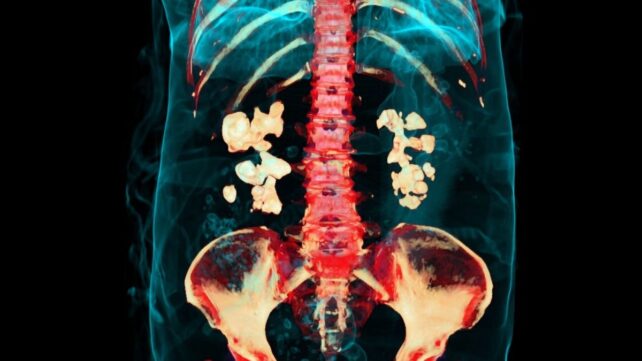
Kidney stones have plagued humans since antiquity, yet despite our long history with them, we've apparently overlooked a key detail about the most common type, a new study finds.
Researchers in the US found live bacteria and biofilms inside calcium oxalate kidney stones. These are the most common type of kidney stone, accounting for nearly 80 percent of all cases, and were – until now – thought to be wholly made of minerals crystallized from salts in urine.
According to the new study, however, bacteria were not only present in these kidney stones, but may play a role in their formation.
"This breakthrough challenges the long‑held assumption that these stones develop solely through chemical and physical processes, and instead shows that bacteria can reside inside stones and may actively contribute to their formation," says urologist Kymora Scotland, of the University of California Los Angeles (UCLA).
"By uncovering this novel mechanism, the study opens the door to new therapeutic strategies that target the microbial environment of kidney stones."
Kidney stones can bring excruciating pain, and while they are not typically dangerous if treated, they can lead to serious complications, especially without appropriate medical care.
Bacteria are known to play a role in the formation of struvite kidney stones, which are relatively rare, accounting for 2-6 percent of cases. The calcium stones that afflict most patients, however, were not previously known to contain bacteria.
The formation of these stones begins with the nucleation and growth of tiny crystals from supersaturated urine. Medical science has found some ways to inhibit this process, but we still don't fully understand how it works.
"Crystal nucleation and growth is a complex process, with many factors capable of functioning as both promoters or inhibitors depending on the exact environmental situation and physical characteristics of the molecule," the researchers write in their published paper.
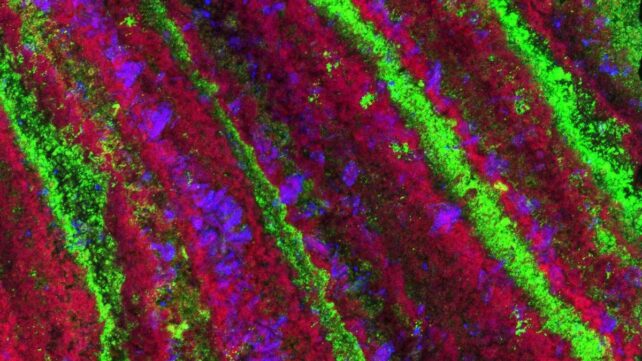
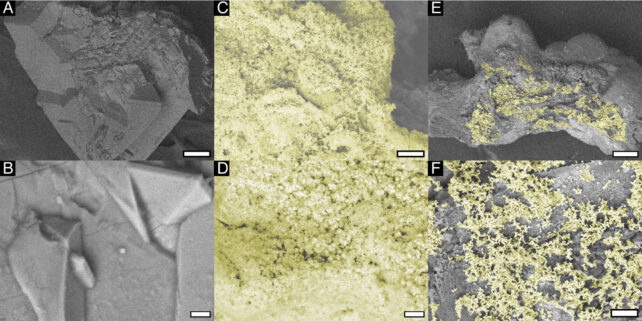
Using electron and fluorescence microscopy, the team didn't just detect a few bacteria clinging to the exterior of calcium kidney stones – they discovered live bacteria and even biofilms embedded within the crystals that comprise the stones.
"We found a new mechanism of stone formation that may help to explain why these stones are so common," Scotland says.
"These results may also help to explain the connections between recurrent urinary tract infections and recurrent kidney stone formation, and provide insights on potential future treatment for these conditions."
The findings suggest bacteria may help seed kidney stones, then get trapped in the resulting structure as crystals aggregate around them.

The researchers suggest kidney stones should be thought of as an "organic–inorganic biocomposite", where bacterial biofilms make up a key part of the kidney stone, even in cases when conventional clinical testing indicates no bacterial presence.
While the new study focused on calcium kidney stones, the origins of other types remain poorly understood – and bacteria may play overlooked roles in those stones, too.
Related: Breakthrough: Scientists Created a 'Universal' Kidney To Match Any Blood Type
This is a revelatory finding about a common health problem that affects tens of millions of people worldwide, but more research will be needed to clarify the role bacteria play in the formation of kidney stones, the researchers note.
"Our multi-institutional team is currently performing studies to determine how bacteria and calcium-based kidney stones interact," Scotland says.
"We want to understand exactly what makes some patients particularly susceptible to recurrent stone formation, and what it is about these particular species of bacteria that allows them to nucleate these stones."
The study was published in the PNAS.