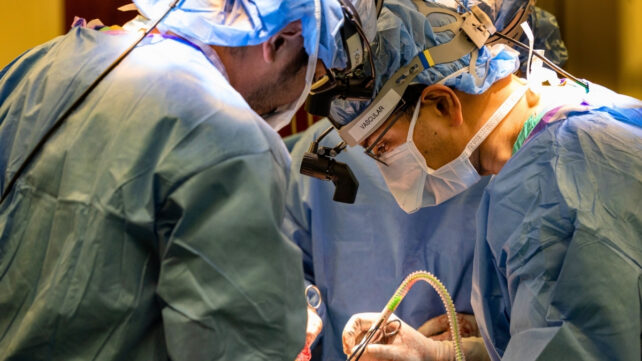
In a remarkable act of life preservation, surgeons were able to keep a critically ill man alive for 48 hours without a pair of lungs, while he waited for a double lung transplant – a radical approach that could be used again for selected patients.
A team from Northwestern University in the US built a total artificial lung (TAL) system that oxygenates blood like our lungs usually do, while managing blood flow and protecting the heart.
The TAL was crucial in stabilizing the patient and preparing him to receive a pair of donor lungs. More than two years on, the individual has recovered well – and has lungs that are fully working.
Related: Experimental Drug Helped Cancer Patients Live 40% Longer in Clinical Trial
It's a story that starts in spring 2023, when the 33-year-old man developed influenza-associated lung failure. This rapidly progressed to pneumonia, sepsis, and what's known as acute respiratory distress syndrome (ARDS).
"He had developed an infection of his lungs that just could not be treated with any antibiotics because it was resistant to everything," says thoracic surgeon Ankit Bharat.
"That infection caused his lungs to liquify and then continued to progress to the rest of his body."
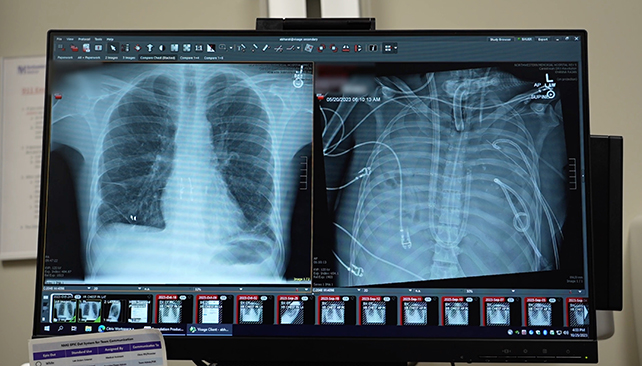
The standard approach would be to put the patient on a life support system and give the lungs time to recover. Here, though, the lungs were the main problem and source of infection: The man seemed certain to die if his lungs weren't removed, and very likely to die if they were.
Removing both lungs – a bilateral pneumonectomy – usually leads to the heart failing due to disruptions in blood flow.
To avoid that and overcome the limitations of previous attempts, the medical team behind the TAL added dual blood flow channels and a flow-adaptive shunt, allowing variations in blood flow to be evened out.
The machine was enough to keep the patient alive long enough for his body to recover enough to make a lung transplant viable. Once the organs were removed, signs of recovery from the infection began.
Bharat and his team carried out a molecular analysis of the lungs after they'd been removed, confirming that there was no chance of the lungs recovering from ARDS of their own accord.
The scarring and immune damage meant that in this case, a lung transplant was absolutely necessary.
"Conventionally, lung transplant is reserved for patients who have chronic conditions like interstitial lung disease or cystic fibrosis," says Bharat.
"Currently, people think if you get severe ARDS, you keep supporting them and ultimately the lungs will get better."

This is an approach that could be used again to save more lives: While constructing a TAL system like this is currently possible only at specialized centers, Bharat hopes that the innovations applied here could be incorporated into standard devices in the future.
Whereas a double-lung transplant might previously have been considered impossible in this scenario, we now know it can be done and can be a success – and may be an option in future cases, though it still depends on timely access to donor lungs.
"In my practice, young patients die almost every week because no one realized that transplantation was an option," says Bharat.
"For severe lung damage caused by respiratory infections, even in acute settings, a lung transplant can be lifesaving."
A case report on the operation has been published in Med.