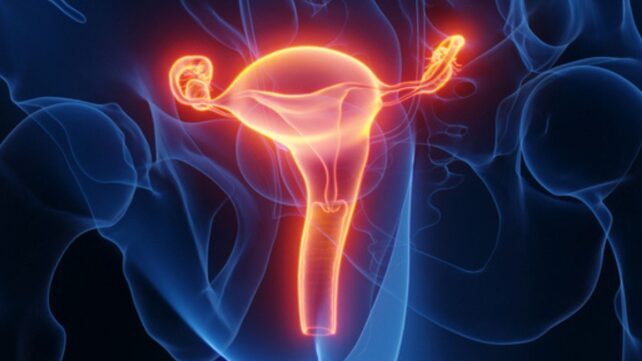
A woman in the United Kingdom, who was born without a womb, has recently given birth to a healthy baby boy in a medical first for the nation.
As a teenager, Grace Bell was told she would never carry and give birth to a baby.
Now in her early thirties, Bell has become the first woman in the UK and possibly only the third in all of Europe to give birth using a donated womb from a deceased donor.
On 12 December 2025, Bell brought a healthy baby boy into the world.
The exceptional organ transplant was initiated and funded by the charity Womb Transplant UK, which is founded and chaired by gynecological surgeon Richard Smith with leadership from transplant surgeon Isabel Quiroga.
"This is a huge milestone, giving more hope to women who do not have a womb and are looking to start a family," says Quiroga, who works at the Oxford Transplant Centre, part of the NHS Foundation Trust.
"This is the only treatment that gives them the ability to carry and give birth to their own child, offering another option alongside adoption or surrogacy."
The first successful womb transplants in the world began in 2012, and in April of 2025, the first woman in the UK gave birth to a healthy baby using a donated womb from her living sister.
Eight months later, Bell's child was born, this time from the womb of a deceased donor.
The surgery took seven hours, and afterward, hormones were used to stimulate menstruation. Bell then underwent IVF to conceive.
Related: Let's Break Down The Delicate And Life-Changing Science Behind Uterus Transplants
The family of Bell's deceased donor says they feel "tremendous pride" at the legacy their daughter has left behind. "She has given other families the precious gift of time, hope, healing, and now life," the family says.
"We urge others to consider donation, so that more people in desperate need may be given the chance to live, just as our daughter so selflessly wished."

Bell's story is not a world first – in fact, it's becoming more common. The first ever birth from the womb transplant of a deceased donor occurred in Brazil in 2017.
In the years since, it is predicted that roughly a dozen babies have been born this way: at least seven in the US, one in the Czech Republic, one in Italy, and two in Turkey.
A global review from 2024 found that the success rates are similar to those of living womb donors. Out of 24 recipients who received a transplanted womb from a deceased donor, the rate for a live birth was roughly 66 percent. Every single one of these patients was affected by Mayer-Rokitansky-Küster-Hauser (MRKH) syndrome, a developmental disorder that impacts the vagina and uterus.
Bell herself also has this syndrome. She hopes that one day more people like herself will have a chance to build a family of their own. As many as 1 in every 5,000 women are born with MRKH. A womb transplant could also help people who were born with a uterus but who have had the organ removed surgically.
"There are no words to say thank you enough to my donor and her family," says Bell.
"I think of my donor and her family every day and pray they find some peace in knowing their daughter gave me the biggest gift, the gift of life.
"A part of her will live on forever."
Womb Transplant UK plans to carry out a total of 10 transplants: five as part of the living transplant program and five involving deceased donors as part of the UK Investigational Study into Transplantation of the Uterus (INSITU).
As part of the study, clinicians give their time and expertise free of charge, and Womb Transplant UK funds the costs of the transplant and associated treatments.