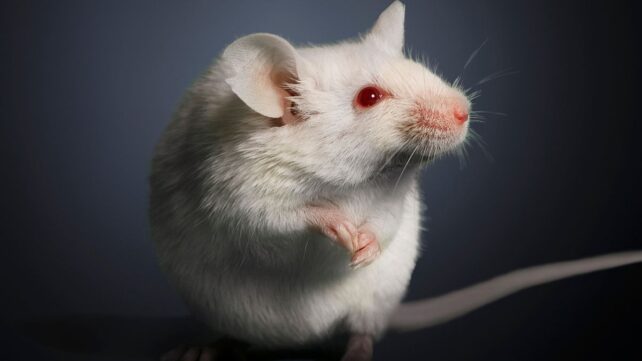
Young poop, like young blood, is making headlines for its potential to reverse age-related decline in mice.
Now, a new study has flipped the script: The poop of older donors has rejuvenated the ovaries of younger mice.
At first, researchers at the University of Southern California, Los Angeles (USC) thought that if they transplanted the gut microbes from 'menopausal' mice into younger mice whose microbiomes had been completely wiped out, it would age their ovaries.
Much to their surprise, however, the opposite happened.
The transplant of older poop actually seemed to boost the health of their ovaries.
Consistently, young mice that received poop from old, non-reproductive mice showed improved ovarian function, and this gave them a slight edge when it came to reproducing with males.
"I feel like we've opened a positive can of worms with this study; there are so many new questions," says senior author of the study, gerontologist Bérénice Benayoun, who runs a lab researching sex differences in aging at USC.
Fecal transplants are cutting-edge and still under research, but emerging evidence suggests that swallowing a 'poop pill' or a 'crapsule' may make the gut look younger, alleviate depression, lower diabetes and heart disease risks, or even ease symptoms of Parkinson's disease.
The gut's connection to the ovaries is an even newer research territory, but scientists have long suspected the two are linked. When mice are treated with antibiotics to become 'germ-free', they show problems with their ovaries.
In one recent study, for example, human patients with ovarian issues had their feces transplanted into mice. Afterwards, the otherwise healthy mice showed ovarian dysfunction.
Benayoun and colleagues thought that transplanting feces from menopause-like mice lacking functional ovaries into young mice would yield a similar outcome.
"Our original hypothesis was that we would see damaging effects of the older microbiome on ovarian function, but surprisingly, we found the opposite," says gerontologist Min Hoo Kim, who led the research at Benayoun's lab.
"When [Kim] first brought these results to me, I wondered if the labels had been swapped!" remembers Benayoun. But no matter which way the study authors analyzed their results, the outcomes were clear.
"We did a fertility assay, we looked at serum hormone levels, follicle counts," says Kim. "All of them indicated improvement in ovarian health in the mice that received the fecal transplants from older mice."
In particular, the research team found that a dose of younger poop reduced gene expressions related to inflammation and triggered changes associated with ovarian rejuvenation.

The study is possibly the first to show that poop transplants can directly remodel gene expressions associated with ovarian health and function. And they don't just impact mice at the molecular level.
"Some of the mice that received the younger microbiome never produced pups, while all of the mice that received the older microbiome did," explains Benayoun.
"Even when ignoring the mice that never had pups, the mice that received the older transplants produced pups more quickly than the mice that received the younger microbiome transplants."
Benayoun, Kim, and their team, including researchers at Tufts University, are not sure why the poop of older mice had this effect on younger mice, but they do have a few ideas.
The older female mice in experiments had gut microbial communities with greater diversity and species richness than those of the younger, fertile mice. This means that transplanting the older poop may have improved gut diversity, and, therefore, health.
Another option relates to estrogen signaling. As ovaries age, they produce less estrogen and respond less to estrogen in the body, and it's possible that gut bacteria may step up to replace that loss in older age.
Related: Poop From Young Donors Reverses Age-Related Decline in The Guts of Older Mice
Imagine if these gut microbes communicate with the ovaries using estrogen. As the ovaries age and struggle to hear as well, the gut microbes may have to increase their volume. If these louder gut microbes are then transplanted into a younger animal, the ovaries may be even more responsive.
More specific studies are needed, but there are now several avenues of research to explore.
"If these effects are also seen in humans, it could provide new treatment targets for infertility or menopause symptoms based on which bacteria species and metabolites are most responsible for this rejuvenation," hopes Benayoun.
The study was published in Nature Aging.