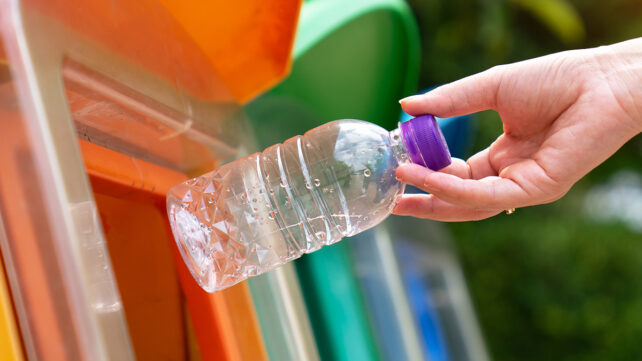
Scientists have found a new way to make a Parkinson's drug – out of old plastic.
The plastic is polyethylene terephthalate (or PET), widely used in plastic bottles and other packaging, and now deeply embedded in the environment.
The drug is levodopa, often called the "gold standard" for managing the motor control problems that come along with Parkinson's.
A team led by researchers from the University of Edinburgh in Scotland deployed specially engineered Escherichia coli bacteria to go from plastic to pharmaceutical, in a sustainable way.
Not only could the new method help put a dent (however small) in our plastic pollution crisis, it also offers a way forward for eco-friendly drug development. Current methods for making levodopa rely heavily on fossil fuels.
"This work demonstrates how engineering biology can transform plastic-derived aromatic monomers into high-value pharmaceuticals for the treatment of neurological disease in humans," write the researchers in their published paper.
The new process isn't quite as simple as putting a plastic bottle in at one end and getting a pack of pills at the other. First, PET needs to be broken down into its constituent parts, including the terephthalic acid (TPA) that would ultimately be converted.
By constructing a new metabolic pathway in E. coli – a chemical chain reaction, driven by enzymes – the researchers were able to get the bacteria to absorb TPA and convert it into levodopa, using two bacterial strains running one after the other.
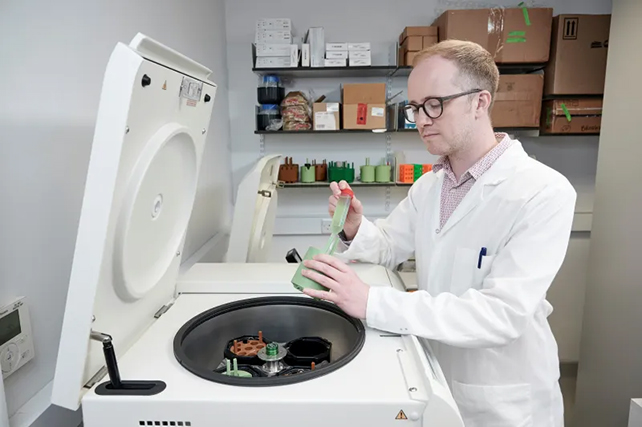
This is just a lab proof-of-concept for now, and more work is going to be needed to scale this up ready for industrial use. However, it shows the potential for bacteria-based recycling that can produce something genuinely useful at the other end.
"This feels like just the beginning. If we can create medicines for neurological disease from a waste plastic bottle, it's exciting to imagine what else this technology could achieve," says Stephen Wallace, biotechnologist at the University of Edinburgh.
"Plastic waste is often seen as an environmental problem, but it also represents a vast, untapped source of carbon. By engineering biology to transform plastic into an essential medicine, we show how waste materials can be reimagined as valuable resources that support human health."

The researchers acknowledge that even if the world's entire supply of levodopa were made through this process, it wouldn't make much of a difference to the 100 million tons or so of plastic that get discarded as waste every year.
This is part of a much bigger picture though. Researchers are now regularly coming up with sustainable ways of turning plastic into something else, rather than having it spread through the environment or fill up landfill sites.
Researchers from the same lab at the University of Edinburgh had previously shown how E. coli could be engineered to turn PET plastic into paracetamol, so these kinds of techniques have plenty of potential in terms of what the start and end chemicals might be.
Efforts are also being made to transform the types of plastic that are manufactured in the first place. If plastic products are made to be more biodegradable to begin with, then that can go a long way to making them easier to dispose of after they've been used.
And, of course, it helps that vital pharmaceuticals could soon be produced from plentiful waste materials, rather than dipping into diminishing supplies of fossil fuels.
Related: New Breakthrough Makes Painkillers Out of Paper Waste Instead of Oil
Funding for this latest study was obtained in part through the Engineering and Physical Sciences Research Council (EPSRC) in the UK, which is part of the UK Research and Innovation (UKRI) government agency.
"This research shows the huge potential of engineering biology to tackle some of society's most pressing challenges," says Charlotte Deane, executive chair at the EPSRC, who wasn't directly involved in the research.
The research has been published in Nature Sustainability.