
We know that too much booze is bad for us, but a new study reveals that even a low level of alcohol intake could damage the brain.
A team of researchers from the US linked higher levels of drinking to reduced brain perfusion (blood flow) and a thinner cortex (the part of the brain where most higher-level thinking is handled).
Importantly, these signs were found in people who stayed within 60 or fewer drinks per month for men and 30 or fewer per month for women. Here, a drink equals 14 grams of pure ethanol, so a bottle of beer, a small wine, or a shot of spirits, roughly speaking.
Keeping below these levels has long been recommended, though the latest US dietary guidelines no longer specify a safe daily cap.
What's more, the researchers found a correlation between drinking, age, and measurements of blood flow and thickness of the brain's outer layer – the cortex.

The findings suggest it's possible the effects of even an occasional tipple can add up over time.
"Alcohol consumption considered 'low risk' may have consequences for the integrity of cortical tissue, particularly with advancing age," write the researchers in their published paper.
"These results may have implications for current harm reduction strategies and alcohol consumption public health guidelines."
The study involved 45 healthy adults of ages ranging from 22 to 70, with no history of alcohol use disorder or binge drinking within the past year.
They were asked questions about their drinking habits over the past year, the past three years, and their lifetime.
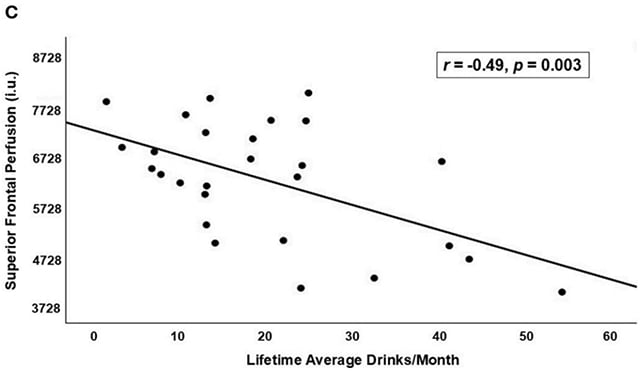
Across all the participants, the average alcohol consumption was 21 drinks a month, over their entire lives. The sample ranged from 1 to 54 drinks per month.
Data from these responses were then charted against MRI scans measuring cortical volume and thickness, as well as brain perfusion measurements, which were available for 27 of the participants. These tests were only done once – the study volunteers weren't tracked over time.
And while cortical thickness was linked to drinking levels, the association was stronger with brain perfusion. This suggests alcohol levels could have a greater effect on blood flow, which in turn risks damage to brain tissue.
As with the rest of the body, strong circulation in the brain is crucial for delivering oxygen and nutrients to where they're needed and removing waste.

"Taken together, the findings may reflect the cumulative effects of low-level alcohol consumption over a lifetime, which interacted with age to promote synergistic decreases in cortical perfusion and thickness," write the researchers.
While this study doesn't dive into the reasons for the association, we already know plenty about alcohol's effects. The researchers suggest oxidative stress – biological wear and tear, which booze can contribute to – is likely to be one of the key factors here.
There are some caveats to consider: The study doesn't show direct cause-and-effect, partly because it captures a single point in time. Also, drinking habits were self-reported, so they may not have been entirely accurate, and factors like diet and exercise weren't accounted for.
Even with those limitations in mind, these are notable findings that fit in with a growing trend in health research. Several studies are now questioning the idea that there is a 'safe' level of drinking as far as our health is concerned.
In fact, the latest official US health dietary guidelines, updated earlier this year, stop short of specifying a particular amount of alcohol consumption that people should stay under: Instead, they state people should "consume less alcohol for better overall health".
Related: Alcohol Profoundly Changes The Way Your Brain Communicates, Study Finds
With this new study and the findings that have previously been published, it may be time to reconsider how occasional you'd like those occasional drinks to be.
We need more research, the researchers conclude, "to better understand the functional neurobiological ramifications of 'low risk' alcohol consumption in adults."
The research has been published in Alcohol.