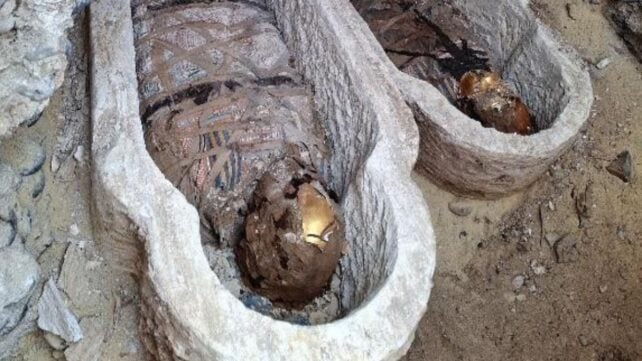
Here's something archaeologists don't see every day, or indeed ever: An ancient Egyptian mummy with an excerpt from the classic Greek text the Iliad plastered to its abdomen.
That's a sentence that takes quite a lot of unpacking, so we'll start with the mummy. In this first-of-its-kind discovery, the 1,600-year-old remains were found in Al Bahnasa, a town in central Egypt, known in ancient times as Oxyrhynchus.
So far, relatively normal, though still exciting for experts. The real twist is the addition of the classic literature, Homer's epic poem, the Iliad, about the Trojan War and the mythological warrior Achilles.
The poem dates back some 2,700 years, and this particular fragment was found written on papyrus and deliberately bound to the mummy's abdomen, as part of the embalming ritual.
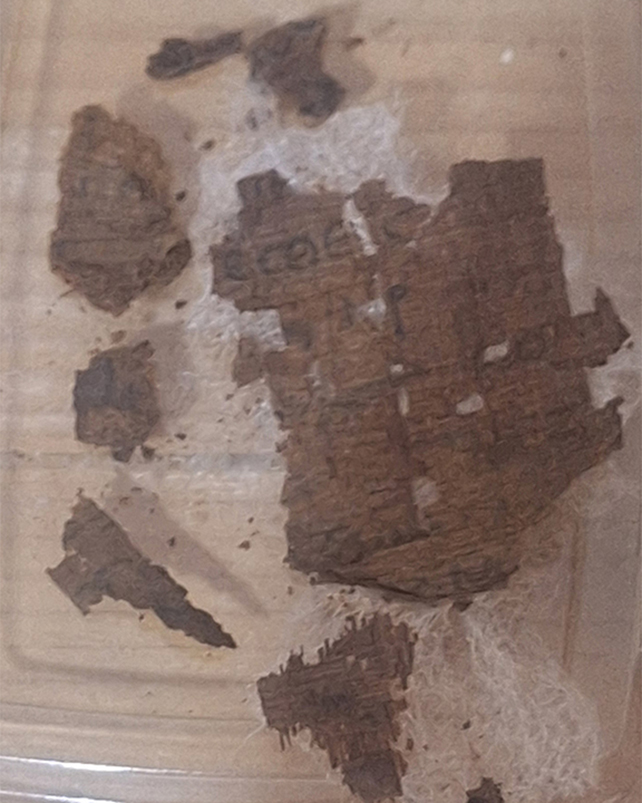
While Greek writings have been uncovered in mummies before, no literary texts have been discovered until now.
"This is not the first time we have found Greek papyri, bundled, sealed, and incorporated into the mummification process, but until now, their content was mainly magical," says University of Barcelona classical philologist Ignasi-Xavier Adiego, director of the Oxyrhynchus Archaeological Mission.
"Since the late 19th century, a huge number of papyri have been discovered at Oxyrhynchus, including Greek literary texts of great importance, but the real novelty is finding a literary papyrus in a funerary context."
While the papyrus is in poor condition, the team has determined that it contains an extract from Book 2 of the Iliad, comprising a catalog of ships. It's a novel finding that sheds more light on the funeral and mummification processes of the time.
What we don't know yet is what the Iliad was doing on a mummy.
One theory among the team who discovered it, Adiego explained to Jack Guy at CNN, is that it may have represented some kind of signature of the embalmer who did the mummifying – a recognizable seal on their work.
Other texts included with mummies that aren't famous Greek poems are thought to have had some kind of ritualistic or protective function – a little like prayers for the dead, perhaps – but it's harder to imagine what Homer's masterpiece is doing here.
"We haven't had the opportunity to study it using high-tech methods such as X-rays, which might allow us to read it better," Adiego told CNN.
"We've done all we can without destroying the papyrus."
That will be the next stage of the research: There are various non-destructive ways to read ancient texts, even if they're not in great condition, and these techniques might reveal more about why this poem was included in the mummification process.

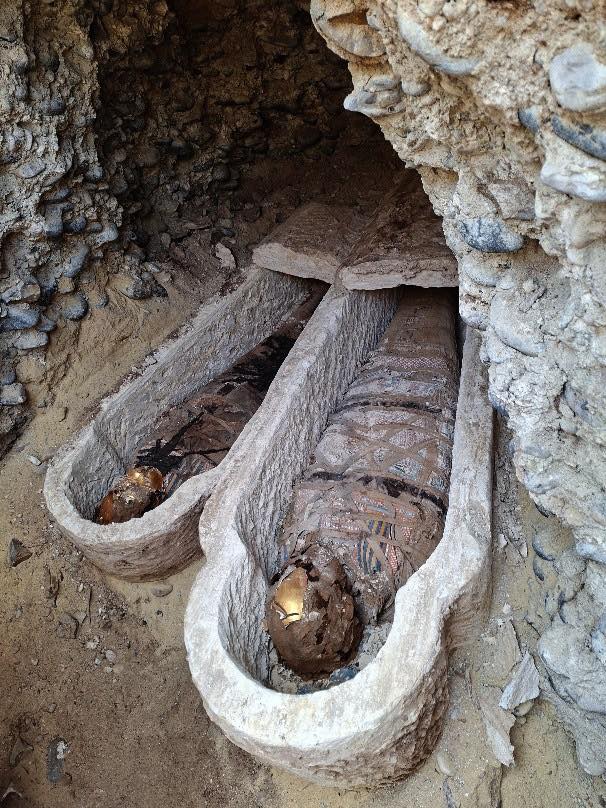
The team is still working to better understand the people who were entombed here. That the bodies were embalmed indicates a certain level of wealth, and gold and copper foil have been found on the tongues of some of them.
As for the Oxyrhynchus site, it's a well-known archaeological dig where excavations have been carried out since the late 19th century. Only traces of the city remain, but the necropolis beneath it has revealed numerous artifacts and remains.
The most recent finds include three limestone chambers holding Roman-era mummies, together with decorated wooden sarcophagi. Unfortunately, previous looting hasn't left much of the site intact – but the Iliad fragment survived.
Egyptians at the time of mummification would certainly have been well aware of Homer and of Greek literature. Greek was used for official documents during the time, and the story of the Iliad would have been widely taught and circulated.
Related: Roman-Era Wreck Reveals How Ships Were Built to Last 2,000 Years Ago
There may well be more to discover, as work on the Oxyrhynchus site continues – and perhaps a few more iconic literary texts hidden away among the ruins.