
A new genealogical study shows how genetic analyses threading together DNA across centuries can save stories of historical migration and ancestry from being eternally lost to time.
The beginnings of this particular story are a familiar one: A group of intrepid colonists set out from England in the early 17th century to seek religious freedom in a land to eventually be known as the United States of America.
In this case, it wasn't the Mayflower, but two ships named the Ark and the Dove, which made landfall in Maryland in 1634.
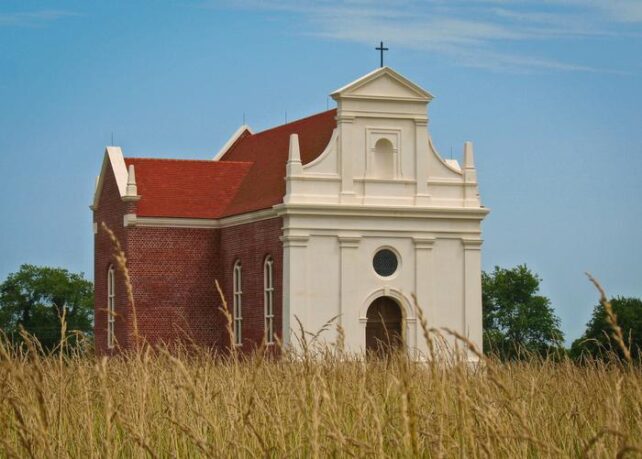
The travelers alighted at a peninsula formed by the meeting of the Potomac River and Chesapeake Bay and established St. Mary's City, the founding colony of Maryland.
Some of their migrations, identities, and descent have now been revealed, via an innovative identity-by-descent (IBD) assessment.
The study was conducted by researchers from the 23andMe Research Institute, Harvard University, and the Smithsonian Institution in collaboration with Historic St. Mary's City, a living history museum dedicated to one of the oldest permanent English colonies in the US.
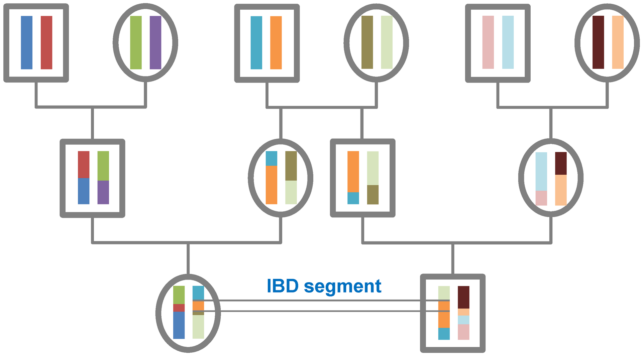
The IBD genealogical method compares DNA inheritance from common ancestors to identify long-gone historical figures, by linking them to living descendants.

According to the researchers, this study represents the first time that scientists were able to unite modern genealogy and ancient DNA analysis to assign identities to some of the earliest European colonists in the US.
The researchers gathered the genomes from 49 individuals buried in Chapel Field cemetery in St. Mary's City, and compared them with that of 11.5 million consenting modern research participants in 23andMe's database.
They unearthed an incredible line of descent: More than 1.3 million of the 23andMe research participants shared DNA with at least one of the individuals buried at Chapel Field.
The genetic links to western England and Wales were especially strong, while also showing that some of these early colonists came from Ireland.
The researchers also unveiled a rich connection between the St. Mary's individuals and people currently living in Louisville, Kentucky.
This connection is the result of a lesser known, post-Revolutionary-War migration, as Catholic families in Maryland moved south to (once again) escape anti-Catholic bias and pursue economic opportunities.
The genetic analysis also suggests which of the colonists may have arrived as indentured servants. This includes two adult males of Irish descent who died young, showed signs of heavy labor and poor health, and were not buried in coffins.

What's more, the researchers uncovered the identities of three completely unknown buried individuals, piecing together their genetic information with that of the 23andMe research participants exhibiting the strongest genetic ties to St. Mary's.
With some additional information, such as overlapping family trees, the researchers identified the remains of Thomas Greene – Maryland's second governor – along with his first wife Anne and their son, Leonard.
"This is the first time that ancient DNA has been used to help identify unknown individuals, without any prior knowledge of who they might have been," explains Éadaoin Harney, a population geneticist at the 23andMe Research Institute, and the study's corresponding author.
"And it just so happens that one of those individuals turned out to be one of colonial Maryland's most prominent figures."
Though some of the research dates to 2016, this work has been formally released just in time to offer an introspective opportunity coinciding with the 250th anniversary of the US – also called the Semiquincentennial or Bisesquicentennial, whichever is easier on the tongue.
Overall, genealogical science has shown an unprecedented capability to trace America's previously invisible founding colonists.
Similar assessments could reveal murky migrations and ancestral histories elsewhere in the world. Especially if future research incorporates mitochondrial or Y chromosome data to explore intact parental lines.
Furthermore, this research represents a diverse but focused collaboration, mirroring the origins of the US.
Related: The Very First American Settlers Arrived Much Earlier Than We Thought
"The descendant community has championed this research from the beginning, and this genetic analysis allows us to directly link our archaeological findings with the living people who represent that enduring legacy today," says Henry Miller, an archaeologist at Historic St. Mary's City and study co-author.
"It is incredibly meaningful as we reflect on the founding of our country."
This research was published in Current Biology.