Our brains might be more alert when unconscious than we realized.
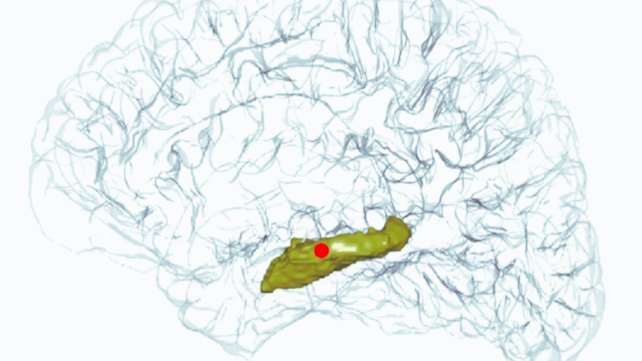
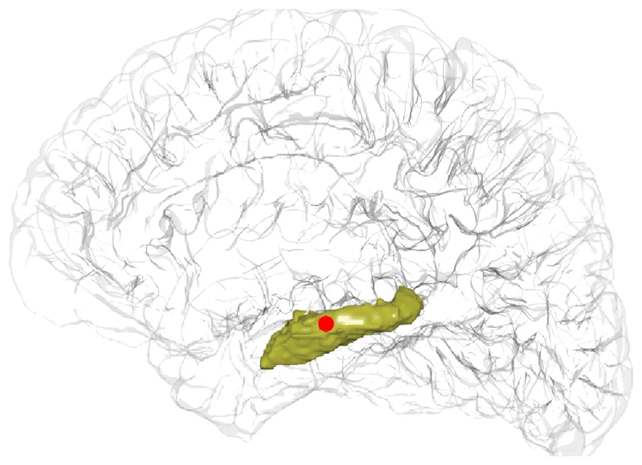
A new study of brain cells in the hippocampus shows that people under general anesthesia can process language in real time and even learn to recognize sounds.
It raises some fascinating new questions about what it means to be conscious and what the brain might be doing when it's hovering in an unconscious state under the weight of anesthetic drugs.
But it leaves the door open to further studies about what is happening in the unconscious brain during sleep or coma.
Seven patients undergoing surgery for epilepsy were involved in the study, led by researchers at Baylor College of Medicine in the US.
Microelectrodes called neuropixels measured their brain cell activity. These electrodes capture very high-resolution data from individual neurons, and haven't been used on the hippocampus before this study.
The probes recorded activity from hundreds of individual neurons to see how the brain reacted to a series of sounds and language prompts.
"Our findings show that the brain is far more active and capable during unconsciousness than previously thought," says neurosurgeon Sameer Sheth, from the Baylor College of Medicine.
"Even when patients are fully anesthetized, their brains continue to analyze the world around them."
The hippocampus handles important jobs in terms of learning and memory.
The researchers wanted to take a look at the hippocampus under anesthesia because it sits deep within the brain, far from where sensory information is first processed, in the cortex.
Past studies have detected residual sensory responses in cortical areas during anesthetized states, but this study goes deeper.
If sounds are triggering activity in the hippocampi of anesthetized patients, then it would be stronger evidence that the brain hasn't fully shut down.
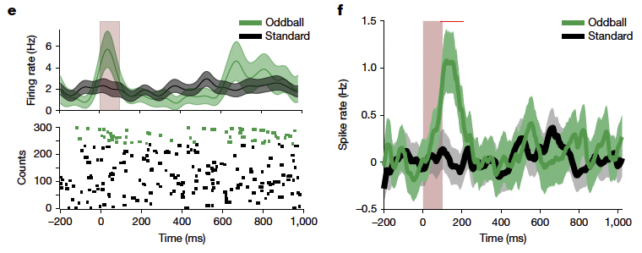
In the first experiment, the patients were played a series of repetitive tones, occasionally interrupted with different 'oddball' sounds.
There were signs in a selection of neurons that the brain could distinguish between these sounds, and that it got better at identifying them over time.
The second experiment was more complex. Clips from educational videos and storytelling podcasts were played to the participants, and the hippocampus consistently showed evidence of processing the incoming language in real time.
Neural activity showed that the brain was sorting through nouns, verbs, and adjectives, and was even trying to predict the next word in a sentence – not dissimilar to the way that generative AI models formulate responses by looking for the most likely next word.
"This kind of predictive coding is something we associate with being awake and attentive, yet it's happening here in an unconscious state," says neurosurgeon Benjamin Hayden, from the Baylor College of Medicine.
The findings suggest that certain processing abilities may not be anchored to consciousness, and can be carried out without us being 'awake'.
It's an idea that's been gaining momentum in recent years, but remains difficult to study.

This also plays into a much wider field of research probing how the brain carries out tasks subconsciously, the study team notes.
Being able to separate one voice in the babble of a crowded party is something we might take for granted, but it requires a lot of clever processing.
Given how murky our understanding of consciousness is, there is lots more work to do.
While brain activity patterns were consistent across participants in this study, there were only seven. And all of them received propofol as the main anesthetic for their surgeries, so the findings might not generalize to other anesthetic drugs.
It also remains to be seen whether the same activity and response to sound would show up in people who were asleep or in a coma.
Related: Experimental Brain 'Pacemakers' May Rewire Circuits Linked to Depression
Further down the line, there might be some exciting practical uses. This might include tapping into the brain's apparent ability to hear sounds and learn words even when at its lowest ebb, to reroute brain wiring if some parts stop working, the researchers suggest.
"Can we use these signals to deploy and run a speech prosthetic for some of the parts of the brain that are damaged by stroke or injury?" says neurosurgeon Vigi Katlowitz, from the Baylor College of Medicine.
"These are questions that we can now consider in relation to this part of the brain."
The research has been published in Nature.