
Dementia remains stubbornly resistant to treatment and devastating for millions of people worldwide.
Scientists have now identified a new molecular target that could point to future therapies, and they've used the discovery to slow the progress of dementia in mice.
That target is a vital enzyme called G protein-coupled receptor kinase 2 (GRK2), which maintains health and well-being in human cells. Part of its role is to help cells respond properly to stress and strain.
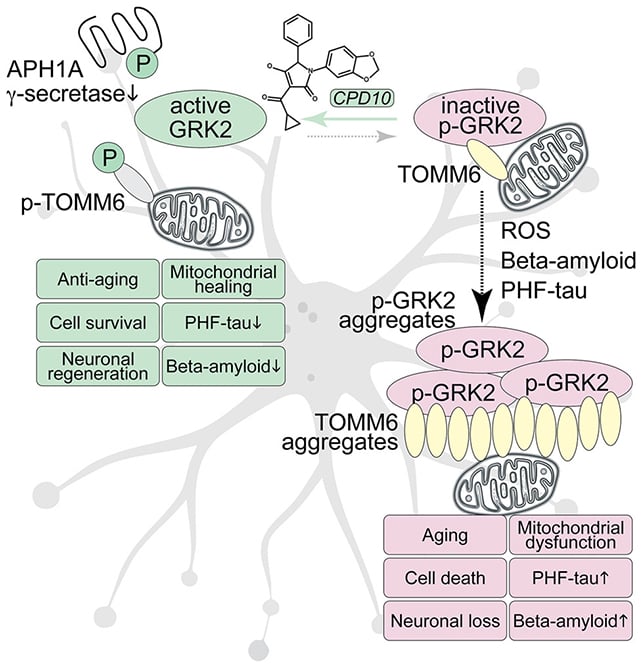
But alongside the normal form of GRK2, there's also a modified, inactivated type.
This dysfunctional GRK2 gathers around mitochondria, the powerhouses of cells. Given the links between mitochondria and Alzheimer's, researchers led by a team at ETH Zurich in Switzerland wanted to see whether GRK2 and dementia might be connected.
They discovered compelling evidence that they are.
" Alzheimer's disease is the most frequent form of dementia without a cure," write the researchers in their published paper.
"Searching for a pharmacological target, we focused on the G-protein-coupled receptor kinase 2 (GRK2). GRK2 exerts a wide array of neuroprotective activities, but the impact of GRK2 on Alzheimer's disease pathogenesis is not understood."
The researchers analyzed mouse models of Alzheimer's and a number of human brain tissue samples from people with this type of dementia, looking for the presence of GRK2 in both its forms and the biological effects it might be having.
In both mice and humans, there was an abundance of the abnormal form of GRK2 in the brain cells.
Not only that, in mouse models, the researchers also found that inactive GRK2 promoted the production of the amyloid-beta protein, which is closely linked to Alzheimer's.
Further investigation revealed that the inactive form of GRK2 was aggregating in large amounts, clumping together in a way similar to amyloid beta as the disease progresses, and landing on and impairing the function of the cell's mitochondria.

"The GRK2 aggregates block the pores of the mitochondria, reducing the amount of energy they can supply and leading to a situation of stress inside the cells," says molecular pharmacologist Ursula Quitterer, from ETH Zurich.
That suggests a damaging loop.
As more stress is placed on brain cells, more inactive GRK2 is produced, exacerbating the problem by further harming mitochondria and promoting increased amyloid-beta production.
As is sometimes the case with Alzheimer's, teasing apart the causes and consequences of the disease is tricky.
There's good news. The researchers were able to use their newfound knowledge of GRK2's sabotage to develop a chemical compound they're calling Compound 10.
In tests on mice and human cells in the lab, the compound successfully prevented abnormal GRK2 enzymes from clumping together. That meant the mitochondria were functioning more effectively, less amyloid beta was accumulating, and nerve cells were staying functional.
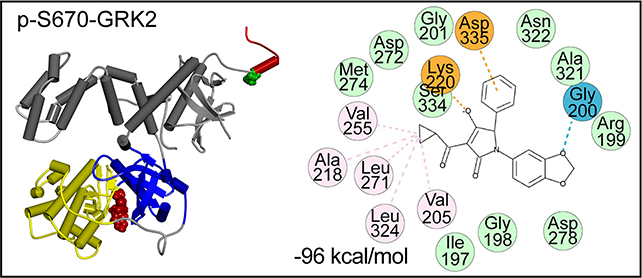
Compound 10 was effective at slowing down dementia progression in the animals, and there were also signs of anti-aging effects elsewhere in the body.
While there's still a lot of work to do to develop drugs that might work in people – including research into GRK2 in a larger group of human brain tissue samples – these are encouraging initial results.
Related: Estrogen Loss in The Brain May Help Explain Women's Alzheimer's Risk
What's particularly noteworthy here is that researchers haven't looked at GRK2 in depth before in Alzheimer's. Given the numerous variables and factors associated with the disease, it's likely that any cure will ultimately have to address the pathologies from multiple angles.
"Alzheimer's is a very complex disease," says Quitterer.
"That's why it's so important that we've now identified a new target protein in the form of GRK2, as well as an active ingredient that operates via GRK2 and therefore via a different mechanism than existing Alzheimer's drugs."
The research has been published in Cell Reports Medicine.