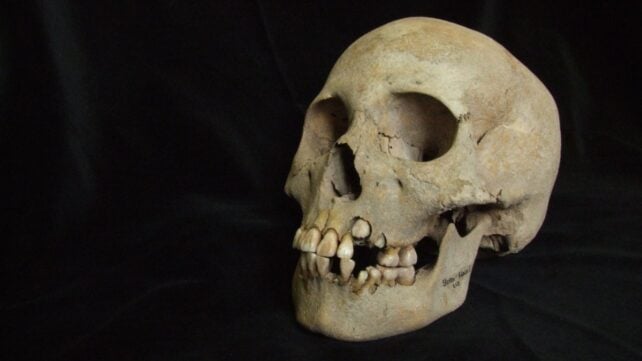
Long before it evolved the genetic machinery that would help make bubonic plague one of history's most feared diseases, the bacterium Yersinia pestis was already capable of unleashing deadly outbreaks.
Now, researchers have uncovered evidence that plague swept through hunter-gatherer communities around Lake Baikal in Siberia around 5,500 years ago.
The findings suggest the disease was capable of killing people in concentrated outbreaks centuries before the emergence of the flea-borne form that would later devastate cities across Europe, Asia, and North Africa.
Previous studies have identified ancient individuals infected with the bacterium, including a case in Sweden from 4,900 years ago and another in Latvia from around 5,000 years ago.
In contrast, the new study paints a picture of plague moving through entire communities.
"Whether the earliest forms of plague were mild or virulent has been a matter of debate, but our findings demonstrate that these ancient strains were already highly lethal," says geneticist Eske Willerslev of the University of Copenhagen.
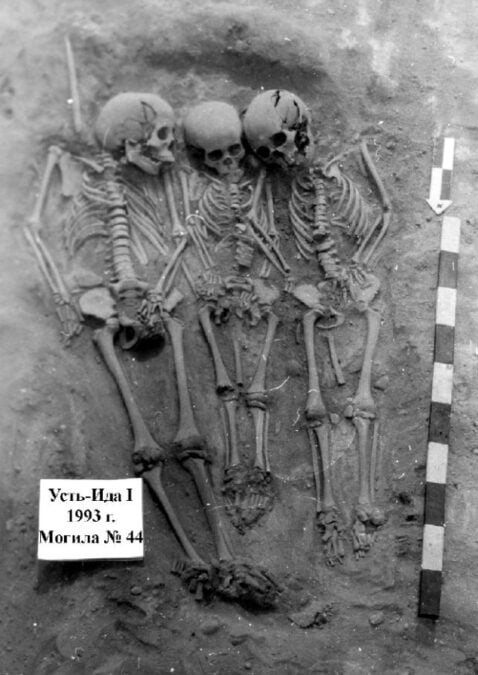
Led by genomicist Ruairidh Macleod of the University of Oxford in the UK, the international team of researchers has identified 18 individuals infected with Y. pestis across four Late Neolithic-era cemeteries – the earliest evidence yet of outbreak-level plague.
Y. pestis is, perhaps, the deadliest pathogen ever to afflict humanity.
In the last 1,500 years, it's estimated to have killed around 200 million people via plague, a disease that takes one of three forms: bubonic, pneumonic, and septicemic.
However, early strains of the bacterium lacked the virulence factors associated with bubonic plague until around 3,800 years ago, obscuring the role the disease may have played in prehistoric populations.
To investigate the health of Late Neolithic communities around Lake Baikal, Macleod and his colleagues sequenced DNA from 46 individuals buried across four archaeological cemeteries: Ust'-Ida I, Bratskii Kamen, Shumilikha, and Serovo.
As the researchers mapped family relationships and community structure, their pathogen screening revealed something unexpected.
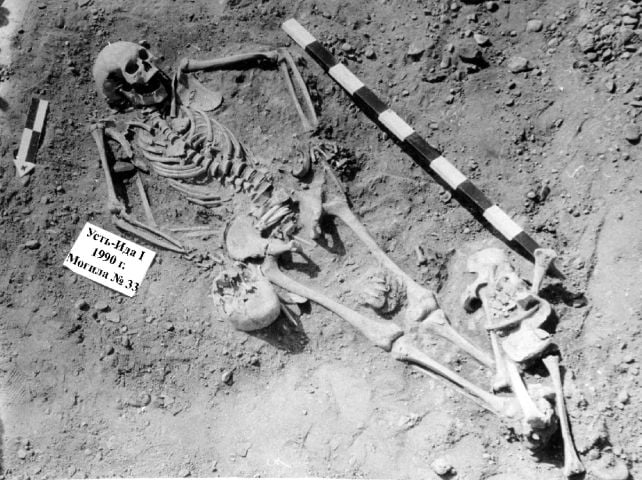
It wasn't just one or two sickly souls. Eighteen of the 46 individuals, or more than a third, were carrying Y. pestis – and at higher levels than any other pathogen identified.
This, on its own, doesn't necessarily mean "outbreak".
But the cases were closely clustered in both space and time – this was a group of individuals buried in the same places and around the same periods, all carrying high levels of Y. pestis DNA.
When the researchers looked closer, they found that two of the cemeteries, Ust'-Ida I and Bratskii Kamen, contained unusually large numbers of children.
Between 65 and 75 percent of the individuals buried there were under the age of 15, making the sites clear demographic outliers among comparable hunter-gatherer cemeteries in the region.
"The unusually high number of children and the short timespan was a real puzzle that we've been trying to solve since the 1990s," says archaeologist Andrzej Weber of the University of Alberta in Canada.
"Finding out that plague was the cause is extraordinary, but it makes so much sense."
Family relationships strengthened the case that an infectious plague had swept through the community. In one grave at Bratskii Kamen, three young girls between the ages of 4 and 9, who were probably close maternal relatives, all carried Y. pestis DNA.
At Ust'-Ida I, Y. pestis was detected in an aunt and nephew buried together, as well as in the aunt's teenage niece, who was buried elsewhere in the cemetery.
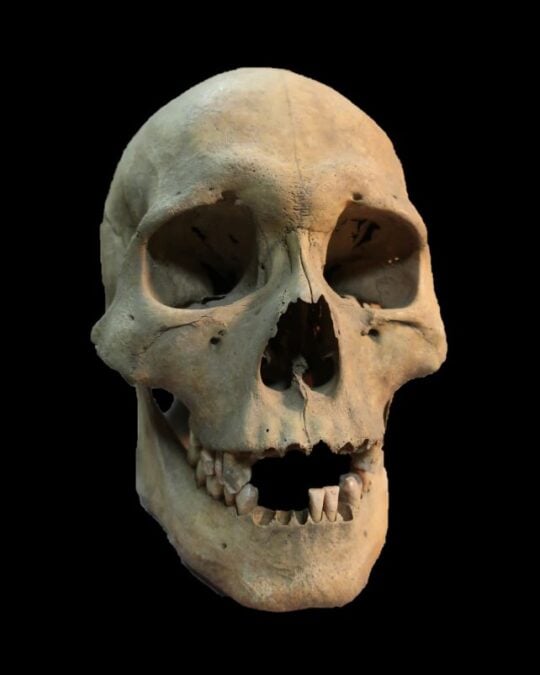
Radiocarbon dating revealed another intriguing pattern among the dead.
Rather than falling into a single epidemic, the Y. pestis-infected individuals were dated to two distinct timeframes, separated by a centuries-long span.
Most of the infected individuals came from an earlier phase centered on Ust'-Ida I, Shumilikha, and Bratskii Kamen, dated to around 5,500 to 5,300 years ago.
Meanwhile, a smaller number belonged to a later phase represented by Serovo and one of the Bratskii Kamen burials, probably centered around 5,000 years ago.
Together, the two groups suggest that Y. pestis outbreaks emerged in the region more than once.
That separation naturally raises the question: Where did the bacterium hide between outbreaks?
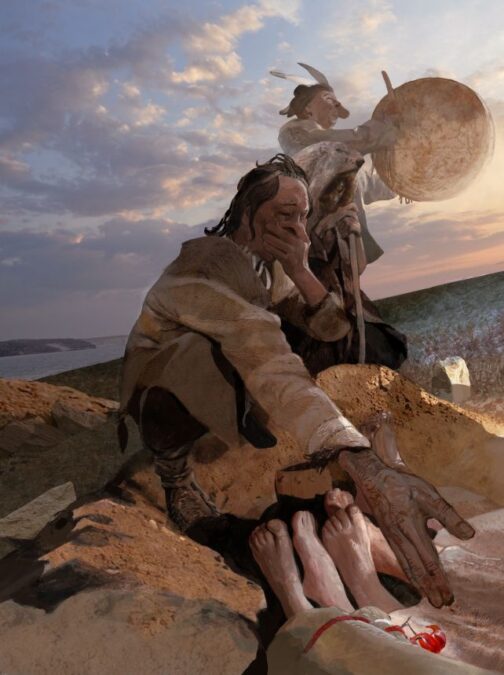
The researchers suggest it may have persisted in local wildlife populations. Marmots, in particular, are a known Y. pestis host in the region, occasionally causing human infections to this day.
While the evidence for an animal-host reservoir is indirect, the long history of rodent-borne plague transmission makes this one plausible explanation.
"These insights are as relevant for the challenges faced by the world today as they were 5,500 years ago, with 75 percent of new human pathogens emerging from animal transmission," the researchers write in their paper.

In addition, genetic analysis showed that the strains belonged to an extremely early branch of the Y. pestis family tree, predating the lineages associated with the later spread across Bronze Age Eurasia.
Related: The Black Death Shaped Human Evolution, And We're Still in Its Shadow
This means it also offers a touchpoint for reconstructing how the bacterium evolved and how it grew so deadly.
"This finding changes our understanding of the earliest plague outbreaks," says genomicist Martin Sikora of the University of Copenhagen.
"Even before the bacterium evolved efficient flea-borne transmission, these ancient strains appear to have carried a potent combination of virulence factors that could make infection highly lethal."
The research has been published in Nature.