One of the world's largest uranium mines, the Wismut GmbH Schlema-Alberoda operation in what was then Soviet East Germany, left behind a toxic legacy.
But within the contaminated water that has since flooded the mine, evolution may already be brewing up a solution.
The mine site was closed in 1990, with the reunification of Germany, and has since been subject to costly and time-consuming remediation efforts.
In its retirement, the underground mine became flooded with water, which has required continuous treatment.
You may already be aware that raw uranium is highly radioactive, and exposure to it – for instance, by drinking contaminated water – can cause serious damage to humans and other living things.
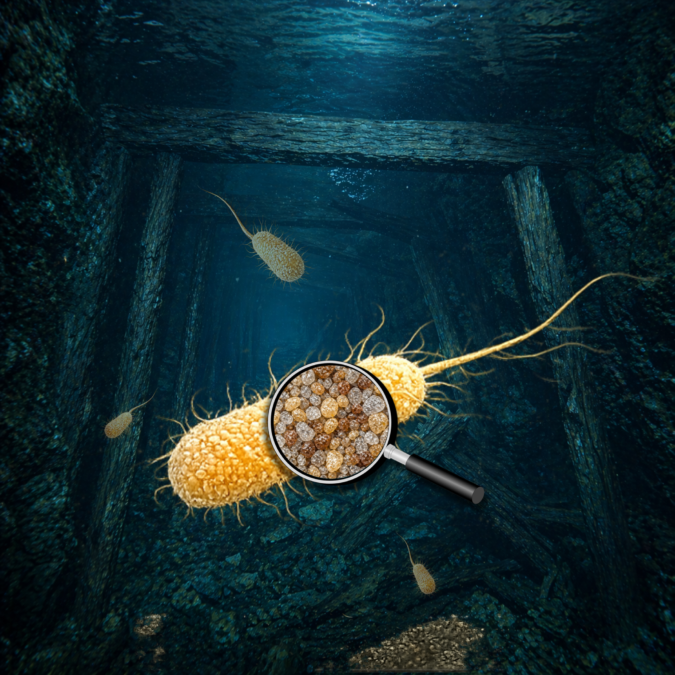
Yet, some organisms are actually making a living in the uranium-laden mine water; it's home to an entire ecosystem of microbes.
And, as scientists have recently discovered, those microbes can actually stabilize uranium under certain conditions.
The research was led by microbiologists and resource ecologists at the Helmholtz-Zentrum Dresden-Rossendorf (HZDR) in Germany and the University of Granada in Spain, who published their results in the journal Nature Communications.
"Our group's investigations had already revealed that bacteria can use uranium dissolved in water for their metabolism when they have access to glycerol as a food source," explains microbiologist Evelyn Krawczyk-Bärsch, of HZDR.
"Our study has revealed for the first time that bacteria supplied with glycerol as a carbon source can convert toxic uranium dissolved in water into a stable chemical compound."
Krawczyk-Bärsch and team began their experiments with water samples collected from the treatment plant inlet of the Wismut GmbH Schlema-Alberoda mine.
"We wanted to create natural conditions for the bacterial community already existing in the mine water because at a depth of approximately 2,000 meters there is usually little or no oxygen in the mine," HZDR microbiologist Antonio Newman-Portela says.
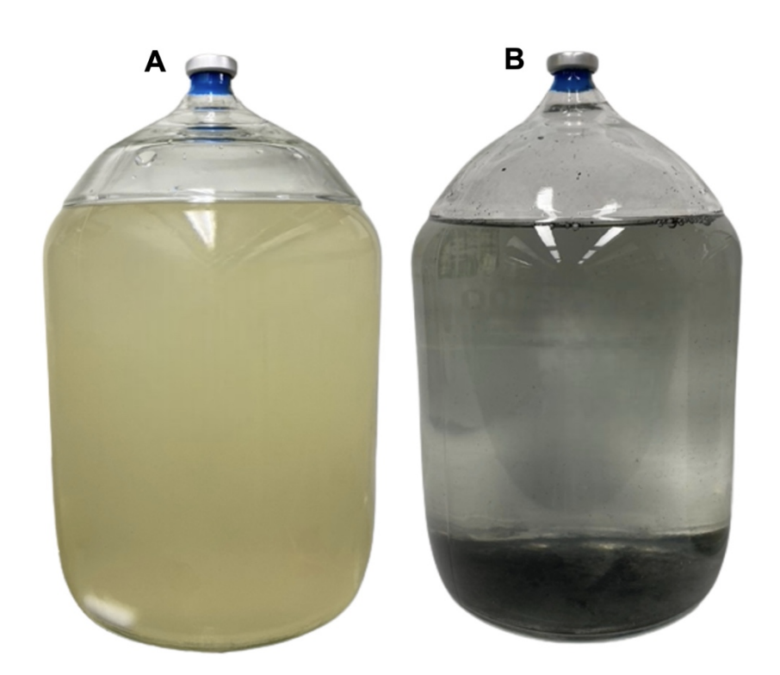
When they incubated the bacteria with glycerol, they found that the bacteria converted uranium into a pentavalent state.
When uranium is pentavalent, it has an unusual oxidation state of +5, which changes how it bonds to other elements, making it easier to 'lock up' within stable minerals.
"Uranium usually occurs with a valency of 4 or 6. Pentavalent uranium does exist, but it is rare or only transient. Until now, it had been seen in an unstable oxidation state," explains Antonio Newman-Portela.
In the presence of the bacteria, pentavalent uranium is then combined with iron and oxygen to form FeU(V)O4 – a compound that scientists were already aware of but have yet to give a 'common' name to.
What they didn't know was that it could form in nature, let alone that bacteria were involved.
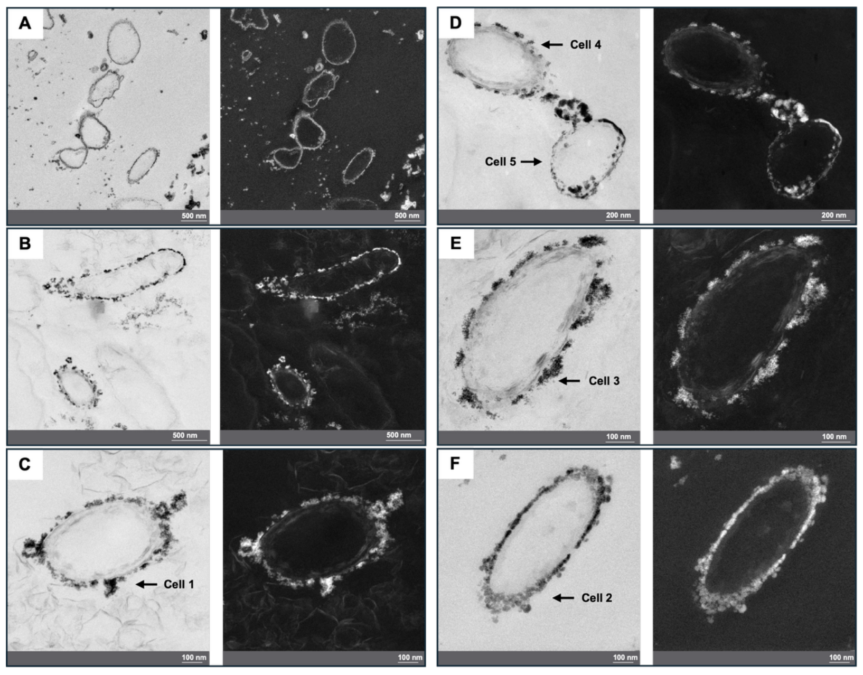
"After 130 days, only around five percent of the uranium dissolved in the water remained in the samples," says Newman-Portela.
The bacteria had not only incorporated the uranium into their cell walls, but an unusually high proportion of that uranium was pentavalent. This meant it more readily formed FeU(V)O4, especially when the water samples were dried and exposed to oxygen.
Radioactive uranium contamination is a global problem.
In the United States, India, Canada, France, South Africa, and Australia, surface water and groundwater have sometimes exceeded the 0.03 milligram per liter guidelines for uranium contamination.
Could bacteria be part of the solution?

"Over the last three decades, bioremediation has been explored as a cost-effective alternative to physico-chemical water treatment," the authors write.
"Field studies [using biological methods] have demonstrated substantial uranium reduction while avoiding the generation of secondary sludge."
Perhaps these bacteria could be allies in our quest to clean up nuclear contamination, not just in Germany, but across the world.
Related: This Infamous Radioactive 'Tomb' Is Leaking, And Experts Are Worried
"Although derived from a single geochemical scenario, the processes identified here are broadly applicable to other contaminated waters," the authors conclude.
But, as Krawczyk-Bärsch points out, "we still have to investigate to what extent bacteria might help to render uranium harmless for remediation purposes."
The research was published in Nature Communications.
This article was fact-checked by Carly Cassella and edited by Rebecca Dyer. While we pride ourselves on our process, we are only human. If you spot a mistake, please let us know.