The ketogenic diet has become one of the world's most popular eating plans.
Originally developed to help control epilepsy, the high-fat, low-carbohydrate diet has since been investigated for everything from weight loss to Alzheimer's disease – and even as a potential way to influence cancer.
But despite years of research, scientists still don't fully understand how the diet affects different organs, let alone different parts of the digestive tract.
While some studies have suggested ketogenic diets may help suppress certain tumors, others have hinted that the picture is far more complicated.
Now, researchers have uncovered another piece of that puzzle, publishing their findings in Nature.
In experiments involving mice genetically predisposed to intestinal cancer, the same ketogenic diet appeared to produce completely opposite effects depending on where in the gut it was acting: It accelerated tumor growth in the small intestine while suppressing tumors in the colon.
The biggest surprise wasn't simply that the diet produced opposite outcomes, but what seemed to be causing them.
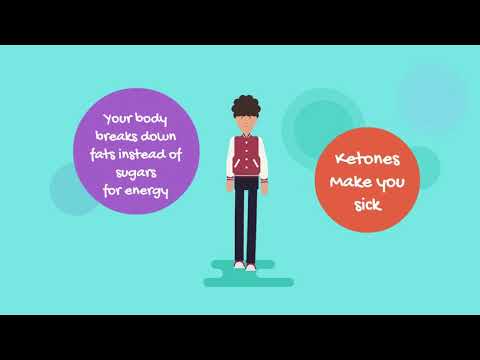
Rather than being driven by ketone bodies – the molecules that have become almost synonymous with ketogenic diets – the effects were linked to how intestinal cells metabolize dietary fat.
The findings challenge one of the leading theories about how ketogenic diets influence cancer.
The team, led by MIT biologist and pathologist Omer Yilmaz, wanted to understand whether the ketogenic diet's reported benefits against colorectal cancer might extend to other parts of the intestine.
To find out, the researchers fed mice genetically predisposed to developing intestinal tumors one of three diets: a ketogenic diet, a standard control diet, or a high-fat, high-calorie diet commonly used to induce obesity.
The results were unexpected.
"Surprisingly, neither increasing nor eliminating ketone production altered intestinal tumor growth," co-first author and MIT molecular biologist Fangtao Chi told ScienceAlert.
"Instead, we found that its tumor-promoting effects in the small intestine were driven by the metabolism of dietary fat rather than by ketone bodies."
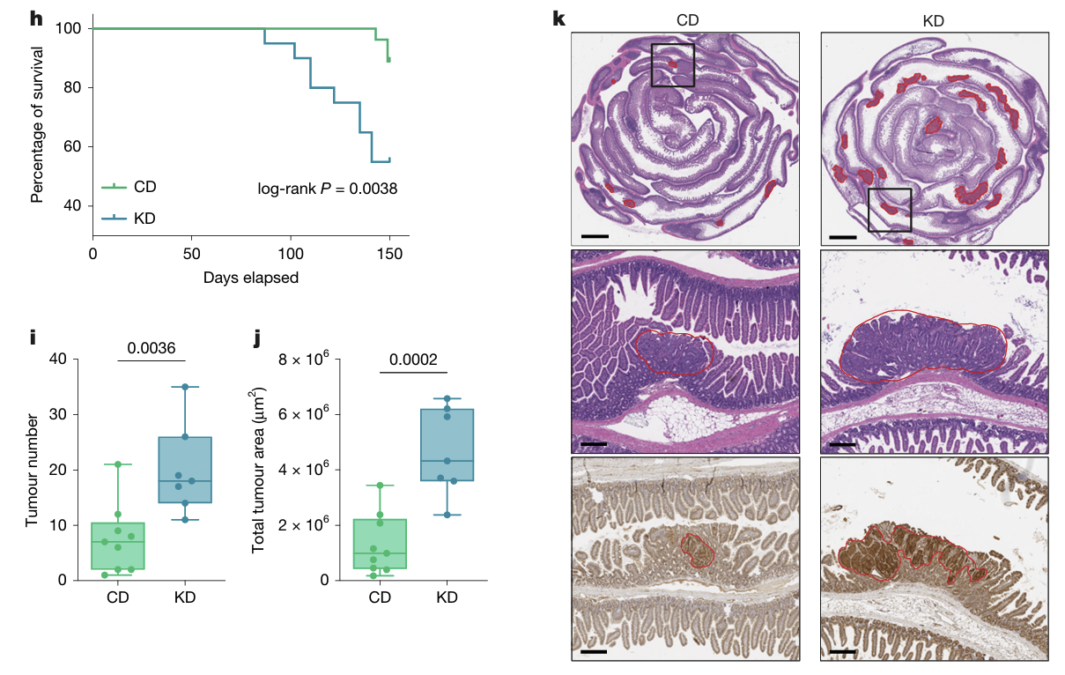
Mice on the ketogenic diet developed small intestinal tumors at rates comparable to – or even higher than – those fed the obesity-inducing diet, despite remaining lean themselves.
At the same time, the ketogenic diet continued to suppress tumor development in the colon, echoing findings from earlier research.
That raised an obvious question: if ketone bodies weren't responsible, what was?
For years, ketones – particularly beta-hydroxybutyrate (BHB) – have been considered one of the defining features of the ketogenic diet, and previous studies had suggested they might help explain its protective effects against colorectal cancer.
Instead, the MIT team found that the real driver was something else entirely.
As intestinal cells broke down dietary fat for energy – a process known as fatty acid oxidation – they activated proteins called PPARs. Those proteins, in turn, encouraged intestinal stem cells to divide more rapidly.
While that extra stem cell activity can help repair damaged tissue, it also increases the chances that some of those cells will become cancerous.
"Having more stem cells means that when you injure the small intestine, it can repair itself better," Yilmaz told ScienceAlert.
"But the downside is that having more active stem cells can lead to tumor formation."
The new findings also challenge one of the biggest ideas in keto research.
A 2022 Nature study suggested that ketogenic diets help protect against colon cancer because of ketone bodies such as BHB. The new study reached a different conclusion.

"Diet and metabolism are often discussed together, but they're not always the same thing," MIT hepatologist Jessica Shay, co-first author of the study, told ScienceAlert.
"Our findings show that in this model, it's the high dietary fat content, not the ketone bodies produced during ketosis, that drives these effects on intestinal cancer, highlighting the importance of distinguishing ketogenic diets from ketone supplements."
The researchers found that ketones weren't driving either effect.
Instead, both the protection seen in the colon and the increased tumor growth in the small intestine appeared to be linked to how cells burn dietary fat.
"We expected ketone bodies like BHB to be the direct drivers," said Yilmaz.
"Instead, we found they were essentially metabolic bystanders."
Like all preclinical studies, these findings come with important caveats.
The experiments were conducted in a mouse model genetically predisposed to developing intestinal tumors. The closest human equivalent is familial adenomatous polyposis, a rare inherited condition that greatly increases the risk of developing intestinal tumors.
Related: Constipation May Be More Than a Simple Digestion Problem, Scientists Say
The researchers say more work is needed to determine whether the same mechanisms operate in people.
The study also suggests that commercially available ketone supplements are unlikely to reproduce either the risks or the benefits seen in the experiments.
Because the effects were linked to fat metabolism rather than ketone bodies themselves, simply increasing ketone levels may not have the same biological impact.
The team is now trying to understand why the same diet has such different effects in two neighboring parts of the intestine.
"We don't know why they're responding differently," said Yilmaz.
"That's the question we're working on next."
The findings are reported in Nature.
This article was fact-checked by Clare Watson and edited by Rebecca Dyer. While we pride ourselves on our process, we are only human. If you spot a mistake, please let us know.