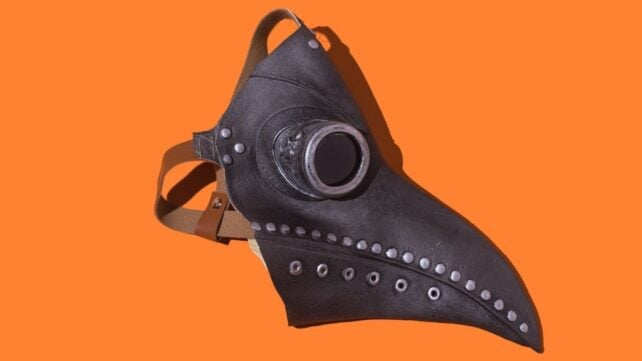
When people think of the plague, they might think of medieval peasants with painful lumps under their arms, being treated by doctors wearing creepy bird-like masks.
But the disease still persists today, and can be lethal if not treated quickly.
Now, almost 700 years after the Black Death killed 50 percent of the European population, we may soon have a new vaccine for this notoriously deadly disease.
In tests in mice, two new vaccines were found to be 100 percent effective against infection by Yersinia pestis, the bacterium that causes plague.
Importantly, this vaccine worked against pneumonic plague, a particularly deadly form of the disease that infects the lungs. It's no surprise then that 100 percent of the control mice succumbed to the disease within a few days of infection.
If it's caught early enough, plague can be treated with antibiotics, but as with other bacterial diseases, these pathogens are increasingly developing resistance to our best drugs.
While primate tests are still required before human trials can begin, these new vaccines could eventually fill a crucial gap.
Currently, there are no plague vaccines approved for use by the US Food and Drug Administration (FDA), and without confirmed options, the World Health Organization doesn't recommend vaccination, except for high-risk groups like health care workers in affected areas.
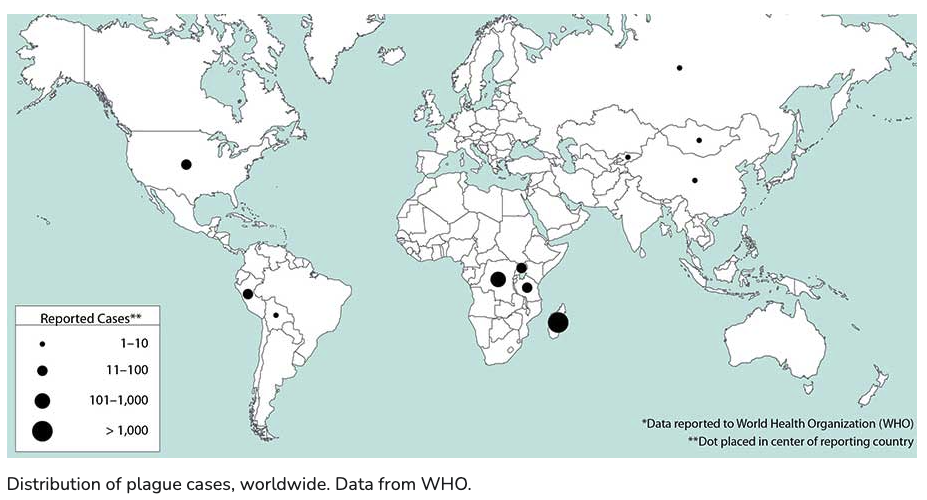
While plague is often thought of as a medieval disease, a few hundred to a few thousand cases are still reported every year, along with occasional outbreaks.
Most of these occur in Africa, but the plague can appear almost anywhere human populations live alongside rat fleas, the host of the Y. pestis bacteria that cause the disease.
People generally think of bubonic plague first, the form that induces painful blisters under the arms or in the groin area of patients. But pneumonic plague, which attacks the lungs, is an even deadlier threat – it's almost always fatal if left untreated, usually within three to four days of symptoms showing.
That makes the 100-percent effectiveness of the new vaccines even more impressive.
Researchers at the University of Texas Medical Branch at Galveston developed two new vaccines against Y. pestis, called LMA and LMP.
These are live-attenuated vaccines, meaning they use living but weakened and mutated versions of the bacteria to stimulate the immune system, so that it can respond if it should ever encounter the natural pathogen later.

The researchers administered the vaccines through an intramuscular injection, followed by a booster 21 days later. That second dose was either the same vaccine again, delivered the same way, or an adenovirus-based vaccine that contained three plague antigens, which was delivered through the nose.
This latter technique is known as a prime-pull strategy. Essentially, the intramuscular dose 'primes' the immune system, then the shot-to-the-nose 'pulls' the immune cells to the pathogen's point of entry: the nasal tissue.
Next, 32 days after the second dose, the researchers exposed the mice to a lethal dose of Y. pestis. Unsurprisingly, 100 percent of the control mice died within four days of infection – but all of the vaccinated mice survived.
Another week after the challenge, the researchers exposed the mice to an absolutely monster dose of plague bacteria. Protection remained strong at 100 percent in most groups, thought it did drop to 80 percent in one particular group.
This affected group was made up of mice that had received two intramuscular doses of LMA or LMP, but not the nasal adenovirus vaccine. They also had been engineered to lack a gene that produces an immune cell called interferon-gamma, which is thought to play a key role in protecting against bacterial infection.

Analysis of the serum, mucus, and other fluids of immunized mice revealed that the vaccines elicited strong antibody responses.
Related: DNA Reveals an Ancient Killer Was Already Deadly 5,500 Years Ago
"Our vaccines and vaccination strategies are promising and should be further evaluated in nonhuman primates, followed by human clinical trials," the researchers write in a paper describing the vaccines.
"In addition, the ability of combinatorial vaccines to elicit rapid and efficacious immunity against plague should be evaluated for their use in reactive/emergency scenarios and ability to generate durable immunity."
The research was published in the journal Science Translational Medicine.
This article was fact-checked by Clare Watson and edited by Peter Dockrill. While we pride ourselves on our process, we are only human. If you spot a mistake, please let us know.