It seems inconceivable, even if you're aware of the perilous situation that the world's water supplies are in, but a developed coastal city in Texas that more than 300,000 people call home is now in serious danger of running out of water.
The city is Corpus Christi, and difficulties with water scarcity are now coming to a head after years of concerns over shortages.
There are multiple issues combining here, perhaps most importantly the arrival of major industrial developments, off the back of the unlocking of vast oil and gas reserves that came with the shale revolution.
One plastics chemical complex, built in 2022, uses as much water for cooling every day as all the Corpus Christi residents combined.

A planned seawater desalination plant, which was supposed to ease some of the pressure brought on by rising industrial water usage, never materialized, further compounding the problem of supply.
And then there's climate change: Texas has been hit by a series of historical droughts in recent years. It all adds up to a scarcity of water that life and businesses rely on.
"Corpus Christi has come as close to running out of water as practically any city in the United States," says Dylan Baddour, a journalist at Inside Climate News.
"They've rebounded a good bit since the beginning of this year, but they have about one year of water in storage right now, which would already be considered an emergency for any city."
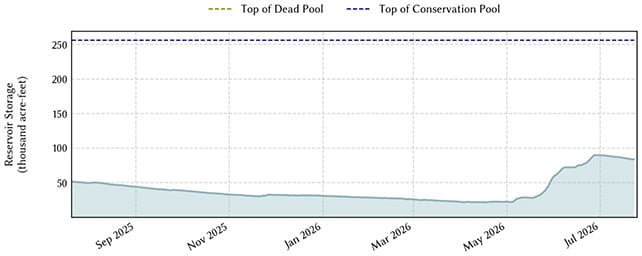
While rainfall during 2026 has eased the pressure somewhat, reservoir levels are still precariously low, and it's not clear how much longer the situation can go on for.
The desalination plant plans haven't been completely abandoned.
There's still a proposal on the table to build a huge facility for removing salt and impurities from seawater, which would produce an estimated 378 million liters (100 million gallons) of water a day (twice as much as the biggest desalination plant currently in the US, in San Diego).
However, the plant has been discussed since 2017, and efforts to move forward with it are being caught up in red tape and questions over funding. The bill for the facility is reportedly in the region of $6 billion.
"There were years of fumbling around, of folks trying to get something on the books, other people seeking to stop it, and all the while, water was running out," says Arcelia Martin, also a journalist at Inside Climate News.
Other options being explored are groundwater wells drilled deep underground – already supplying 12 million gallons a day – but these solutions are also vulnerable to drought. Plans to use wastewater for industrial cooling purposes are also being explored, with supplies set to go online this year.

City residents have faced restrictions around watering their gardens or washing their cars since August 2024, but it was expected that emergency measures might have to be introduced as early as December 2026.
Thanks to the rains we've seen this year, that prediction has now been pushed back to September 2027, but there's still very little margin for error. City authorities need to find a solution to the water scarcity problem, and quickly.
Emergency measures might include rolling 'water blackouts', where water is only available for some parts of the day, for example. However, that's not really a solution for industrial uses – these refineries and plants would have to be shut down, bringing subsequent knock-on effects on the economy and communities.
Sadly, as with other natural resources, it seems that we haven't been appreciating what we had until we're dangerously close to running out.
Related: UN Report Warns There's a Different Type of 'Pandemic' Coming For The World
"What this story shows us is that point where we begin to see what it means for a city to run out of water," says Baddour.
"It's never really happened here, or on a large scale in the world, in modern times."
"The possibilities that it raises are tremendously grave, and that's what we're dealing with here."
This article was fact-checked by Michael Irving and edited by Rebecca Dyer. While we pride ourselves on our process, we are only human. If you spot a mistake, please let us know.