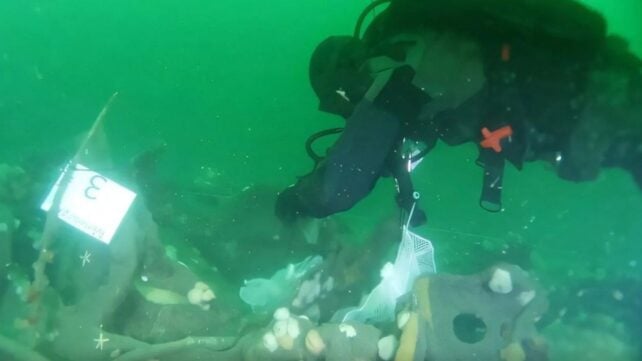
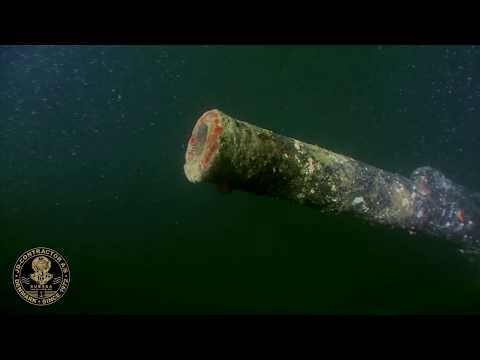
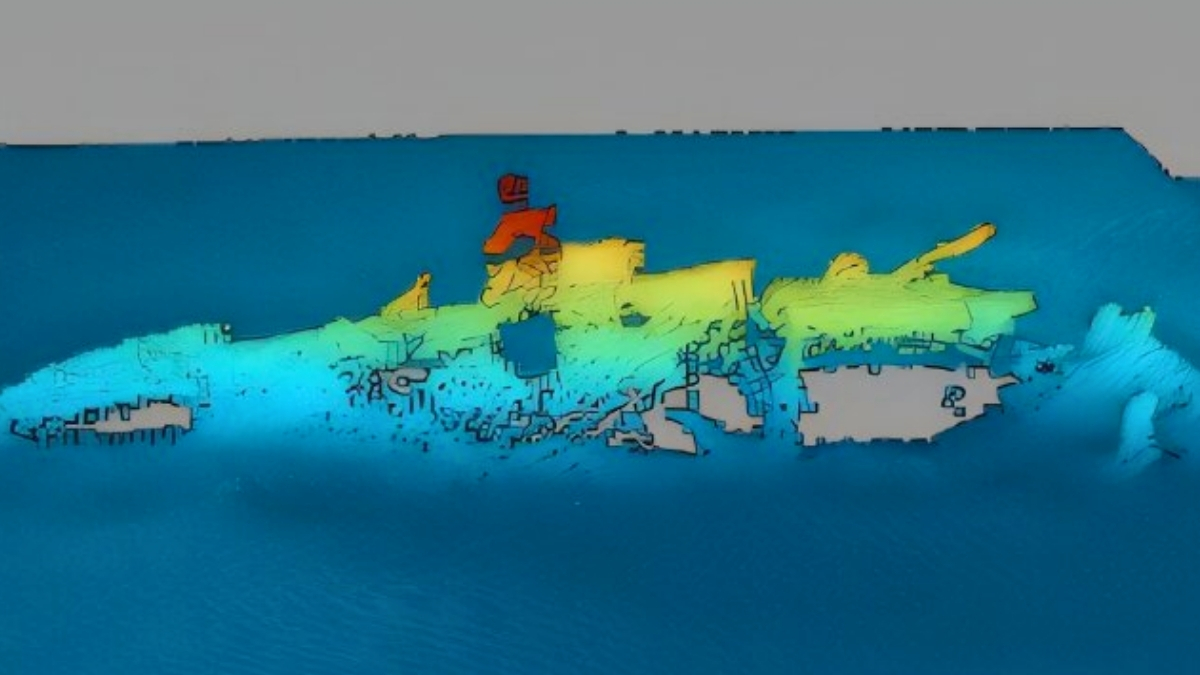
A German WW1 submarine known as SM UC-30 was returning home in April 1917 when it hit a British mine and sank.
Twenty-seven men were lost in the wreck, along with the 18 mines and six torpedoes the submarine was loaded with.
For decades, nobody knew where the boat ended up.
Then, in 2016, Danish diver Gert Normann Andersen rediscovered the sunken boat and its toxic arsenal on the floor of the North Sea.
Civilian diving was forbidden due to the risks, but geoscientist Katrine Juul Andresen from Aarhus University in Denmark was not put off.
She wanted to know if the explosives were leaking from the wreck, and what impact they might be having on the surrounding marine life.
As part of an ongoing effort to locate and investigate dangerous wrecks in the North Sea, Andresen and her collaborators worked with the Royal Danish Navy to explore the site.
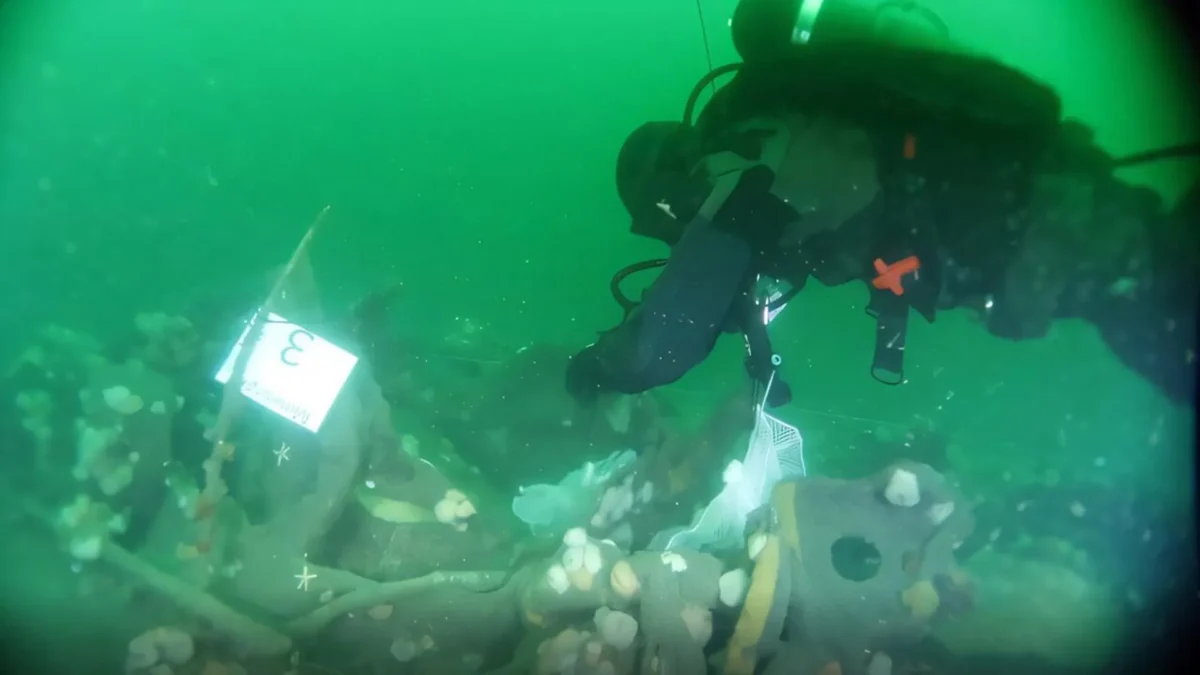
"We received great assistance from navy divers," she explains.
"After receiving instructions, they dove down and collected sediment samples, water samples, and wildlife samples from various locations on the wreck and from the surrounding seabed."
The Navy divers also took video and photos of the wreck, which helped the scientists assess the wreck's condition and how exposed the mines were.
"We found traces of TNT in the wildlife, the seabed, and the water column," Andresen says.
"Pollution is definitely occurring. The question is how significant the effect is and how far from the wreck the pollution impacts the marine environment."
She thinks the pollution source is relatively localized, but says it will worsen as the wreck continues to deteriorate and expose more of the explosive material inside the mines.
"Many of these chemical compounds… are toxic and threaten the marine environment and its organisms," writes Andresen and team.
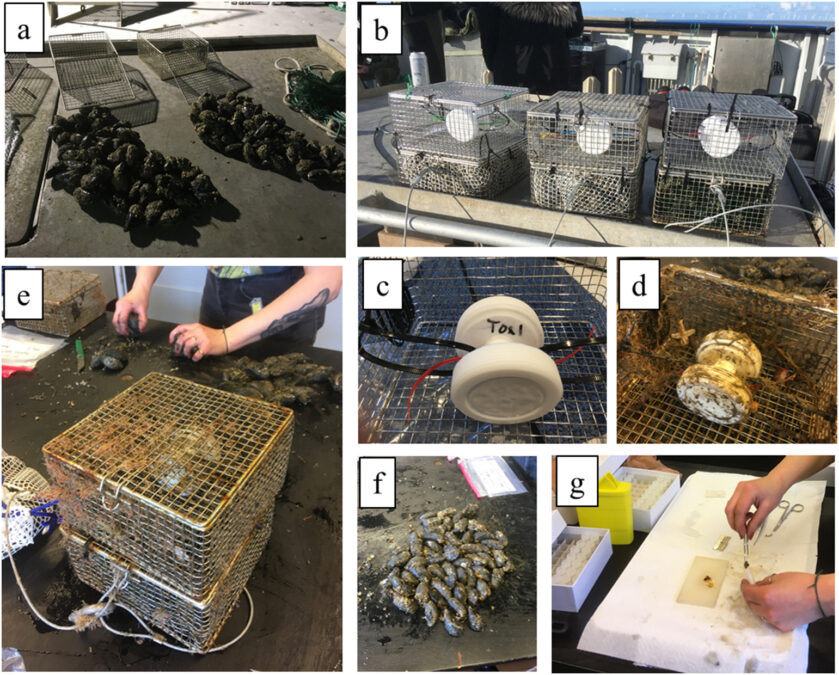
They conducted field experiments by placing healthy blue mussels (Mytilus edulis) on three North Sea wrecks, including SM UC-30, for at least 11 weeks, to see what impacts exposure had at different sites.
Because all the mussels started life in more or less the same growing conditions, the differences between them by the end of the experiment were useful indicators of the influence of the TNT-laden wreck environments.
There are a lot of other variables between wreck sites that could impact the growth of marine life.
Still, the concentrations of TNT and related molecules, 4-ADNT and 2-ADNT (which are formed when TNT is either digested by bacteria or altered by chemical reactions in seawater), gave a pretty clear picture of which wrecks were posing a more significant environmental hazard.
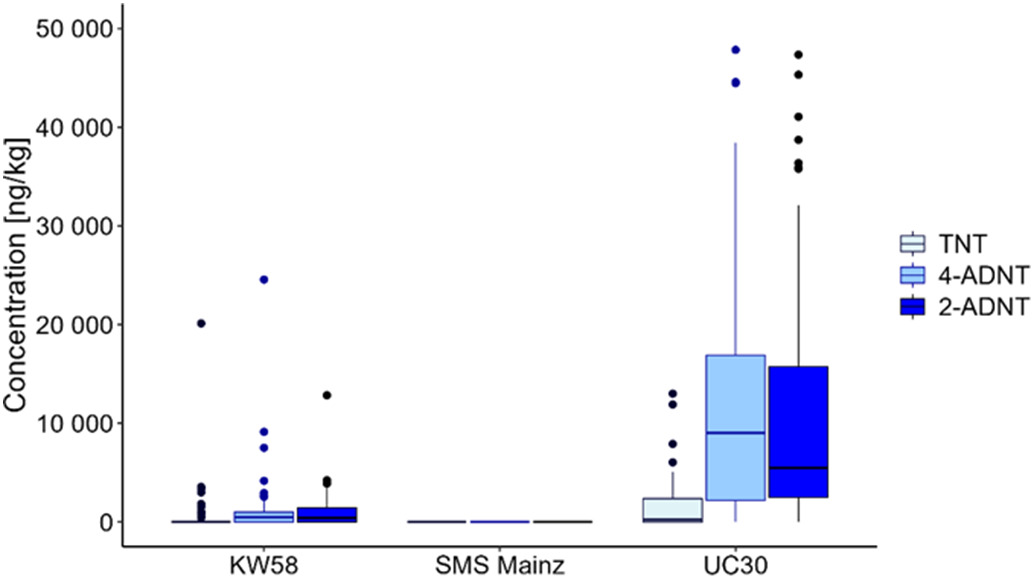
While all three wrecks were known to carry munitions, the TNT-laden mines on UC-30 were the only explosive units in direct contact with seawater, leading to heavy corrosion.
They found different rates of accumulation of TNT, 4-ADNT, and 2-ADNT in cells in the mussels' digestive glands, "indicating negative impacts emanating from munitions-laden wrecks."
And with the greatest concentrations seen in the mussels submerged at the UC-30 wreck came the greatest indicators of oxidative stress and metabolic disruption.
"Significant differences can be seen in the activity of the enzymes involved in detoxification processes," the authors report.
Many thousands of wrecks from war lie on the sea floor globally, still loaded with munitions. And after decades of exposure to salty water, the metals that encase those explosives corrode away.
The explosive contents of these wrecks are no small drop in the ocean: experts estimate there are 1.6 million tons of conventional munitions (i.e., standard explosives, as opposed to nuclear or chemical weapons) in German waters in the North and Baltic Seas, mostly left over from World War 1 and 2.
Much of this was deliberately dumped after the wars.

There's no easy way to clean up this mess: detonating the munitions can spread the contamination and worsen the problem; retrieving the explosives is dangerous, and costly.
Related: Sunken Soviet Submarine Is Leaking Radioactive Material in The Ocean
It's a timely reminder of the centuries-long legacies that wartime activities have on global ecosystems, even in places far from the sites of battle.
The research was published in Marine Pollution Bulletin.
This article was fact-checked by Rachel Garner and edited by Rebecca Dyer. While we pride ourselves on our process, we are only human. If you spot a mistake, please let us know.