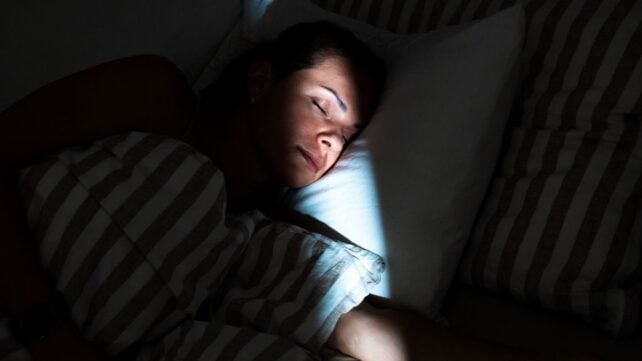
A major study of more than 10,000 adults has found that exposure to light at night is associated with subtle yet measurable signs of cardiac damage.
Compared to participants who slept in near darkness, those who were subject to even a little bit of light – say, through the crack of a door – were more likely to have hearts with larger chambers and thicker walls.
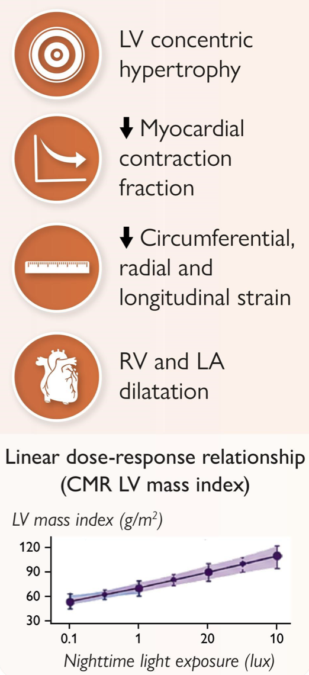
The risks went up with each 'dose' of light.
Participants in the highest-exposure group experienced light above 3 lux for an average of nearly 34 minutes per night.
That's roughly equivalent to keeping three candles burning about one meter (3.2 feet) away from the bed.
But even such dim light may be impacting the heart, according to the new results, published in the European Heart Journal.
The cardiac walls of participants who slept under lit conditions the longest were 1.5 percent thicker than participants who slept with nearly no light at night.
The mass of their left ventricles was also 2.4 percent larger, and their heart's contractile function was 1.9 percent lower.
"This is the first study of its kind, and it shows that exposure to higher levels of light at nighttime is linked to cardiac remodeling," says epidemiologist Lu Qi from Tulane University in the US.
"This is where the structure and function of the heart change, and we typically see it in response to chronic stress or injury to the heart. It's our body's way of adapting to that stress, but ultimately it weakens the heart and can lead to heart failure."
The findings come from the United Kingdom Biobank, which tracks health changes across the nation's population over time.
Participants included in the study had nighttime light exposure assessed for one week using wrist-worn light sensors.
The structure and function of their hearts were also measured using cardiovascular magnetic resonance (CMR).
Compared to participants with no nighttime light exposure, those who experienced roughly half an hour or more of light at night showed worrying signs of cardiac remodeling, including an increase in the thickness of the left ventricle's walls and impaired contraction.
While these changes are technically 'subclinical', meaning they don't show noticeable outward effects, Qi and colleagues argue that they are still clinically relevant.
A parallel analysis involving 73,286 participants found that those exposed to the highest light at night had links to poorer health outcomes.
These participants had a 29 percent higher risk of heart failure, a 15 percent higher risk of atrial fibrillation, a 24 percent higher risk of myocardial infarction, a 33 percent higher risk of stroke, and a 26 percent higher risk of dying from cardiovascular disease over the course of 8 to 10 years.
Exposure to bright daytime light (greater than 1,000 lux) showed no associations with cardiovascular outcomes or mortality.
"The relationship is biologically coherent, the effect sizes are clinically meaningful, and the dose–response is unambiguous: more light, worse outcomes," write three cardiologists from Germany, who were not involved in the study, in an accompanying editorial.
"The takeaway is clear, darkness deserves recognition as a vital sign, as essential to cardiovascular health as blood pressure control and clean air."
"The takeaway is clear, darkness deserves recognition as a vital sign, as essential to cardiovascular health as blood pressure control and clean air."
The study from the UK Biobank is only observational, but because it was conducted among such a large number of people, it was able to glean tiny changes in the heart that may be connected to sleep.
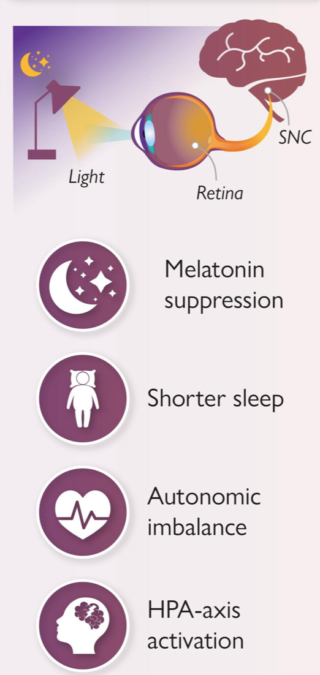
Interestingly, the study researchers found shorter sleep durations may partly explain why light at night has an impact on the heart
Upon further analysis, this factor explained between 25 and 50 percent of the changes observed.
The findings underscore the importance of getting enough sleep at night, and they suggest that keeping a bedroom dark at night through the use of blackout curtains or eye masks could help.
Today, it is well-established that light exposure at night suppresses melatonin secretion, which is a key hormone that regulates our sleep cycles by helping us fall asleep.
Perhaps light during key hours of the night keeps us awake, and this could have downstream effects, placing more stress on the heart.
More direct research is needed to investigate the possible mechanisms at play.
Related: Wearing an Eye Mask While You Sleep Could Have Surprising Mental Benefits
"Light pollution has emerged as a new risk factor for cardiovascular disease," says Qi.
"Our findings, together with evidence from other studies, suggest that reduction of nighttime light exposure should be considered as one of the potential strategies for preventing heart disease by clinicians and policymakers."
The study is published in European Heart Journal.
This article was fact-checked by Fiona MacDonald and edited by Fiona MacDonald. While we pride ourselves on our process, we are only human. If you spot a mistake, please let us know.