
Could changing your diet really turn back your body's clock?
Not the wrinkles on your face or the gray in your hair. The clock in question is hidden in signals carried by your blood, metabolism, and cardiovascular system.
In a new study, some older adults ate differently for just four weeks – and estimates of their biological age shifted several years younger.
Even more surprising, the strongest change appeared in a group eating more carbohydrates and less fat, challenging the familiar idea that carbs must always be cut.
So did these people really become younger in a month? Or did the clock measure something more fleeting?
The study, published in Aging Cell, offers an intriguing but cautious answer.
Researchers at the University of Sydney analyzed data from 104 adults aged 65 to 75 who participated in the Nutrition for Healthy Living trial.
Every meal they ate for four weeks was prepared and delivered by the researchers. Participants did not count calories and could eat as much as they wanted from the supplied menus.
They were randomly assigned to four groups, meaning they did not choose which diet to follow.
Two diets included both plant and animal foods, with half their protein coming from animal sources. Two were semi-vegetarian, with 70 percent of protein coming from plants.
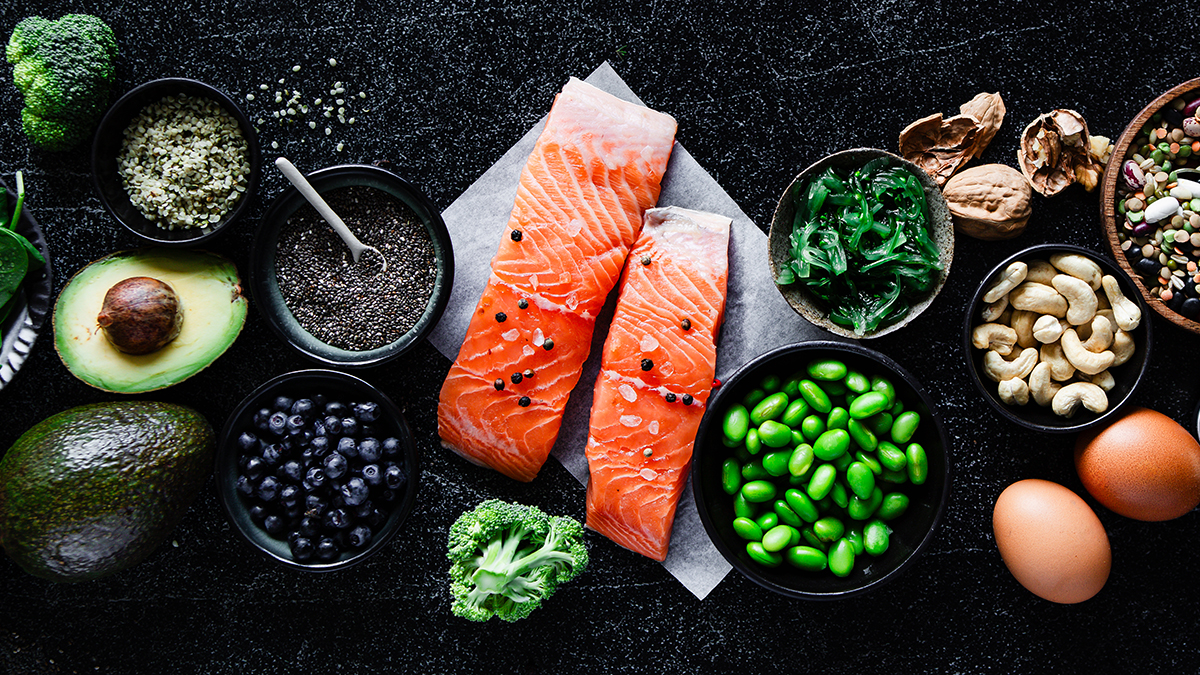
Each type was split again. One menu contained more fat and fewer carbohydrates; the other contained less fat and more carbohydrates. In every diet, protein supplied 14 percent of total energy.
Before and after the trial, researchers calculated participants' biological age.
Chronological age records time since birth. Biological age reflects how old the body appears based on measurements such as blood pressure, blood sugar, cholesterol, inflammation, and body composition.
The team used the Klemera-Doubal Method, or KDM, to combine age-related clinical measurements into a single estimate. Two versions incorporated seven or 15 markers, including cholesterol, glucose, insulin, blood pressure, waist circumference, and body mass index.
The high-fat diet containing animal foods, which most closely resembled participants' usual diets, produced no meaningful change in biological-age estimates.
Estimates fell in the other three groups.
The strongest evidence came from the group eating both plant and animal foods, but with less fat and more carbohydrates.
Depending on the KDM calculation, this group's biological-age estimate was around 3.5 to 4.1 years lower than that of the high-fat comparison group after baseline differences were taken into account.
But that does not mean four years vanished from anyone's life.
Study co-author Alistair Senior tells ScienceAlert that calling participants biologically younger would slightly overstate the finding. Instead, the diets gave them "the biomarker profile of a younger person," he says.
And "high carbohydrate" did not mean a menu of cake, candy, and white bread.
The carbohydrates came mainly from whole, minimally processed foods. The researchers warn that their findings should not be extended to diets rich in refined sugars or simple carbohydrates.
The groups with lower age estimates also consumed more fiber, less fat, and less animal protein than they usually did.
Senior says saturated fat intake, which distinguished the high-fat omnivorous diet from the other three, may explain the difference.
There is another mystery.
Biological-age measures can react quickly to temporary changes. Previous research has found that stress can push biological age upward before measurements fall again during recovery.
Diet can rapidly alter blood sugar, cholesterol, insulin, inflammation, and blood pressure. Because these feed into the KDM calculation, the clock may have moved even if the deeper trajectory of aging did not.
That leaves the study's central question unresolved: Did participants begin aging more slowly, or did their bodies simply respond positively to four weeks of different food?

The trial cannot separate those possibilities.
It lasted only four weeks and involved a small, relatively healthy group of older Australians. Participants already had younger-than-expected physiological profiles at the beginning.
Researchers also do not know whether the changes continued once the supplied meals ended, reduced age-related disease risk, or helped anyone live longer.
Senior says much longer studies must track participants' risk of age-related disease. If a diet gives someone both the biomarker profile and disease risk of a younger person, "functionally what else do you want?" he asks.
Still, the findings offer a tantalizing clue.
The body's apparent age may not be carved in stone. It may behave like a dashboard, moving as metabolism, inflammation, and cardiovascular health respond to what we eat.
Related: Scientists Are Trying to Define What 'Reversing Aging' Really Means
Four weeks of controlled meals did not prove that aging had been reversed. But they showed how quickly the body's age-related signals can answer when the menu changes.
The study was published in Aging Cell.
This article was fact-checked by Fiona MacDonald and edited by Fiona MacDonald. While we pride ourselves on our process, we are only human. If you spot a mistake, please let us know.