
We've known for decades that multiple sclerosis (MS) and Epstein-Barr virus (EBV) are linked, and experts think it's probably down to a complex combination of environmental and genetic factors.
In a new study published in Nature Medicine, researchers have mapped out a pattern that brings us closer to understanding how EBV infections might trigger MS in some people.
The research found patients with multiple sclerosis tend to show signs of EBV 'reactivating' in their bodies within the three months before their MS symptoms flare up.
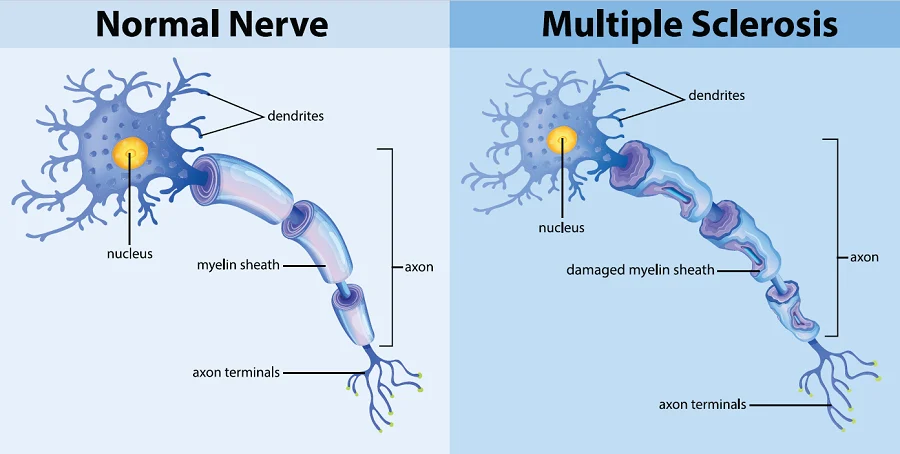
MS is an autoimmune condition in which the person's own immune system attacks the myelin sheath that's supposed to protect their nerves. Especially in its early stages, the disease tends to appear in flare-ups, interspersed with periods of remission.
These flare-ups or relapses of MS can look different from patient to patient, but generally they involve the sudden appearance of new symptoms lasting at least 24 hours, such as loss of balance, severe fatigue, and blurred vision. They can also mean existing symptoms worsen.
Infection with EBV vastly increases the risk of developing MS and seems to be involved in triggering relapses.
EBV is extremely common. Carried through saliva, this surreptitious herpesvirus can be easily transmitted by sharing drinks, food utensils, or kissing.
It's the virus that most commonly causes mononucleosis, better known as 'mono'.
About 95 percent of adults in the United States are estimated to have been infected with EBV at some point in their lives.
The trouble is, once you're infected with EBV, the virus never really goes away.
It hangs around in your body in a dormant state, without causing any symptoms.
But stress, certain drugs, and immunosuppression can convert the virus back into its reproductive, active form.
The new study, which was based on data from participants in a study at Brigham and Women's Hospital, brings us closer to understanding why EBV reactivation and MS relapses often go hand in hand.
Based on analysis of blood samples from 114 people with MS and 21 healthy controls, the reactivated EBV may set off a molecular and genetic chain reaction that culminates in an MS attack.
This was an observational study (researchers measured outcomes in data without assigning people to make changes for the sake of an experiment), so it's impossible to say if EBV reactivation actually causes the MS attacks.
What the study does show is that proteins originating from the virus can trigger certain genes – ones associated with MS risk – to be expressed, just before patients experienced an MS relapse.
These same patterns could not be seen in the blood of MS patients in remission, or in healthy participants.
Some of the greatest changes were seen in B cells, immune cells in which dormant EBV loves to hide out.
In MS patients, B cells misidentify the sheath of nerve cells as a threat, causing killer T cells to attack.
The majority of people infected with EBV will not go on to develop MS. But the new study suggests the virus might be involved in 'unlocking' a relapse in genetically susceptible people who already have MS.
"This study puts all the pieces together, showing a timeline of how the reactivated virus interacts with risk genes to unleash inflammation before relapse occurs," says neuroimmunologist Tanuja Chitnis, of Mass General Brigham.

This could even help doctors identify patients at risk of MS relapse ahead of time with a blood sample, though larger studies are needed to confirm how broadly such biomarkers could be applied.
It could also lead to new treatments – though again, those would still be quite far off, with much more research needed before anything actually reaches the pharmacy.
Related: Scientists Discover New Evidence a Common Virus Helps Trigger MS
"Currently, most MS treatments work by broadly suppressing the immune system," Chitnis explains.
"Our results suggest there's an opportunity to be more precise and develop approaches that target EBV or the immune cells involved in relapse."
The research was published in Nature Medicine.
This article was fact-checked by Rebecca Dyer and edited by Rebecca Dyer. While we pride ourselves on our process, we are only human. If you spot a mistake, please let us know.