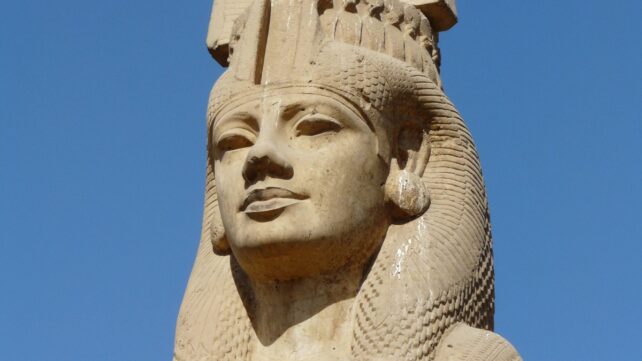
Numerous women ruled ancient Egypt in some form or another throughout its storied history, not to mention some action-movie-worthy princesses.
Notable names include Hatshepsut, Nefertiti, and Cleopatra – seven Cleopatras, in fact.
Sifting back through the sands of time, the first queen of Egypt was Sobekneferu, who ruled almost 4,000 years ago. Or so the conventional chronology goes.
But Egypt's first woman sovereign may have ruled more than a millennium earlier, potentially making her the earliest in recorded history.
Her name was Meretneith, meaning "beloved of Neith," the goddess of war and motherhood, a combination that either makes more or less sense the more you think about it.
Now, new research published in the journal Prague Egyptological Studies reveals some previously hidden (in plain sight) evidence of Meretneith's sovereignty status, and describes her versatile, decades-long rulership in unexplored detail.
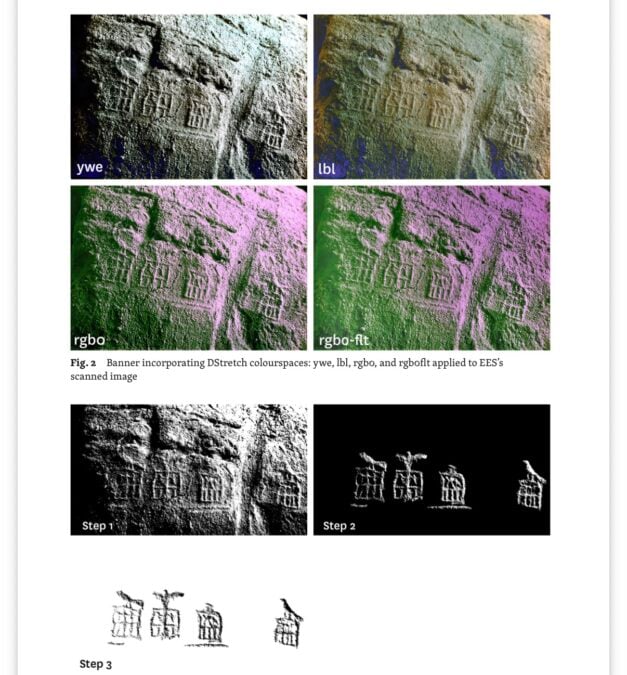
Egyptologist Sue Kelly at Charles University in Prague, and digital archaeologist Crystal Miller at the University of Bucharest in Romania, used a custom digital-imaging technique – isolating the hieroglyphs, inverting the colors, and converting the image into a high-contrast vector graphic – to reveal Meretneith's name inscribed on "serekhs," or royal seals.
Such devices were afforded to Egyptian rulers.
The serekhs adorn a set of 13 mud stoppers – plugs used to seal pottery jars and other vessels – discovered 80 years ago in the mummy-infested Saqqara necropolis (interestingly, this is not where Meretneith was buried).
"In our opinion, the result identifies Meretneith with the primary mark of rulers in this period," Kelly explains.
"This means she really was a female king (not simply a 'queen', but a true equivalent to a male ruler, hence 'king') during the First Dynasty, and the second female ruler of ancient Egypt whose name was recorded in the royal serekh emblem."
It's a complicated, contested situation. Despite her name appearing across many media, including tombs at both the esteemed royal necropolises of Abydos and Saqqara, her status has remained ambiguous and much debated.
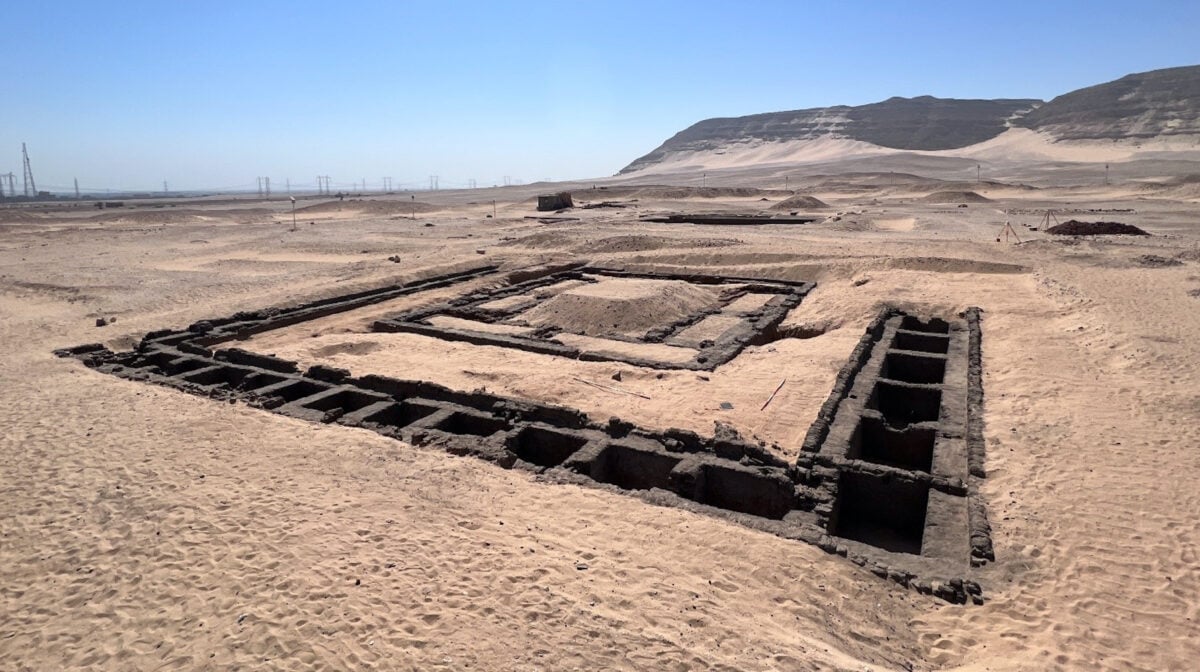
But multiple lines of evidence support Meretneith's prominence, including her royal tomb at Abydos, an "unequivocal ruler's burial," loaded with hundreds of large wine jars and nearly 50 subsidiary graves and chambers, used to inter servants and courtiers.
Her name also appears to have been inscribed on a monumental stone stela, of a kind afforded to rulers – one of a pair recovered from her tomb, though the second was too damaged for its inscription to be confirmed.
Across a career that may have spanned at least 30 years of rulership in some form or another, the researchers suggest that Meretneith began her political trajectory as a co-regent who ruled alongside her possible father, Djer, the third king of Egypt, whose name also appears on the mud-stopper serekhs.
This conclusion builds on an earlier proposal that she'd first served as a crown princess, or heir apparent.
Later, Meretneith may have become regent when her son, Den, was a minor.
Intriguingly, a still-mysterious seal impression found in Den's tomb may list a chronology of rulers, or ancestors for a mortuary cult, with Meretneith's name featured last, with the title of "king's mother."

Additionally, "Egyptians acknowledged her political status by naming her on the tomb seal of a subsequent ruler, Semerkhet," suggesting she was respected after her reign, Kelly explains.
"Other texts indicate that she held authority over the treasury and officials, governing as a ruler without a political title."
Her political versatility likely stemmed from her gender and her position in the ruling family at the time; she adopted numerous, distinct ruler roles as the political environment evolved.
Related: Medical Scans Reveal Hidden Secrets Inside Ancient Egyptian Mummies
"We suggest Meretneith had the advantage of stepping in and out of the political domain as necessitated by the needs of the political environment," Kelly concludes, "unlike male rulers who succeeded her, reigned, died, and were buried by their successors."
This research was published in Prague Egyptological Studies.
This article was fact-checked by Rebecca Dyer and edited by Rebecca Dyer. While we pride ourselves on our process, we are only human. If you spot a mistake, please let us know.