There's a strange allure to herbal supplements. Because they come from plants, many people tend to make two somewhat paradoxical assumptions.
The first assumption is that because these remedies are found in nature (plants or otherwise), they must be somehow inherently good; and secondly, that because they're 'natural', these supplements are totally benign and can just be added on to treatment regimes without any serious effects.
A new study highlights how a compound derived from a common herbal supplement may actually interfere with the proper action of the anti-PD1 therapies often prescribed to tackle deadly melanomas.
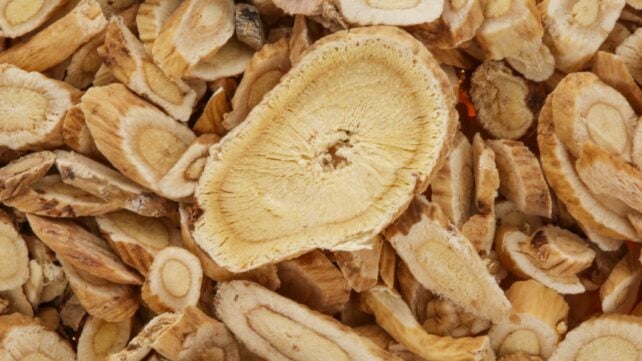
Astragalus supplements, also known as huang qi, are especially popular in Traditional Chinese Medicine. They're typically derived from the root of the plant Astragalus membranaceus.
The people who sell this supplement claim it can boost the body's immune system, and it's particularly touted as helping to fight cancer.
There's no strong clinical evidence that supports that claim, though people still continue to take astragalus, often as a complementary therapy while also undergoing modern cancer treatments.
Some also say it can help cancer-related fatigue, though again, the evidence is insufficient.
But since it's a natural supplement, it can't hurt, right?
Well, given anti-PD therapies can cost patients tens to hundreds of thousands of dollars each year – a horribly steep cost for a potentially life-saving therapy, but a therapy which has good evidence to support it nonetheless – it probably pays to be cautious with what you add to your cancer treatment plan.
The recent study was conducted in mice, so it's far from being conclusive in itself. Just because drugs and supplements work in certain ways in mice doesn't mean they will necessarily do the same thing in humans.
But their bodies are similar enough to ours that they can provide a good starting point to progress the research further.
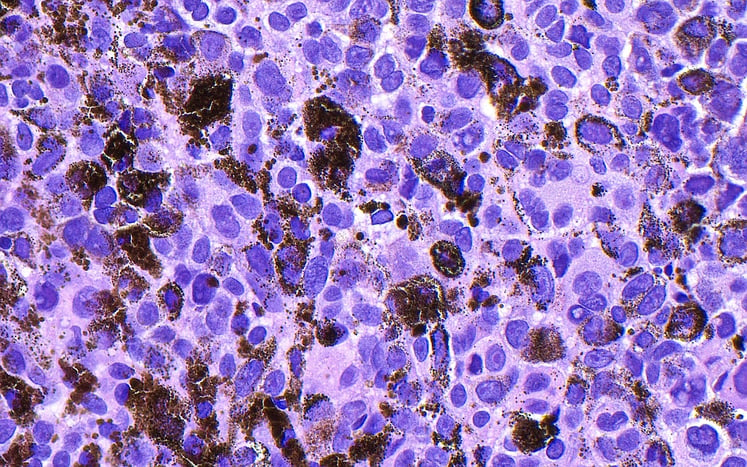
The study involved twenty-four mice, sorted into four groups. These mice were injected with genetically modified cells that caused the rodents to develop melanoma-like tumors.
One group received anti PD-1 therapy (10 mg/kg every three days); one group received astragalus polysaccharide (200 mg/kg daily); a third group was treated with both astragalus and anti PD-1; and a final group received a saline injection as a control.
That injected astragalus polysaccharide dose is the same one that Traditional Chinese Medicine studies found some evidence for in mice, while injectable astragalus polysaccharide is also used in some countries as a complementary cancer therapy.
The researchers measured the mice's tumors every two days, and by day 18, the mice were euthanized.
"Unexpectedly, astragalus polysaccharide significantly antagonized the anti-tumor efficacy of anti PD-1 in melanoma mice," the authors report.
Anti PD-1 is supposed to help dendritic cells and certain T cells (CD4+ and CD8+) – a suite of potent cancer-fighting immune cells – penetrate tumors.
But in the anti PD-1 mice, astragalus polysaccharide appeared to interfere with this process, instead creating what the authors call an "immunosuppressive" microenvironment within the tumor by blocking certain signals – JAK-STAT1/CIITA and TLR/NF-κB – at a molecular level.
Those signals are key to how anti PD-1 therapy works, so injecting astragalus polysaccharide at the same time as undergoing anti PD-1 therapy may be doing more harm than good.
"This study suggests that the combination of natural polysaccharides and immune checkpoint inhibitors may warrant caution, although further studies are needed to validate these findings and determine their clinical relevance," the authors conclude.
The research was published in Frontiers in Immunology.
This article was fact-checked by Peter Dockrill and edited by Peter Dockrill. While we pride ourselves on our process, we are only human. If you spot a mistake, please let us know.