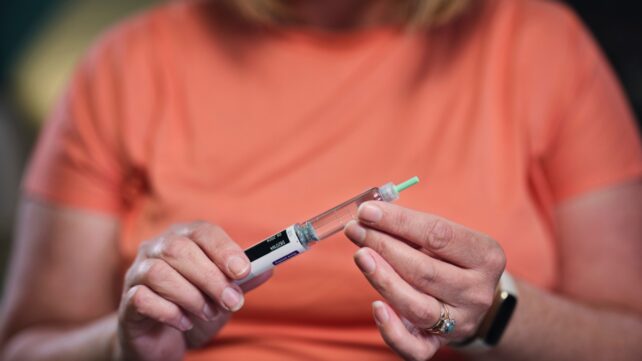
Going under general anesthesia comes with its risks, and taking Ozempic-like drugs could raise a few.
One of these medications relaxes the body's muscles, and the other slows digestion.
Together, that combo could be deadly.
New research from the United Kingdom has found that patients taking GLP-1 drugs – such as Mounjaro, Wegovy, or Ozempic – may be 11 times more likely to regurgitate stomach contents during an elective or emergency procedure than patients not on these drugs.
The absolute risk is small but serious.
If the contents of the stomach are regurgitated and the patient is not in control of their body, they can inhale the material into their lungs, leading to injury or obstructing the airways.
That's why patients about to undergo surgery are typically advised to fast for a certain period of time beforehand.
But those using GLP-1 drugs may need to cut out solid food for longer than the average patient, just to be safe.
In the UK study, almost a third of patients taking GLP-1 drugs had been advised to hold off using their medication for eight to 14 days before the procedure.
But in reality, that may do very little to reduce the risk of regurgitation, and it may increase the risk of blood sugar issues.
Even when patients withhold semaglutide for up to three weeks, evidence suggests their stomach still takes longer to empty.
Stopping the medicines for less than three to four weeks might not be long enough for the effect on the stomach to wear off, the research suggests, led by Kariem El-Boghdadly, an anesthesiologist at King's College London.
"Since tirzepatide and semaglutide have an elimination half-life of 5 and 7 days, respectively, cessation of 25 and 35 days (five half-lives) would be required to effectively eliminate the drug," the researchers write in their paper.

Previous studies have highlighted the risks of pulmonary aspiration and regurgitation for those on GLP-1 drugs, but these findings were largely retrospective with a high risk of reporting bias.
This new research in the UK is a national, multi-center investigation that examined the data of more than 47,000 patients undergoing elective or emergency procedures under the care of an anesthetist.
Compared to those not taking GLP-1 drugs, participants on these drugs were more likely to suffer from regurgitation, especially as they woke up from anesthesia, but sometimes at the beginning or during surgery as well.
Two of these cases led to aspiration.
That meant the incidence of pulmonary aspiration and/or regurgitation in people receiving GLP-1 drugs was one in 71.
Patients not receiving GLP-1 drugs showed a rate of one in 802.
The current research cannot determine how GLP-1 drugs are linked to anesthetic complications, but obesity and diabetes are known risk factors for pulmonary aspiration, so it is possible that these factors are confounding the results.
There were only two cases of pulmonary aspiration among 1,348 patients receiving GLP-1 drugs, which is not a large enough sample size to reveal much.
"These data warrant further prospective studies to determine interventions that may mitigate risks of pulmonary aspiration and improve patient outcomes," the authors conclude.
Especially as many patients may not be telling their anesthetists about their use of GLP-1 drugs.
More than 40 percent of the UK sample had obtained their GLP-1 drugs outside general practice or hospital prescribing routes, such as online.
"Given their effectiveness for weight loss, GLP-1 receptor agonists are obtained increasingly through non-physician or specialist prescription routes, such as online pharmacies," write the study authors.
"Consequently, people undergoing surgery may not readily report their use, and standard approaches to medicines reconciliation might not include them on admission for surgery."
Honesty with your anesthetist, however, is the best policy.
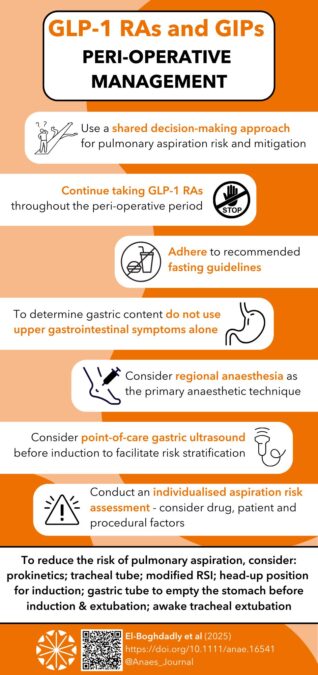
The American Society of Anesthesiologists currently recommends that most patients continue with their drugs for diabetes or weight loss before an elective procedure.
The society advises, however, that those with a high risk for gastrointestinal side effects follow a liquid diet for 24 hours before their procedure.
"While some providers may believe it's safest to pause the GLP-1 drug for surgery, they should consider whether the risk of delayed stomach emptying outweighs any risk that stopping the GLP-1 drug may have on the condition being addressed by the GLP-1 drug," the guidance says.
"The team should also consider other factors, including that withholding the GLP-1 drug may be resource intensive, cost or insurance-prohibitive, and risk other negative side effects such as impacting blood sugar levels."
Medical procedures require a fine balance of risk versus benefit, and as novel medications like GLP-1 drugs explode in popularity, our scales may need readjusting.
The more we know, the safer we can be.
The findings were presented in September at the Association of Anaesthetists Annual Meeting in Liverpool and published in the Association's journal Anaesthesia.
This article was fact-checked by Peter Dockrill and edited by Peter Dockrill. While we pride ourselves on our process, we are only human. If you spot a mistake, please let us know.