
Whole grains are an essential part of a healthy diet, rich in fiber, carbohydrates, and nutrients.
Yet many people do not get enough on their plates.
A major systematic review of 87 randomized trials has now determined just how many servings of whole grains you should eat a day to lower your risk of heart disease.
It may be more than current guidelines suggest.
The findings are published in the European Heart Journal.
The new review covers substantially more trials than ever before and includes more than 6,500 participants from Asia, Europe, the US, Canada, Brazil, and Australia.
What's more, researchers specifically investigated how the dose of whole grains impacted cardiovascular risk factors in the short term.
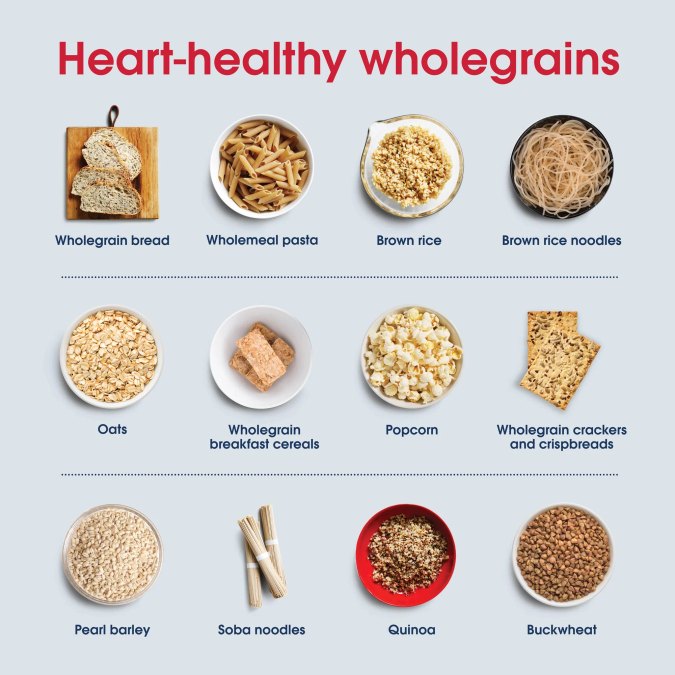
Strong evidence suggests that on longer timescales, diets rich in whole grains, such as brown rice, oats, and quinoa, are linked to a reduced risk of type 2 diabetes, hypertension, and coronary artery disease.
But randomized controlled trials haven't always produced consistent results.
"Although higher whole grain intake has long been linked to better heart health in population studies, clinical trials have produced mixed findings," explains lead author Helda Tutunchi from Tabriz University of Medical Sciences in Iran.
"This left an important practical question unanswered: how much whole grain should people eat to meaningfully improve cardiovascular health? To address this, we systematically combined and analyzed all available randomized controlled trials to identify the amount of whole grain associated with the greatest benefits."
The results consistently showed that eating whole grains reduced body weight, blood pressure, 'bad' cholesterol, glucose levels, and inflammatory markers.
Benefits generally emerged at intakes of 30 to 40 grams a day (dry weight), which is around 2 servings a day.
But the greatest reductions in most cardiovascular risk factors occurred at around 60 to 100 grams a day of whole grains, or roughly four to six servings.
The United States Dietary Guidelines currently advise that Americans eat, on average, two to four servings of whole grains a day.
But according to this recent analysis, more servings may be associated with even greater health benefits, depending on the risk factor.
The greatest improvements in blood pressure, for instance, were seen at around 60 grams a day (four servings) of whole grains.
But the greatest benefits for bad cholesterol were seen at 220 grams per day. That's roughly a dozen servings of whole grains.
Relatively few randomized trials evaluated very high whole grain intakes, above 140 grams per day, so the effects at those intake levels are more uncertain.
But the team found 'high-certainty evidence' for the effect of whole grains on body weight, waist circumference, and total cholesterol.
"The trial evidence indicates that higher whole-grain intakes than presently recommended in some guidelines may be optimal for cardiometabolic health," reads an accompanying editorial, led by Cecilie Kyrø from the Danish Cancer Institute.
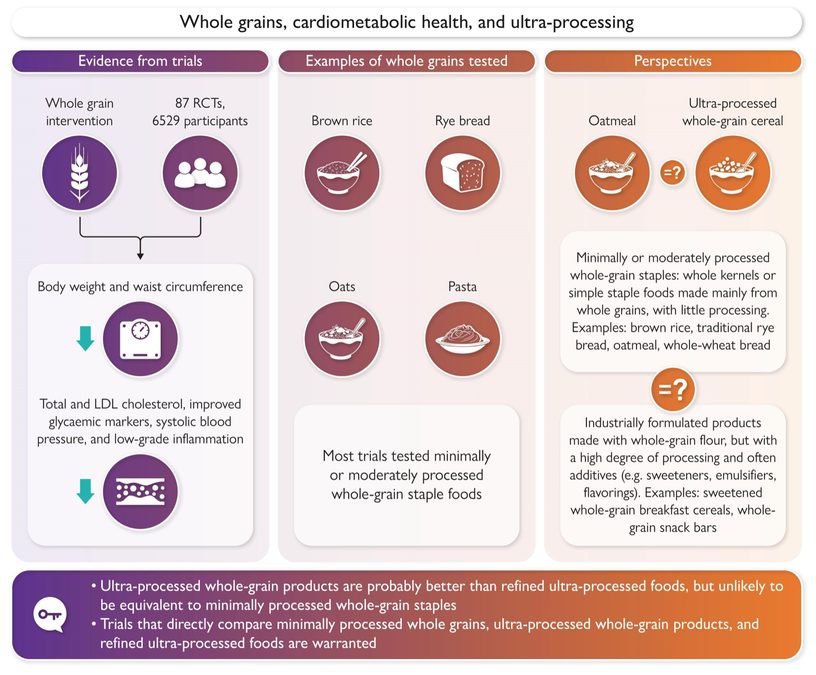
The randomized trials considered in this analysis were short-term, but the benefits they uncovered may add up, reducing the risk of future cardiovascular disease in clinically meaningful ways.
Perhaps that is why in epidemiological studies, people who eat more whole grains tend to have a lower risk of heart disease over the years.
"These findings do not necessarily call for major changes to existing guidelines, but they support public health strategies that help people increase their whole-grain intake and move toward the higher end of current targets," says Tutunchi.
Further research is now needed to determine how higher doses of whole grains impact health over the long run.
Until these trials are conducted, Kyrø and colleagues argue that the message for clinicians and patients is "reassuringly simple".
"Encouraging patients to replace refined grain foods with minimally processed whole grains is likely to yield modest but meaningful improvements in body weight, waist circumference, and blood lipids," they write, "perhaps particularly in individuals with type 2 diabetes."
The study is published in the European Heart Journal.
This article was fact-checked by Rachel Garner and edited by Peter Dockrill. While we pride ourselves on our process, we are only human. If you spot a mistake, please let us know.