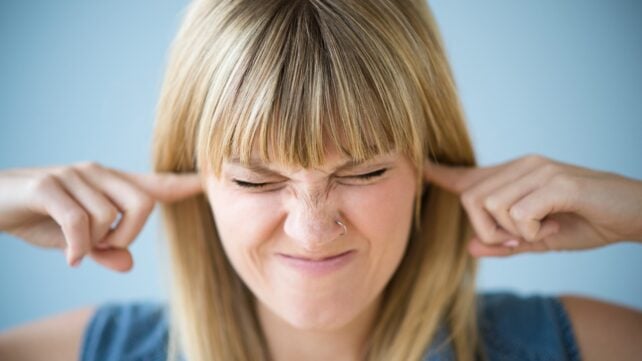
Misophonia is an unpleasant condition to have: It means normal, everyday sounds like chewing or sniffing set off a severe and negative reaction in your brain.
Right now the available treatments only go as far as managing misophonia, rather than tackling it directly. To work towards giving people genuine relief from these intense feelings, researchers are trying to better understand what causes it in the first place.
In a new pre-print study published on medRxiv, a team from the Yale University School of Medicine investigated how misophonia runs in families, and whether there might be genetic components to it that will help with diagnosis and treatment.
Studies have looked at this before, but only by asking people with misophonia about relatives who might also have the condition – no one has contacted or assessed those family members directly.
In the latest research, surveys of 101 people with misophonia and their families showed that 39 percent of probands (the first person in a family with the condition) had a first-degree relative with misophonia, while 48 percent had at least one any-degree relative with it.
The data also showed relatively high rates of related neuropsychiatric conditions, both in the probands and in their wider families – they included anxiety, depression, Attention Deficit Hyperactivity Disorder ( ADHD), and Obsessive-Compulsive Disorder (OCD).
"We demonstrate the high rates of misophonia and other neuropsychiatric conditions in family members, suggesting possible shared genetic and environmental risk factors," write the researchers in their paper.
"We also found higher rates of misophonia and anxiety among mothers than fathers, consistent with the female predominance of these conditions."
The researchers described these as "preliminary" findings: They're yet to be peer-reviewed, and there was no control group for comparison. There doesn't appear to be a single genetic switch for the condition, and a family history of misophonia isn't a guarantee that someone will develop it.
However, the results do offer up some clues worth investigating. More detailed DNA sequencing and analysis is now underway in ongoing research, which will use unaffected families as comparison points.
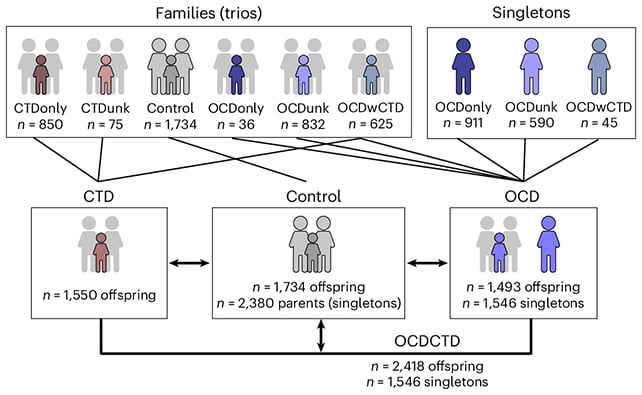
The researchers have previously used similar approaches in looking at linked conditions. In another recent study from some of the same experts, published in Nature Neuroscience, a technique called whole-exome sequencing was used with people with OCD and tics.
This sequencing focuses specifically on the parts of our DNA that actually make proteins, where rare variants known as de novo mutations appear. These mutations can flag up genes and biological pathways involved with a condition – as they did with OCD and tics.
"Related family-based studies have produced genetic leads in ADHD, childhood anxiety, complex motor stereotypes, and body-focused repetitive behaviors such as trichotillomania, or hair pulling, and excoriation disorder, or skin picking," says child psychiatrist Thomas Fernandez.
The researchers expect that the same techniques as those in the Nature Neuroscience study can reveal more about misophonia, through the analysis of 'trios' – probands and both their parents.
While we know less about misophonia for now than conditions like OCD, early data suggests people who have it also have more of these de novo mutations, and that's potentially a key route towards learning more about the condition.
"The field needs approachable, evidence-informed materials that explain misophonia, help people describe their experiences, and offer practical guidance for families, schools, and health professionals," says Fernandez.
As the researchers emphasize, misophonia is a genuine brain response, not just a case of someone feeling too sensitive to certain sounds. It can also have a very real impact on the quality of day-to-day life, causing misunderstandings and conflict – something which can change as we get more insight into misophonia.
"The response can feel immediate and involuntary, and some people avoid shared meals, classrooms, workplaces, or social situations to escape triggers," says Fernandez.
The research has been published on the pre-print server medRxiv, and in the journal Nature Neuroscience.
This article was fact-checked by Rachel Garner and edited by Peter Dockrill. While we pride ourselves on our process, we are only human. If you spot a mistake, please let us know.