We're still searching for a root cause of Alzheimer's disease, but scientists are learning more and more about the risk factors involved: old age, primarily, but also genetics, diet, sleep quality, and even pollution in the air we breathe.
Some of those risk factors, like our genetics and age, are set.
Others are environmental factors – contributions to Alzheimer's risk from our surroundings – and exposure to ionizing radiation falls into this category.
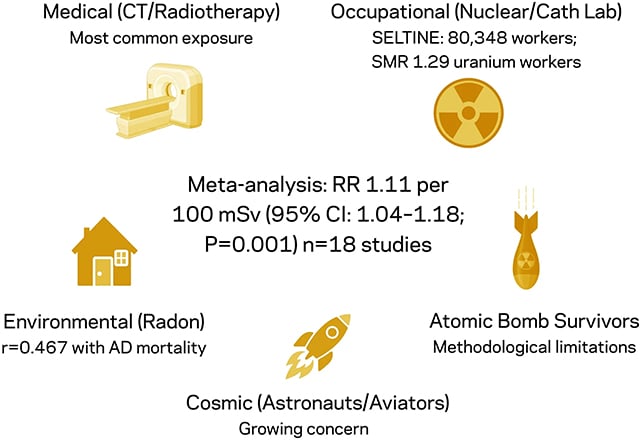
This is the radiation you get from working at nuclear sites, traveling through space, or (most likely for the majority of us) undergoing medical scanning procedures.
Ionization happens when radiation has enough energy to knock electrons off atoms, leaving charged ions that can damage the body.
In a new review published in Frontiers in Immunology, researchers from The Feinstein Institutes for Medical Research in the US analyzed more than 100 previous papers to get a deeper understanding of how this radiation exposure might be linked to Alzheimer's.
"Human exposure to ionizing radiation is remarkably common," write the researchers in their published paper.
"The cognitive consequences of these exposures, particularly the potential for radiation to initiate or accelerate Alzheimer's disease, are therefore relevant to an expanding population."
The reviewed studies covered health and disease data, trials using animals, and molecular models, so there was a lot of information to bring together and parse.
For example, a meta-analysis of 18 studies found an 11 percent increase in dementia risk for every 100 millisieverts of cumulative radiation exposure. Some of the participants in these studies worked at nuclear plants and uranium processing facilities.
Animal studies revealed similar patterns. Mice bred with Alzheimer's-like symptoms showed accelerated brain dysfunction when exposed to radiation. In monkeys, radiation was linked to damage to key structural proteins in the brain.
"Available evidence suggests that ionizing radiation can induce a temporal sequence of molecular and cellular changes leading to cognitive decline," write the researchers.
The researchers also reviewed past work to develop ideas about how this radiation damage might occur.
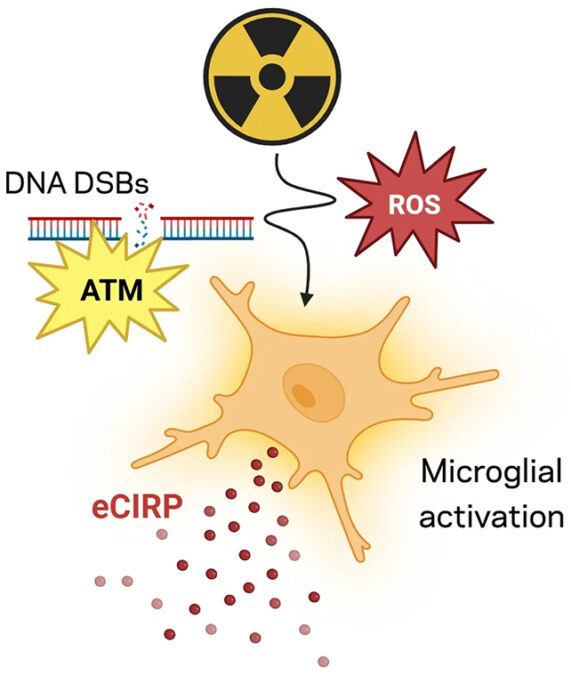
An earlier study from some of the same researchers established that damage done to DNA through ionizing radiation, and the subsequent brain immune cell response, leads to a release of a protein called eCIRP.
This then appears to drive a chemical change in tau proteins – phosphorylation – of the kind that precedes the toxic tangles seen in the brains of people with Alzheimer's.
While further research is going to be needed to confirm the connection and the chain reaction that goes on in human brains, it's a potential new target for Alzheimer's investigations.
"These structural and metabolic changes accumulate over time, shaping the clinical trajectory from radiation exposure to cognitive decline," writes the team.
"Translating these mechanistic insights into eCIRP-targeted therapies and validated biomarkers could open a new front in the prevention and treatment of these prevalent and debilitating disorders."
According to the researchers, eCIRP could also be triggering inflammation and damage to the power supplies of cells, and putting restrictions on the creation of new neurons.
It's worth bearing in mind that the majority of the studies and data gathered here involve radiation doses far higher than most people would ever encounter day to day.
There's no suggestion that simply getting X-rays can lead to Alzheimer's, and it should also be noted that one of the researchers has registered a patent linked to eCIRP inhibition.
Taken as a whole though, it's evidence that this is another avenue worth pursuing in Alzheimer's research. Next steps could include a closer look at the eCIRP-tau relationship and gathering new data at more realistic, lower radiation levels.
"Dementia and Alzheimer's disease affect over 55 million people worldwide, and the number in the US alone is projected to reach 13.8 million, representing 3.8 percent of the population by 2060," write the researchers.
"Despite decades of research and the development of disease-modifying therapies targeting amyloid-beta and tau pathology, effective preventive and therapeutic approaches remain elusive."
The research has been published in Frontiers in Immunology.
This article was fact-checked by Rebecca Dyer and edited by Rebecca Dyer. While we pride ourselves on our process, we are only human. If you spot a mistake, please let us know.