
We Homo sapiens are pretty damn proud of our tool-making prowess.
From smartphones to the humble-yet-mighty wheel, our ability to craft objects to help us attain our goals is something that we've often thought defines us as a species.
But tens of thousands of years ago, Homo sapiens were not the only humans with a wide arsenal of tools.
In a recent dig at a significant Neanderthal site in Barcelona, Abric Romaní, archaeologists have unearthed a massive cache of wood imprints, several of which appear to be tools.
The findings, recently published in Science Advances, suggest our extinct Paleolithic relatives were actually skilled and prolific woodworkers.
Of the 597 wood imprints the team discovered, 13 are clearly modified tools and other domestic objects.
One of the most exciting objects identified was a wooden club, which seems to have been deliberately shaped for whacking stuff.
It's reminiscent of the classic 'caveman' costume prop, but archaeologists have never actually seen anything like it in the prehistoric record.
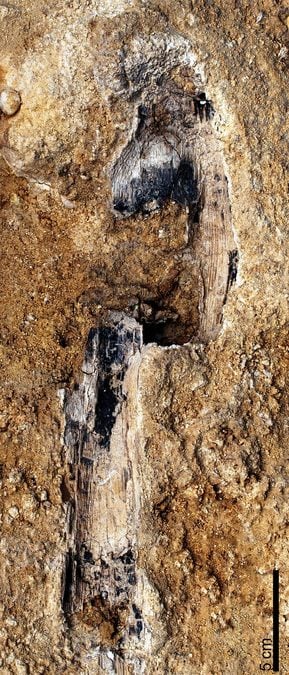
"To date, only one possible example has been reported from Kalambo Falls (Zambia), dated to ∼400 kyr," writes Palmira Saladié and a team of researchers based at the Catalan Institute of Human Paleoecology and Social Evolution (IPHES).
"Consequently, assessing the precise function, use intensity, or behavioral context of such implements, particularly in relation to Neanderthal occupations at Abric Romaní, remains challenging given the limited comparative record and the functional variability documented among recent hunter-gatherers."
The team also found structural poles that may have been used for shelter; a tripod; some pointed wood objects that may be digging sticks; and two spears.
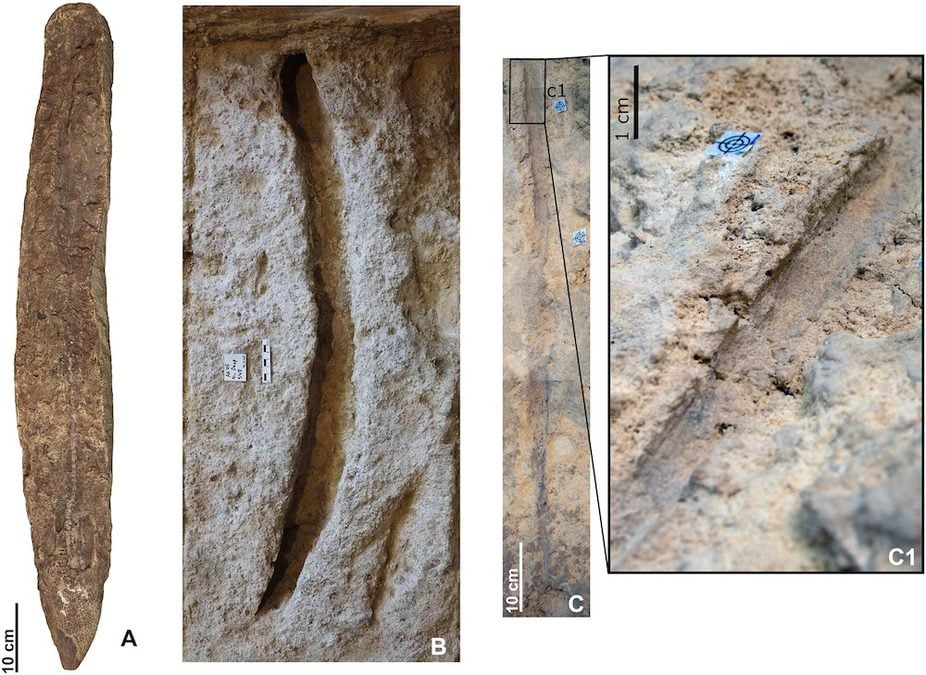
They believe four charred bark objects may have been used as trays or containers for food.
It's not the first evidence that Neanderthals may have made tools with wood, but it's possibly the most detailed and extensive collection of specimens.
In 1995, wooden weapons were found in Germany that dated back to 300,000 years ago, and in 2018, a paper described 171,000-year-old wooden tools found in Tuscany, Italy.
Another pair of artifacts found in Greece may also be Neanderthal – though in all these cases, it's more of an archaeologist's best guess as to who the craftsperson really was.
Wood tools are much less likely to be preserved than those made from stone, for instance, because of their organic quality: wood easily decays.
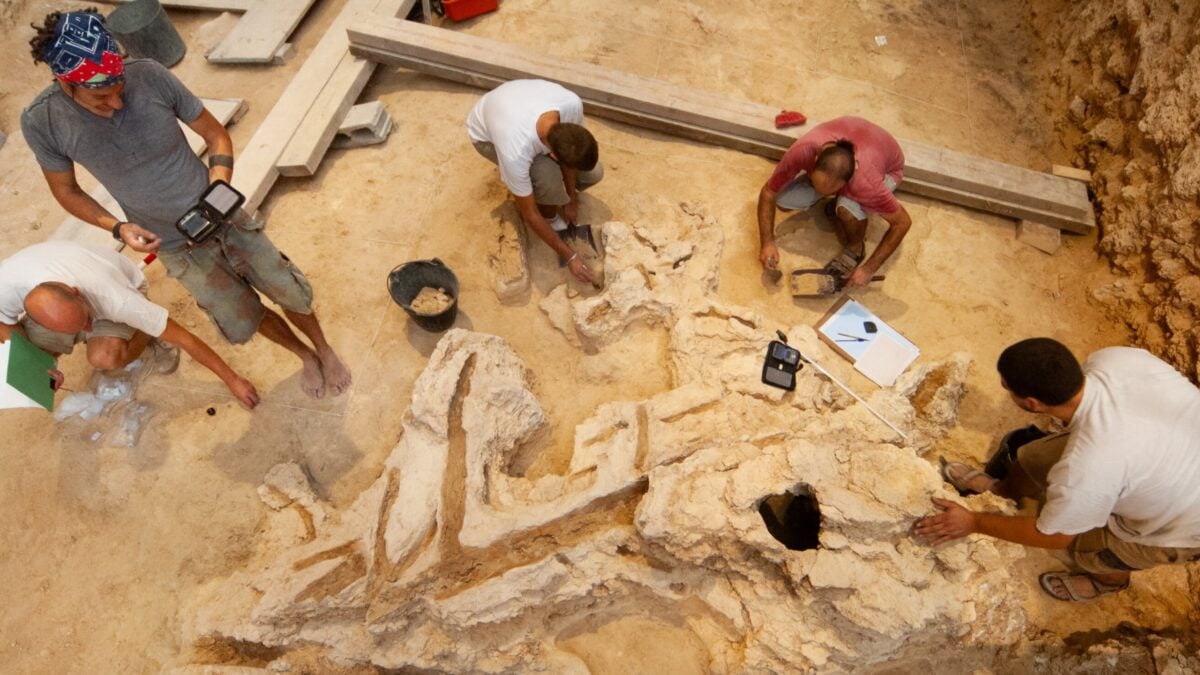
But at Abric Romaní, the imprints of wooden artifacts are preserved across layers of limestone. Even though the wood is long gone, calcium carbonate built up around the wood before it rotted away. This mineral cast left a negative imprint of the tool that survived the millennia.
In some cases, these imprints are so clear that the researchers can see details down to the cellular level, which is how they know they're looking at traces of wood.
"Wood technology likely played a key role in human evolution, yet it remains poorly documented because organic materials rarely preserve in archaeological contexts," Saladié and team note.
"The Abric Romaní assemblage highlights the importance of wood within Neanderthal technological systems and provides previously unknown insights into the role of organic materials in Middle Paleolithic societies."
The research has been published in Science Advances.
This article was fact-checked by Fiona MacDonald and edited by Fiona MacDonald. While we pride ourselves on our process, we are only human. If you spot a mistake, please let us know.