
Researchers often undertake reviews, which are studies of previous studies.
By bringing together findings across different experiments, populations, and time periods, broader trends can often be identified.
Now, a comprehensive new review drawing on 361 scientific studies has found growing evidence that having less protein in a diet could slow down biological aging.
The research, by molecular biologist Bailey Knopf and biomedical researcher Dudley Lamming from the University of Wisconsin-Madison, is published in Cell Press Blue.
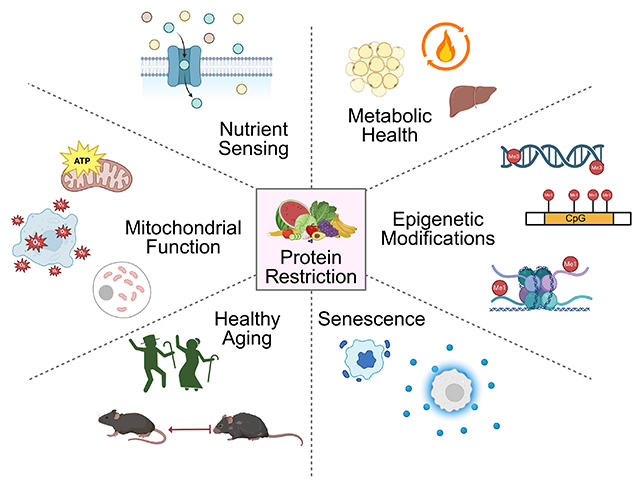
The review looks at protein's impact on metabolism and lifespan, as well as assessing some of the biological processes that might explain the links.
There is nuance to the story though, because a lot of previous research has shown that protein can be good for us.
It's used to build and repair muscle, can help in weight management, and is also associated with healthy aging – particularly when it comes to maintaining muscle mass in later years.
The researchers suggest that protein intake needs to be tailored to individuals, rather than reduced in every case.
"Despite widespread recommendations for higher protein intake during aging, increasing evidence suggests that dietary protein restriction (PR) promotes metabolic health, healthspan, and lifespan across diverse organisms," write the researchers in their published paper.
"This review provides a comprehensive overview of current knowledge regarding the benefits of PR and amino acid restriction for healthy aging and highlights the therapeutic potential of interventions based on these diets to promote healthspan and longevity."
There's a lot to take in from the review – as you might expect from a review drawing on 361 references – but some of the findings highlighted by the authors include the signs of slower aging that have turned up in animals put on low-protein diets.

In human studies, there's been evidence that cutting down on protein in a diet can reduce some of the inflammation that speeds up biological aging, as well as helping to boost overall metabolic health.
On the other hand, the researchers also point out the relationship between exercise and protein consumption, suggesting that more protein can be beneficial – for those who are regularly active and working their muscles.
"It's absolutely crystal clear that there are benefits of protein to muscle growth and exercise response of active individuals," says Lamming.
"But because most people are relatively sedentary, many people are likely consuming more protein than they actually need, which probably has negative health consequences."
The review also considers some of the potential explanations for the benefits of restricting dietary protein. They include shifting cell signaling to focus more on maintenance rather than growth, reducing the accumulation of senescent cells (waste cells that need to be removed), and boosting cellular energy production.
Some of the chemical changes that come from eating less protein include a greater abundance of the hormone fibroblast growth factor 21 (FGF21), the researchers note, while the review also highlights certain amino acids that may be connecting dietary protein to aging processes.
Ultimately, it may be that the types of protein we eat, and the combination of amino acids in it, matter as much as total intake.
"These studies show that the amount of protein sedentary people are eating today may have negative health consequences, at least at the population level," says Lamming.
Looking ahead, the researchers don't recommend a reduction in dietary protein across the board, but they do want to see a reassessment of how much protein we all need, especially in relation to age and exercise.
Studies of groups of people that analyze protein's effects on biological aging and metabolism could follow, and from there inform our understanding of how to best ensure we age as healthily as possible.
"Recent recommendations have encouraged people to eat more protein, but they've also encouraged people to exercise more," says Lamming.
"We probably need to personalize protein recommendations based not just on age, but also on how physically active people are."
The research has been published in Cell Press Blue.
This article was fact-checked by Peter Dockrill and edited by Peter Dockrill. While we pride ourselves on our process, we are only human. If you spot a mistake, please let us know.