You've eaten a meal, and some time later, you start feeling sick. Your first thought might be the food you just ate.
A new study in mice suggests that meals eaten weeks earlier could also influence how an infection unfolds.
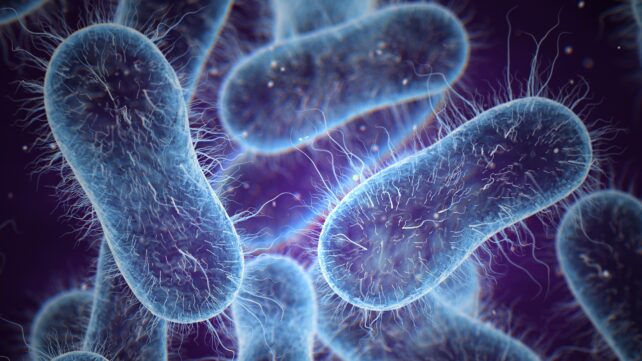
Food-poisoning bacteria arriving in the intestine encounter a community of microbes already living there. Diet helps shape that community, and the new research suggests it can affect how well the gut withstands an infection.
Mice fed a high-fat, low-fiber diet for three weeks became more severely ill after receiving the food-poisoning bacterium Salmonella.
In one experiment, they had fewer bacteria in their droppings than mice eating standard chow, even as more reached their livers and spleens.
Researchers at Fudan University in China and Georgia State University wanted to understand how diet affected the course of infection with these bacteria, which commonly reach people through contaminated food.
They randomly assigned young male mice to two diets. One group ate standard grain-based laboratory chow.
The other received a fattier, lower-fiber feed designed to model Western-style eating. Fat provided 60 percent of its calories, compared with about 17 percent in the standard chow.
After three weeks, the mice hadn't developed noticeable obesity or diabetes, but their gut microbes had changed. Genetic analysis showed fewer kinds of bacteria and a different mix of microbes in the Western-diet animals.
The mice then received one of two doses of a type of food-poisoning bacterium called Salmonella Enteritidis. There were eight mice in each of the four groups.
At the lower dose, the Western-diet mice shed fewer Salmonella bacteria in their droppings on days two, four, and six. They still died sooner – about 15 days on average, compared with roughly 22 days for mice eating standard chow. At the higher dose, the Western-diet mice again died sooner.
The droppings revealed only part of the infection. On day four, the livers and spleens of Western-diet mice held more Salmonella at both doses. Their colons, livers, and spleens also showed more severe tissue damage.
One possible explanation lay in the gut wall, a barrier that helps keep intestinal contents separate from the rest of the body. If that barrier became easier to cross, bacteria could have more opportunities to spread.
The researchers checked by feeding mice a fluorescent tracer and measuring how much reached their blood. More crossed in the Western-diet animals, especially during infection.
Did the altered gut microbes also play a part?
In a separate experiment, the team gave mice on both diets an antibiotic mixture for a week before infection. With their gut bacteria depleted, the animals responded much more similarly. The differences in survival, Salmonella counts, and a measured inflammatory signal largely disappeared.
That result strengthens the case that gut microbes contributed to the diet's effects. The findings fit with research showing how diet shapes the conditions that keep potentially harmful bacteria in check.
There were signs that Salmonella wasn't the only bacterium reaching the liver.
Genetic comparisons between gut and liver samples suggested that some resident intestinal bacteria might have made the journey too. Those traces don't show whether every bacterium detected was alive, though, or establish exactly how it got there.
The antibiotic experiment leaves an important question unanswered: Which microbes made the difference?
The team plans to restore microbial communities and transfer selected bacteria into mice raised without microbes. This could help reveal whether bringing particular bacteria back can limit the infection's spread.
For now, the results come from small groups of male mice from one laboratory strain. The diets differed in several ingredients, so the study can't pin the effects on fat or fiber alone. Whether the same changes would worsen infections in people still needs to be tested.
The research has been published in Animal Microbiome.
This article was fact-checked by Peter Dockrill and edited by Peter Dockrill. While we pride ourselves on our process, we are only human. If you spot a mistake, please let us know.