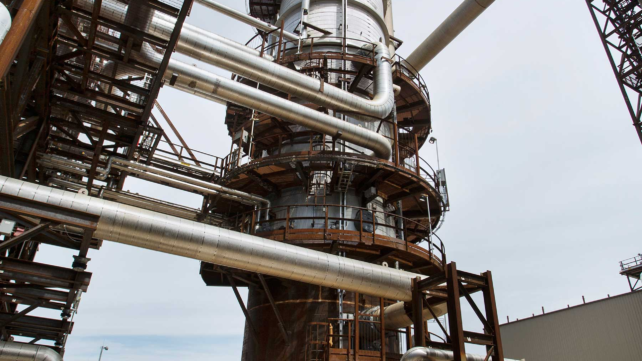
An effort to mitigate one of the most damaging consequences of industrialization has inadvertently created a geological hazard.
A new analysis of earthquakes in central Alberta, Canada, has found that a major carbon capture and storage project – Quest CCS, operated by Shell Canada – is responsible for a decade of seismic activity.
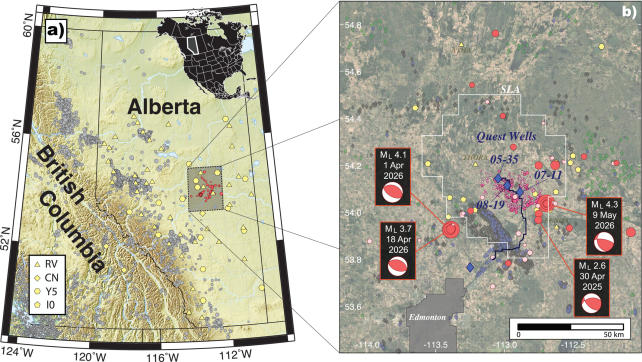
That activity includes the largest earthquakes ever linked to the sequestration of carbon dioxide in a deep saline aquifer, reaching magnitudes of 4.1 and 4.3. The shaking was felt as far away as Edmonton, some 70 kilometers (43 miles) from the injection site.
The earthquakes could continue for years, even if the injection of carbon dioxide were to stop today.
The discovery, however, could prove invaluable in helping scientists design and monitor future carbon capture projects to minimize the risk of triggering earthquakes.
"A detailed analysis of the Quest CCS earthquakes is important for ensuring safe subsurface injection practices moving forward," write seismologist Ryan Schultz of ETH Zürich and colleagues in a paper in Geophysical Research Letters.
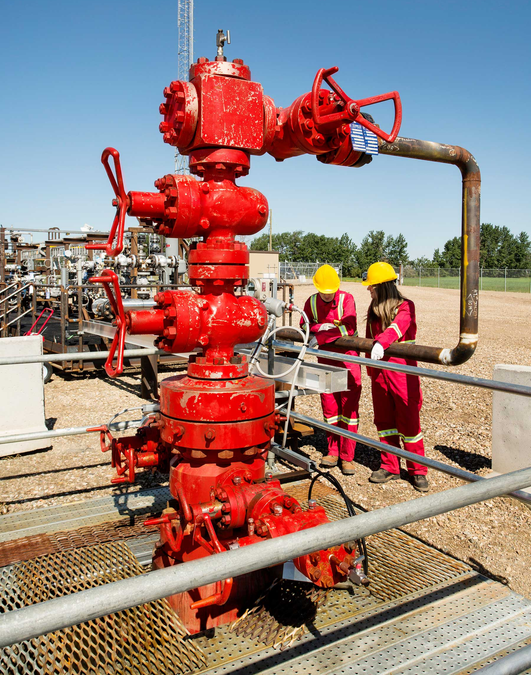
As human industrial activity has accelerated over the last two centuries, the accumulation of carbon dioxide in Earth's atmosphere has emerged as a serious threat to our way of life.
The gas helps trap heat in Earth's atmosphere – a greenhouse effect that, if left unchecked, could dramatically reduce the habitability of large swathes of our planet.
One strategy for curbing this warming, alongside reducing our reliance on fossil fuels, is to intercept and stow away carbon dioxide emissions before they enter the atmosphere.
This is the principle behind carbon capture and storage (CCS). Carbon dioxide is captured at industrial facilities, compressed into a dense fluid, and pumped deep underground into rock formations where it can, ideally, remain trapped for thousands of years or longer.
Eventually, according to modeling, the carbon may even be taken up into minerals or dissolve into the groundwater.
At Quest CCS, the carbon dioxide is injected into a porous, water-bearing sandstone layer 2.1 kilometers underground that is capped by layers of impermeable rock, which prevent the carbon dioxide from escaping.
The project, which commenced operations in August 2015, captures roughly a third of the carbon dioxide emissions produced by Shell Canada's Scotford bitumen upgrader. Around a million metric tons of carbon dioxide are injected underground every year, with more than 10 million metric tons sequestered to date.
But pumping fluid into Earth's crust isn't without consequences.
Even though much of the fluid seeps into tiny cracks and cavities in the rock, its injection increases the pressure within those spaces. That pressure can loosen the grip that holds the two sides of a geological fault together, allowing them to slip against each other, generating quakes.
That mechanism is well known from another aspect of fossil fuel production – the underground disposal of wastewater, which has been linked to earthquakes in the US's oilfields.
While the link between wastewater disposal and earthquakes has been established, however, scientists were less certain that carbon sequestration could have the same effect.
Some scientists have argued that the physical properties of carbon dioxide make its geological storage less prone to triggering earthquakes than, for example, the underground disposal of wastewater.
Others have suggested that the relative lack of earthquakes associated with CCS may simply be because the technology is still in its infancy.
One way to find out is, of course, to study real-world data – and with Quest CCS in operation for more than a decade now, it offers enough data to start connecting the dots.
Schultz and his colleagues compiled and analyzed seismic records for the region dating back to 1985. They also combed through the more recent data for evidence of smaller earthquakes that may have gone undetected.
In the three decades prior to the commencement of carbon dioxide injection, just one earthquake of magnitude 2.5 or greater had been recorded in the study area.
In the decade since Quest CCS opened, there have been more than 10.
Meanwhile, Shell Canada's own monitoring system has detected more than 800 seismic events, most of them too small to be felt.
The researchers calculated that the frequency of earthquakes had increased by a factor of 20 to 40 following the commencement of injection.
But it wasn't just the timing of the earthquakes. It was their locations, too.
Over the course of the decade, the earthquakes had been occurring progressively farther and farther from the injection wells – a pattern consistent with the spread of increased fluid pressure through the rock.
Almost all the recorded earthquakes fell within the boundaries of the expanding region of pressure predicted by the researchers' analysis, originating in ancient rock beneath the sandstone reservoir, where the increased pressure appears to have reactivated pre-existing geological faults.
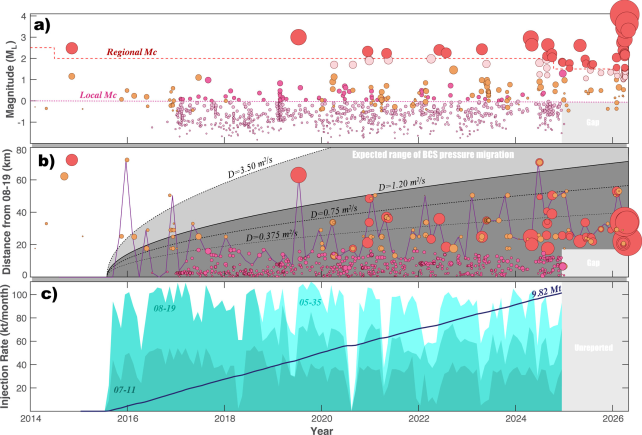
And the magnitude of the earthquakes has been increasing, too.
On 1 April 2026, a magnitude-4.1 earthquake struck near the town of Bon Accord, some 35 kilometers from the Quest injection wells. It was felt as far as Edmonton.
A little over a month later, on May 9, a magnitude-4.3 earthquake struck near the town of Waskatenau.
This is the really worrying part. Halting the injection of carbon dioxide doesn't necessarily halt the spread of increased pressure through the rock.
The team modeled the future evolution of that pressure under two different sets of assumptions about the properties of the rock.
In both models, even if Quest had ceased operations on 1 May 2026, the pressure at the site of the Bon Accord earthquake would have continued to climb until around 2033 to 2035.
If operations continue as planned until 2040, that pressure could continue to rise until around 2044 or 2045.
This means that one of the simplest strategies for mitigating induced earthquakes – temporarily halting the injection of fluid – may have little immediate effect on earthquakes occurring farther away.
Meanwhile, by extrapolating the observed pattern of earthquake migration, the researchers calculated that, if operations continue unchanged, seismic activity could reach downtown Edmonton by 2032.
But their two models of underground pressure produced dramatically different results. One predicted no significant increase in pressure beneath Edmonton; the other predicted an increase of up to 18 kilopascals.
Both models are consistent with measurements taken close to the injection wells. What's missing is a detailed understanding of how pressure propagates through rock over greater distances.
Obtaining that information could be crucial for assessing the risk not just to Edmonton, but to populated regions near future carbon sequestration projects.
The findings could also inform the selection of sites for future CCS projects. Layers of impermeable rock beneath a carbon storage reservoir, as well as above it, could help insulate underlying faults from changes in pressure.
Another potential solution proposed by the researchers is to drill wells specifically to relieve underground pressure in earthquake-prone regions – an approach that could be used to harvest geothermal energy in what the researchers call a potential silver lining.
The research has been published in Geophysical Research Letters.
This article was fact-checked by Peter Dockrill and edited by Peter Dockrill. While we pride ourselves on our process, we are only human. If you spot a mistake, please let us know.